The Technion’s story has been intertwined with Israel’s for more than a century, from laying the foundations for a new nation to shaping its future.

From medicine to security, explore how the Technion is advancing Israel and improving lives around the world.
View All Impact Areas
Explore stories, news, insights, and data across articles, videos, and podcasts.
view all content types
of the student body are Arab Israeli
in Europe and #21 in the world for aerospace engineering*
locations
The Technion’s story has been intertwined with Israel’s for more than a century, from laying the foundations for a new nation to shaping its future.
Explore ATS, the Technion, and the people behind the breakthroughs redefining what's possible for Israel and the world.
Learn More About ATSATS is a community of supporters, innovators, and champions of possibility united by one mission: transforming Israel and the world through science and discovery.
Learn MoreFor more than 100 years, the Technion has been Israel's technological engine and leading driver of innovation, technology, and entrepreneurship, transforming ideas into impact.
Learn More
Step inside Israeli innovation at the David and Janet Polak Visitors Center. Experience our 360° immersive movie and tech exhibition. Open to individuals and groups.
Learn MoreFrom medicine to security, explore how the Technion is advancing Israel and improving lives around the world.
View All Impact AreasExplore stories, news, insights, and data across articles, videos, and podcasts.
view all content typesExplore ATS, the Technion, and the people behind the breakthroughs redefining what's possible for Israel and the world.
Learn More About ATSAs Seen in SPACEREF
The Fluidic Telescope (FLUTE) project team, jointly led by NASA and Technion – Israel Institute of Technology, envisions a way to make huge circular self-healing mirrors in-orbit to further the field of astronomy.
Larger telescopes collect more light, and they allow astronomers to peer farther into space and see distant objects in greater detail. These next-generation large space observatories would study the highest priority astrophysics targets, including first generation stars – the first to shine and flame out after the Big Bang – early galaxies, and Earth-like exoplanets. These observatories could help address one of humanity’s most important science questions: “Are we alone in the universe?”
Like a carry-on suitcase, payloads launching to space need to stay within allowable size and weight limits to fly. Already pushing size limits, the state-of-the-art 21 foot (6.5 meter) aperture James Webb Space Telescope needed to be folded up origami-style – including the mirror itself – to fit inside the rocket for its ride to space. The aperture of an optical space observatory refers to the size of the telescope’s primary mirror, the surface that collects and focuses incoming light.
by
spaceref.com (opens in a new tab)
on
April 27, 2023
Learn how the FLUTE project will advance astronomy through innovative self-healing mirrors designed for space telescopes.
1 min
X (opens in a new tab) / Facebook (opens in a new tab) / LinkedIn (opens in a new tab) / Email / Copy Link
Aerospace / Engineering / Faculty /
A Breakthrough From the Technion Together with collaborators from leading medical centers in Israel, the United States, Europe, and Australia, Shamai and his team at the Technion have developed an AI model that predicts both the risk that breast cancer will return and whether a patient is likely to benefit from chemotherapy — offering a […]
At the Technion, Israel Institute of Technology, the future often begins with a deceptively simple question: What can we do today that we could not do before? “Science and engineering have never been about yesterday’s tasks. They’ve always been about the future,” said Prof. Lihi Zelnik-Manor, vice president of External Relations and Resource Development at […]
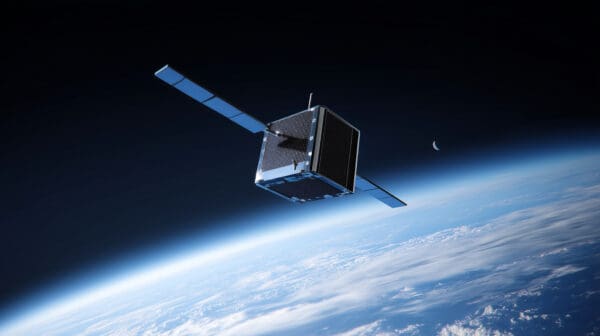
The first satellite in the CloudCT network has transmitted its first observation from orbit, marking an early milestone for the Israeli-German research project studying clouds and polarized light from space. The image shows a view toward central France as the satellite passed over the Baltic Sea, according to a statement from the Technion – Israel […]
Stay on top of the latest breaking scientific discoveries from Israel and the Technion. Subscribe to the ATS newsletter.