Video

Why the Perfect Pitch is Your Biggest Mistake

September 23, 2026
Go
Video

When the Newsroom Meets the Algorithm

September 18, 2026
Go
disease detection
Article

A Breathalyzer Test for Cancer?

September 17, 2026
Go
Podcast

Everything In-House

August 11, 2026
Go
disease detection
Article

A Breathalyzer Test for Cancer?

September 17, 2026
Go
artificial intelligence health care
Article

Europe Is Betting on Technion Innovation

September 04, 2026
Go
Chatbot | American Technion Society | Donate to Israel
In The News

Can AI Chatbots Support Mental Health?

August 07, 2026
Go
Cancer Research | American Technion Society | Donate to Israel
In The News

Advancing Cancer Research Through Discovery

August 04, 2026
Go
AI in education
Article

Rethinking Education in the Age of AI 

September 25, 2026
Go
artificial intelligence health care
Article

Europe Is Betting on Technion Innovation

September 04, 2026
Go
Tree Canopy | American Technion Society | Donate to Israel
In The News

Cornell Tech’s Tree Canopy Project Builds a Cooler New York City

August 11, 2026
Go
Wildfire detection | American Technion Society | Donate to Israel
In The News

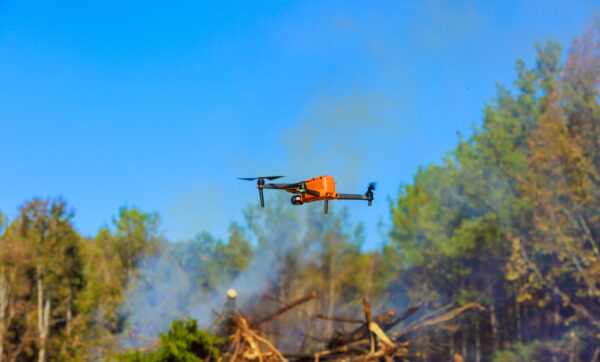
Wildfire Detection Takes Flight With AI-Powered Drones

August 04, 2026
Go
strength in every step | American Technion Society | Donate to Israel
Article

Strength in Every Step: Recovery, Resilience, and a Walk to Remember

August 21, 2026
Go
Student Resilience | American Technion Society | Donate to Israel
Article

Never Too Late for a New Challenge

August 17, 2026
Go
coexistence | American Technion Society | Donate to Israel
In The News

The Technion’s Model of Coexistence

August 07, 2026
Go
Sirens | American Technion Society | Donate to Israel
Article

When the Sirens Sound

August 07, 2026
Go
Reuven Aronashvili
Video

From a Poor Town to Leading Paradigms in Cyber

September 25, 2026
Go
earthquake rescue | American Technion Society | Donate to Israel
In The News

Israeli Drones Aid Earthquake Rescue Efforts in Venezuela

July 08, 2026
Go
No GPS or Communication Drones flying in the background as a soldier's shadowy silhouette fills the foreground
Video

When GPS Fails, This Drone Keeps Going

June 10, 2026
Go
Article

Technion Innovations: Safeguarding Israel and the World

May 28, 2026
Go
Article

Seeds of a New Community

September 08, 2026
Go
Tree Canopy | American Technion Society | Donate to Israel
In The News

Cornell Tech’s Tree Canopy Project Builds a Cooler New York City

August 11, 2026
Go
Wildfire detection | American Technion Society | Donate to Israel
In The News

Wildfire Detection Takes Flight With AI-Powered Drones

August 04, 2026
Go
Energy Tower | American Technion Society | Donate to Israel
In The News

The Energy Tower: A Vision Ahead of Its Time Finds New Life

July 08, 2026
Go
AI in education
Article

Rethinking Education in the Age of AI 

September 25, 2026
Go
Podcast

Predictions from The Himalayas

September 17, 2026
Go
Student Resilience | American Technion Society | Donate to Israel
Article

Never Too Late for a New Challenge

August 17, 2026
Go
Video

Technion: The Vision to Do Good

August 17, 2026
Go
Video

Technion: The Vision to Do Good

August 17, 2026
Go
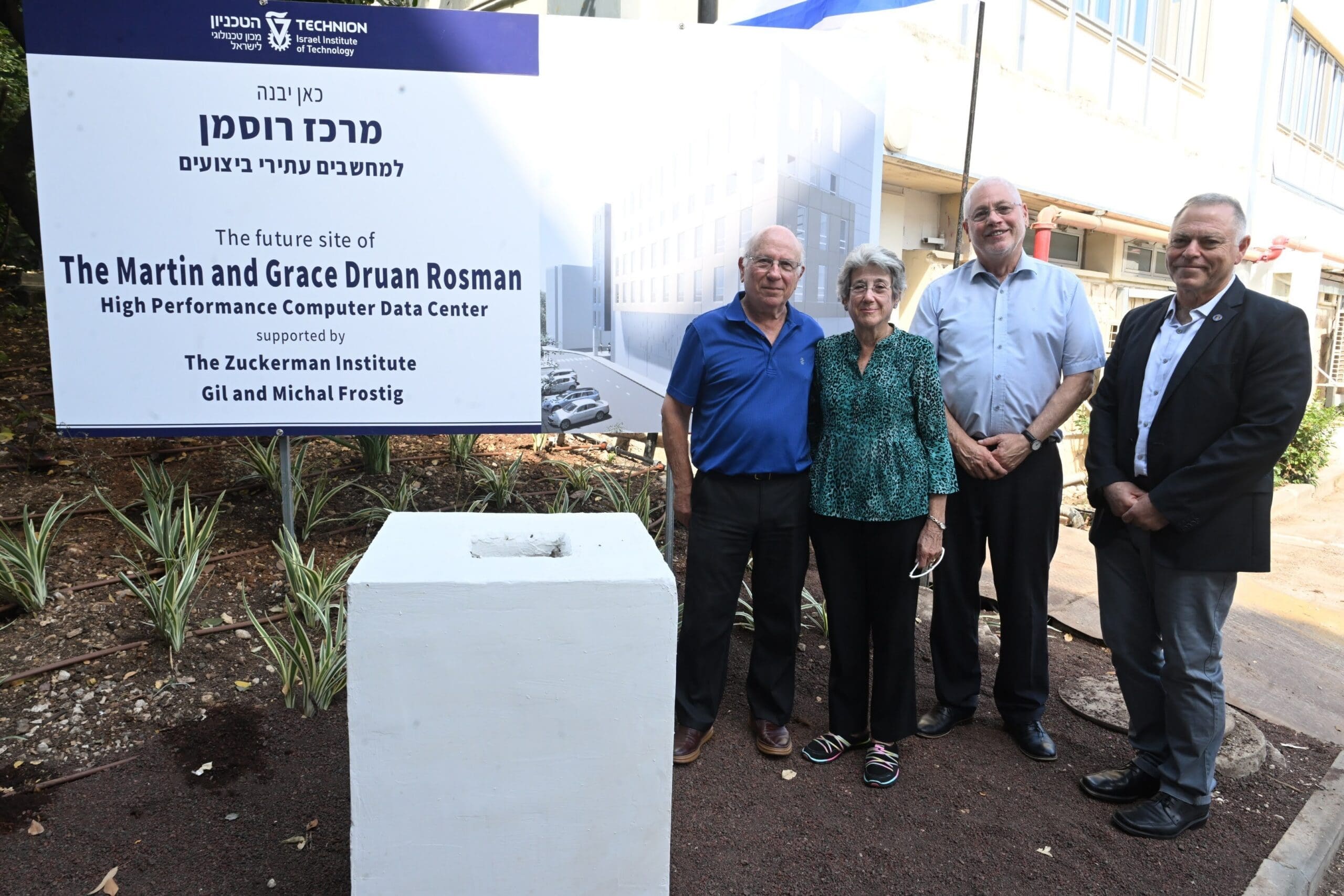
From left: Dr. Martin Rosman; Grace Druan Rosman; Technion President Prof. Uri Sivan; and Dr. Rafi Aviram, executive vice president and director general of the Technion, at the cornerstone ceremony for the Martin and Grace Druan Rosman High-Performance Computer Data Center building. | American Technion Society | Donate to Israel
Article

A Vision Built Around Students

June 29, 2026
Go
1912 - Today | Technion flag with Israeli flag | Donate to Israel | Technion University
Video

1912 to Today: The Institution That Helped Build Israel

June 10, 2026
Go
Article

Doing Well by Doing Good

May 23, 2026
Go

Watch, Read & Listen

Explore stories, news, insights, and data across articles, videos, and podcasts.

view all content types
AI in education
Article

Rethinking Education in the Age of AI 

September 25, 2026
Go
disease detection
Article

A Breathalyzer Test for Cancer?

September 17, 2026
Go
Article

Seeds of a New Community

September 08, 2026
Go
artificial intelligence health care
Article

Europe Is Betting on Technion Innovation

September 04, 2026
Go
Reuven Aronashvili
Video

From a Poor Town to Leading Paradigms in Cyber

September 25, 2026
Go
Video

Why the Perfect Pitch is Your Biggest Mistake

September 23, 2026
Go
Video

When the Newsroom Meets the Algorithm

September 18, 2026
Go
Video

Technion: The Vision to Do Good

August 17, 2026
Go
Podcast

Predictions from The Himalayas

September 17, 2026
Go
Podcast

Everything In-House

August 11, 2026
Go
the heart | American Technion Society | Donate to Israel
Podcast

The Heart Will Go On

July 15, 2026
Go
Or Yochanan | American Technion Society | Donate to israel
Podcast

Reinventing the American Dream in Austin

June 10, 2026
Go
In The News

Can Decart Put Israel on the AI Map?

September 18, 2026
Go
Tree Canopy | American Technion Society | Donate to Israel
In The News

Cornell Tech’s Tree Canopy Project Builds a Cooler New York City

August 11, 2026
Go
coexistence | American Technion Society | Donate to Israel
In The News

The Technion’s Model of Coexistence

August 07, 2026
Go
Chatbot | American Technion Society | Donate to Israel
In The News

Can AI Chatbots Support Mental Health?

August 07, 2026
Go
25 %

of the student body are Arab Israeli

1K +

companies founded by graduates and faculty in the last 10 years

# 10

among universities worldwide for producing undergrad entrepreneurs

The Technion’s story has been intertwined with Israel’s for more than a century, from laying the foundations for a new nation to shaping its future.

About ATS

ATS is a community of supporters, innovators, and champions of possibility united by one mission: transforming Israel and the world through science and discovery.

Learn More

About the Technion

For more than 100 years, the Technion has been Israel's technological engine and leading driver of innovation, technology, and entrepreneurship, transforming ideas into impact.

Learn More

Alumni Corner: Rafi Yoeli M.Sc. ’84, Ph.D. ’87

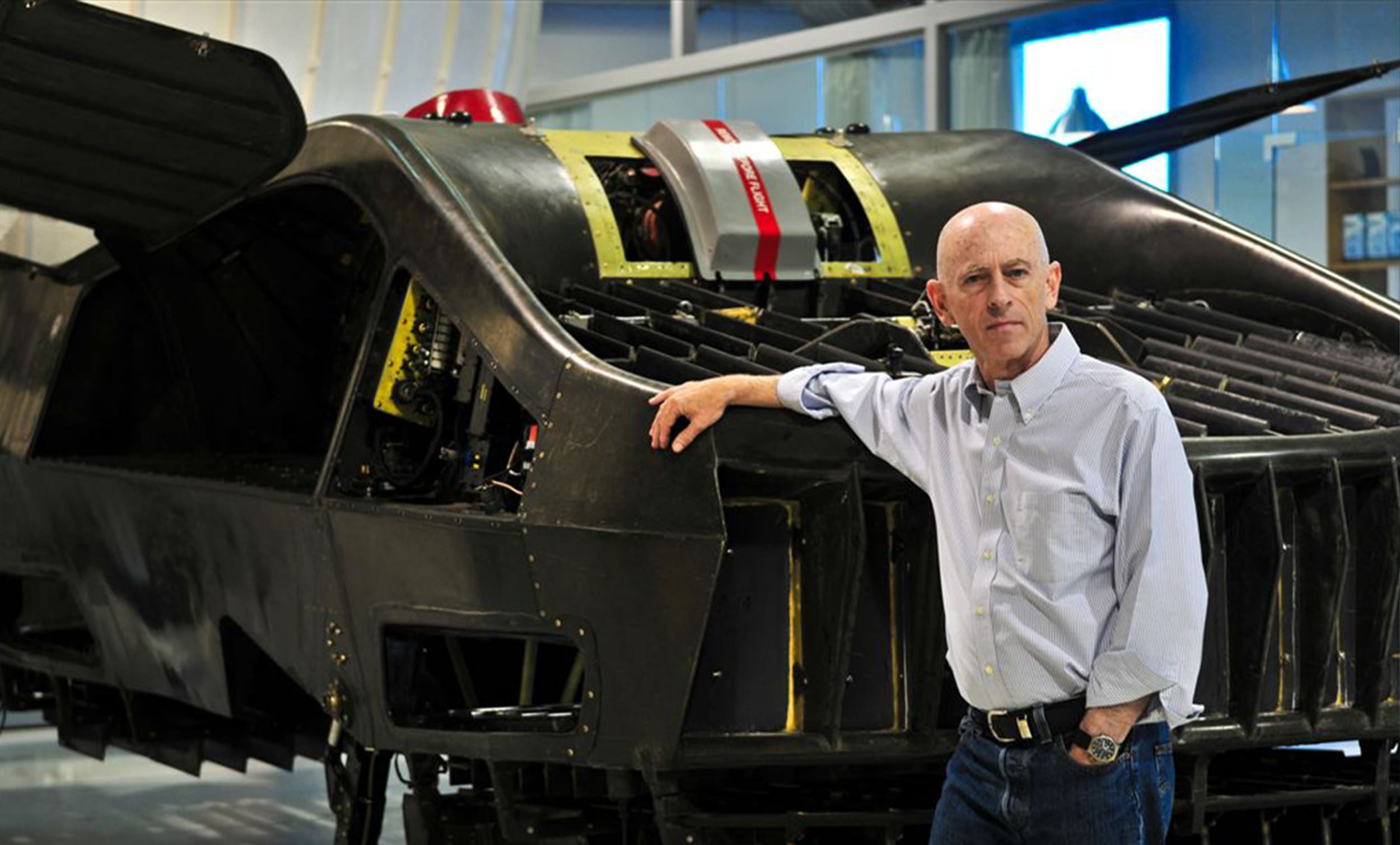
Rafi Yoeli with flying car tech prototype | Donate to Support Israel | American Technion Society

Rafi Yoeli with his Cormorant, credit Rafi Yoeli.

After selling his first aviation company, Rafi Yoeli had time to ponder his next move. He’d already served in the Israeli Air Force, earned two Technion graduate degrees as well as a pilot’s license, and had worked at Boeing and Israel Aircraft Industries, where he was one of the chief designers of the Lavi Fighter Jet.

What did he land on? The flying car.

Growing up in the 1960s, Yoeli was enamored with a rudimentary flying machine called Airgeep. But the Vietnam War was in full swing and funding that could have gone to Airgeep went to helicopters. “I said to myself: Aerospace technology has come a long way since the Airgeep. It’s time to dust off the concept and see if we can make it viable. The dream was there but perhaps the technology wasn’t ready.”

So after more than 40 years of advances in the aeronautics industry, Yoeli established Urban Aeronautics Ltd. in 2002 to build VTOLs, vertical takeoff and landing vehicles — but not just another helicopter, a much more compact vehicle that would truly earn the name flying car. “A few years ago, I couldn’t say these words,” Yoeli said. “But it’s a true flying car. And it’s very compact and very powerful.” Flying cars could be used for everything from easing city street congestion to medical evacuations. According to Yoeli, his would be the world’s safest, quietest, most compact flying car ever. With 300 test flights under its belt since 2016 and favorable media coverage from TIME and other outlets, Urban Aeronautics appears to be well on his way.

The company has spent much of the past decade developing flying cars that are similar to helicopters but without their Achilles Heel: the overhead and tail rotors and their exposed blades. The rotors, Yoeli said, can lead to accidents if they nick a tree or telephone line. And their whirling blades make it difficult to get in and out of tight urban areas, while also being extremely noisy.

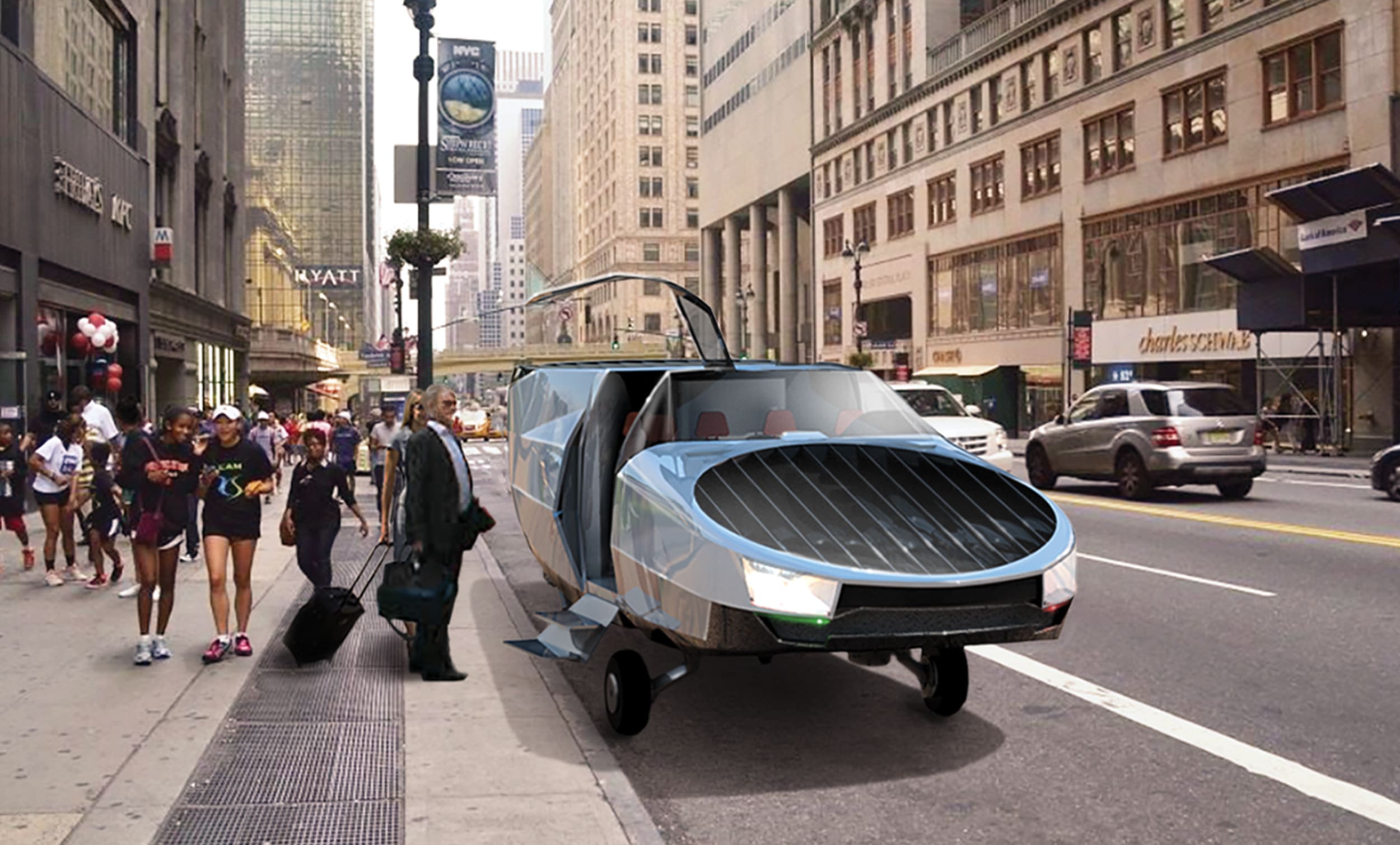
Instead, Urban Aeronautics relies on what the company defines as ‘Fancraft’ technology, replacing the external rotors with two internal fans integrated into the front and back of the passenger cabin, making their flying cars safe and quiet. The company also employs light composite materials, sensors, and fly-by-wire technology, or computer-operated flight control systems, all unavailable in Airgeep’s day. Two cars are under development: the unmanned Cormorant, and its showcase VTOL, the manned CityHawk.

“We’ve cracked the code of how to achieve the same speed, the same payload capacity, the same range, and the same altitude as a normal helicopter,” Yoeli said of the CityHawk, “but with a vehicle the size of a Humvee.” The CityHawk can fly at 100 to 120 knots or between 115 to 138 miles per hour, reach an altitude as high as 16,000 – 18,000 feet, and travel about 125 miles with full payload, or twice that with half the passenger load. Reminiscent of the flying car on the animated 1960s TV show, “The Jetsons,” which carried George and Jane Jetson in the front and their two children in the back, CityHawk has seats for five passengers plus a pilot. “It’s more than just flash,” the Technion graduate said of the idea many would consider fanciful. Some 600 private helicopters ferry executives to their offices in Sao Paulo, Brazil every day, avoiding epic traffic jams and violence in the streets, Yoeli said. CityHawk could do the job more efficiently, landing four CityHawks on a helipad now reserved for just one helicopter. CityHawks are also ideal for medical rescue and evacuation. Currently, when a person has a heart attack or accident in the city, a typical helicopter has to land half-a-mile away. “Paramedics are running with their equipment and precious time is lost. That’s not good enough,” he said. City Hawk will be able to get as close as a car and even rescue people directly from high-rise buildings. The Cormorant has its own important missions. Because it is unmanned, it is ideal for disaster response scenarios such as a nuclear meltdown and firefighting. The Cormorant can also be used in agriculture, powerline maintenance, and on the battlefield, carrying supplies to the soldiers and returning with wounded that need urgent medical attention. Yoeli was born in Tel Aviv and spent some of his youth in Switzerland where his father was studying cartography. He did his military service in the Israeli Air Force, first as an air traffic controller and later on as an engineer repairing aircraft. Following his service, Yoeli earned his bachelor’s degree at Tel Aviv University. From 1976 to 1982, he worked at Israel Aerospace Industries (IAI), Israel’s foremost state-owned aerospace and aviation manufacturer. During that period, he helped develop the Lavi fighter as well as several business jets, and earned his civilian pilot’s license for helicopters and planes while living in Seattle as an IAI liaison to Boeing. After IAI, he returned to his studies, earning his master’s degree in aeronautics and his Ph.D. in artificial intelligence — both at the Technion in 1984 and 1987, respectively. “I loved the Technion, every minute of it,” he said. Yoeli lived in a neighborhood just above the Technion, and he relished the half-mile walk through the woods to campus. “These were fantastic years. The freedom of academic life and studying, the facilities available to me. I just dove into it,” he said. His second child was born at that time, and he belonged to the health club and pool. “So, the family spent a lot of time on campus too. My years at the Technion were some of the best I remember.” In 1989, he founded his own company, Aero Design & Development Ltd. AD&D developed applications for helicopters that were servicing the Israel Electric Company, as well as a series of aircraft including an unmanned aerial vehicle adopted by the IDF and renamed Skylark. Yoeli sold the company in 2002 to Elbit Systems, one of Israel’s premier aerospace and defense companies, before launching Urban Aeronautics. So when will the cars take to the skies? In August 2020, Urban Aeronautics signed an agreement with U.S.-based Hatzolah Air to help develop, produce, and market CityHawk for emergency medical service. The company is also teaming up with IAI and Boeing to bring the flying cars to the marketplace. Urban Aeronautics is teaming up with IAI, Boeing, and other large aerospace partners to bring the flying cars to the marketplace. Yoeli is designing both the Cormorant and CityHawk to comply with current Federal Aviation Administration (FAA) standards and anticipates the Cormorant to come out first in approximately three years from now. “We’re already getting calls from all over the world about the Cormorant and CityHawk.” Cormorant will be used for both defense and civilian purposes, he said. The CityHawk, a manned civil aircraft, is expected to start service as a rescue vehicle in around 2026. By 2028 or 2030, he hopes to replace CityHawk’s jet fuel-powered turbine engines with electric engines powered by hydrogen fuel cells. Hydrogen fuel cells have three times the power of fossil fuels and are 100% sustainable. “We think it’s the way of the future,” Yoeli said. Flying cars are indeed gaining traction. In late July 2020 the state of New Hampshire signed a bill into law that legalizes driving “roadable aircraft” on public roads. However, the new “Jetson Bill” stipulates that takeoff and landing in airplane mode can only happen at an airport. As Yoeli sees it, his flying car is more advanced than what New Hampshire lawmakers had in mind. “We’ve designed an aircraft that doesn’t need either wings or exposed rotors and is so compact that it can literally take off and land anywhere,” he said. “It’s the first aircraft that can offer genuine door-to-door aerial mobility.”


Related Stories

AI in education
Article

Rethinking Education in the Age of AI 

September 25, 2026

Artificial intelligence is not simply changing higher education — it is detonating old assumptions about how students learn and how professors teach. As universities worldwide grapple with how to respond, the Technion is working to confront the questions head-on.  Here, AI is not treated as a threat but a catalyst, prompting careful reexamination at every […]

Go
artificial intelligence health care
Article

Europe Is Betting on Technion Innovation

September 04, 2026

Every year, the European Research Council (ERC) identifies some of the world’s most promising early-career researchers and gives them the freedom to pursue bold ideas. This year, two of those ideas came from the Technion – Israel Institute of Technology. From cancer research to artificial intelligence (AI), breakthroughs that shape the future often begin with […]

Go
Tree Canopy | American Technion Society | Donate to Israel
In The News

Cornell Tech’s Tree Canopy Project Builds a Cooler New York City

August 11, 2026

Despite New York City Mayor Zohran Mamdani’s past calls to boycott Cornell Tech because of its partnership with Israel’s Technion-Israel Institute of Technology, city officials and Jewish community leaders on Wednesday announced a $250,000 investment in a Cornell Tech research initiative aimed at expanding New York City’s tree canopy to combat rising temperatures. New York City Council Speaker Julie Menin, the first Jewish woman to hold the post, and other officials unveiled the funding for Cornell Tech’s Urban Tech Hub at the Jacobs Technion-Cornell Institute on Roosevelt Island. The grant will launch the Generative Tree Canopy Project, which will use…

Go

Love Israel and Science? 

Stay on top of the latest breaking scientific discoveries from Israel and the Technion. Subscribe to the ATS newsletter.

Secret Link