Something Fresh in the State of Denmark
October 06, 2026


























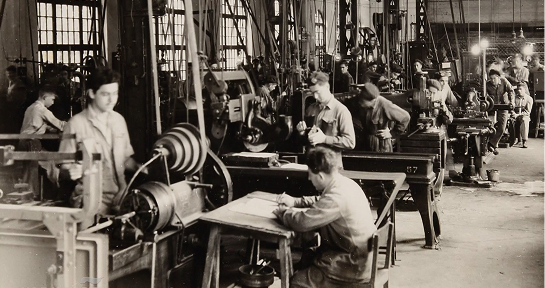
The Technion’s story has been intertwined with Israel’s for more than a century, from laying the foundations for a new nation to shaping its future.

Step inside Israeli innovation at the David and Janet Polak Visitors Center. Experience our 360° immersive movie and tech exhibition. Open to individuals and groups.
Learn MoreHow a question about pomegranate waste brought researchers across 11 faculties together

This was exactly the kind of problem members of the sustainability center — chemists, engineers, architects, physicians, and food scientists, all circling the same problem from different angles — were brought together to solve.
This time of year, pomegranates are piled high in produce aisles, stacked in bins at the farmers market, and decorating Rosh HaShanah tables. When it comes to extracting the juicy seeds, everyone has their own unique technique. Some score the crown and pull the fruit apart in a bowl of water so the seeds sink and the pith floats, others halve it and whack the back with a wooden spoon to make the seeds rain down. No matter the method, once done, a heap of peel and pith gets tossed in the garbage.
One fruit at a time, that waste is nothing significant. But 65,000 tons of it a year is something else.

That was the number Stewart Resnick, chairman and president of The Wonderful Company, posed to Distinguished Professor Ilan Marek, director of the Technion’s Stewart and Lynda Resnick Sustainability Center for Catalysis (RSCC). Established in 2022 with a $50 million gift from the Resnicks’ foundation, the RSCC brings together a community of Technion scientists dedicated to advancing catalysis research for a more sustainable world. With their support, scientists and engineers work across disciplines to develop cleaner, more efficient industrial processes that reduce energy use and lessen humanity’s impact on the planet.
“I’m the biggest producer of pomegranate juice,” Resnick said to Marek of his company, POM Wonderful, noting that whatever the presses don’t send to the bottle, they send to the trash. “What can you do with it?” he asked
“I’m a chemist,” Marek replied. “I never thought about pomegranate waste.” Neither had any of his colleagues. But this was exactly the kind of problem members of the sustainability center — chemists, engineers, architects, physicians, and food scientists, all circling the same problem from different angles — were brought together to solve.
While the center’s physical home is being built, collaboration takes root through its Catalysis Club, where 35 faculty members from 11 different faculties gather regularly to talk science. In December 2024, members convened to tackle the pomegranate question. To share how this fruit became a Jewish symbol, Prof. David Eisenberg explained the role of pomegranates in the Bible. Prof. Miki Aviram presented an introduction to pomegranates and their biological activities, and Assoc. Prof. Avi Shpigelman provided insights into innovative uses for pomegranate peel derivatives.
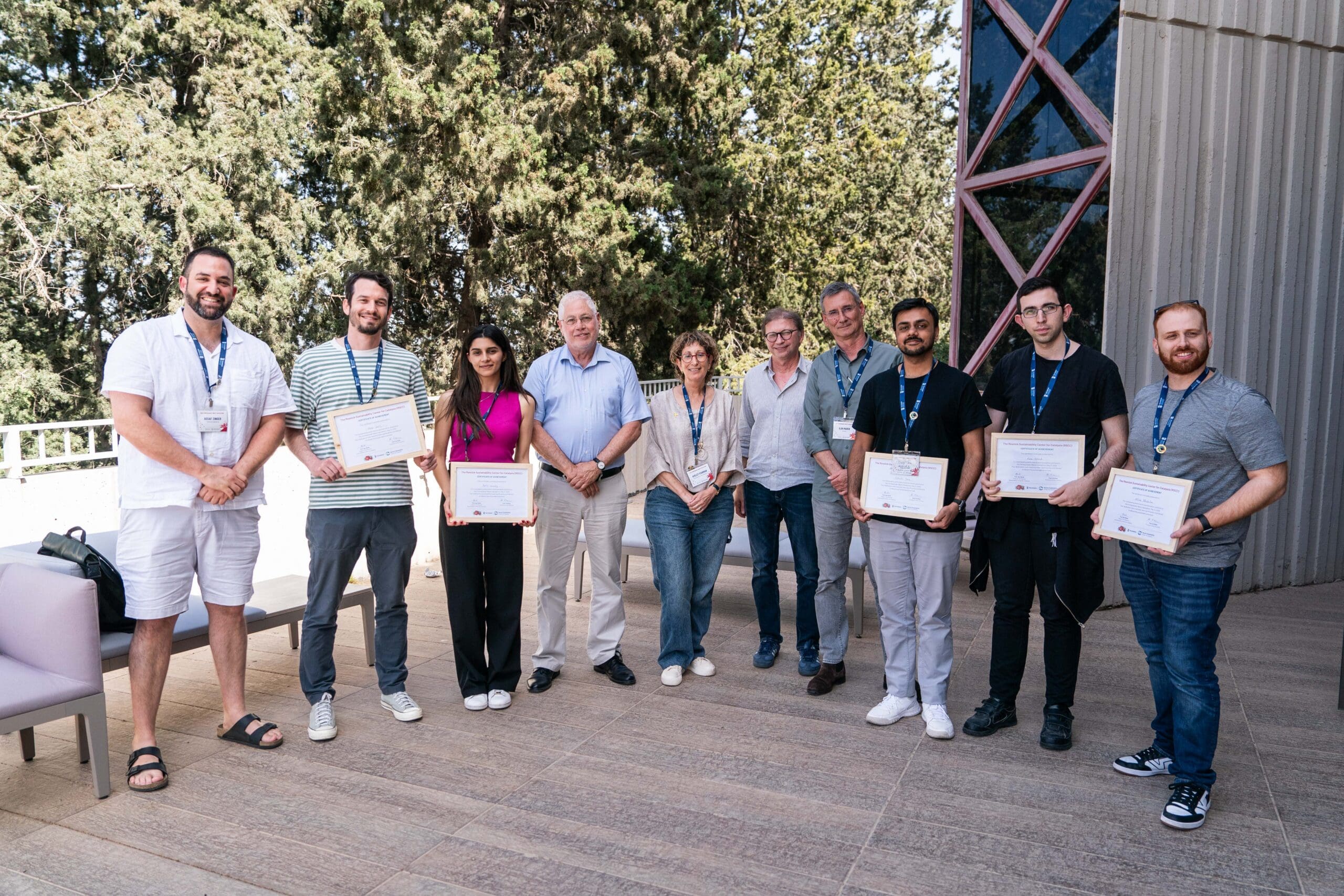
What came from this initiative was the kind of thinking no single discipline arrives at alone. Assoc. Prof. Yehonadav Bekenstein noticed the peel carries the same antioxidant power that makes the juice healthy; dry it, link its natural polysaccharides into a polymer, and you have a paper wrap that keeps fish and meat from spoiling. He had never worked on polymers, but at the center there were people who had. Assoc. Prof. Eisenberg, who already makes battery electrodes out of coffee waste, surmised he could also experiment with pomegranate waste. Asst. Prof. Shany Barath, who 3D-prints with wood waste, decided to fold the peel into her material to protect what she builds from oxidation.
In May 2025, a follow-up event was held: the RSCC Pomegranate Waste Hackathon, with the participation of scientist members and their Ph.D. students. First prize went to Pomwood, a 3D-printed biocomposite made from wood and pomegranate peel waste that harnesses the peel’s natural antimicrobial and fire-retardant properties.
Another project grew out of discussions with the Resnicks’ company. Four researchers (Profs. Omer Yehezkeli, Avi Shpigelman, Charles Diesendruck, and Oz Gazit) from three different faculties are now collaborating to transform pomegranate waste into soluble dietary fiber. It’s advancing successfully with financial support from The Wonderful Company.
In a season built around renewal, the pomegranate has become more than a symbol for these elite scientists. It has become a catalyst for new ideas, unexpected collaborations, and a more connected scientific community.