Something Fresh in the State of Denmark
October 06, 2026





















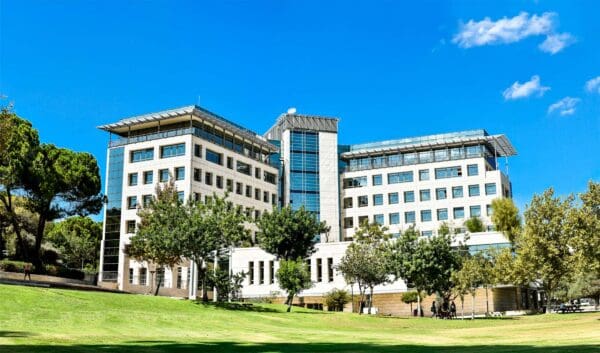









The Technion’s story has been intertwined with Israel’s for more than a century, from laying the foundations for a new nation to shaping its future.

Step inside Israeli innovation at the David and Janet Polak Visitors Center. Experience our 360° immersive movie and tech exhibition. Open to individuals and groups.
Learn MoreTedXTechnion
Your body as a living city Fast forward, vibrant, full of motion, and in constant. In our body, billions of cells work together in perfect harmony, in perfect coordination, each with a purpose, each in its destiny. But sometimes that harmony break. A single cell loses its way and begin to grow out of control.
An illegal, dangerous building rises in the city, a tumor. Now imagine sending a tiny, invisible robots, ghost, that can find this building and destroy it from within, bringing harmony back to the city, eliminating the tumor. This isn’t science fiction. This is NanoGhost, a unique technology born in my lab, designed to change the way we need to fight cancer.
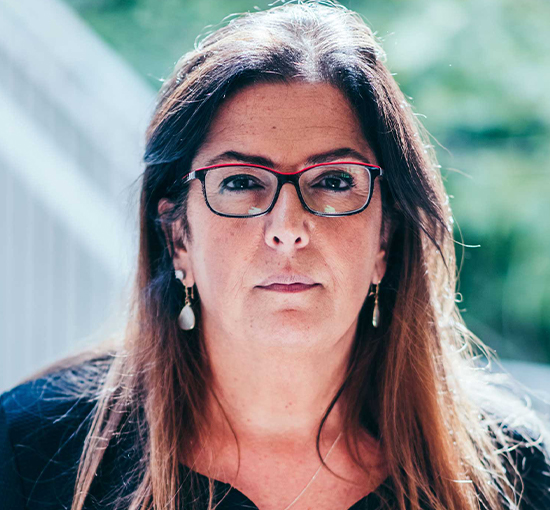
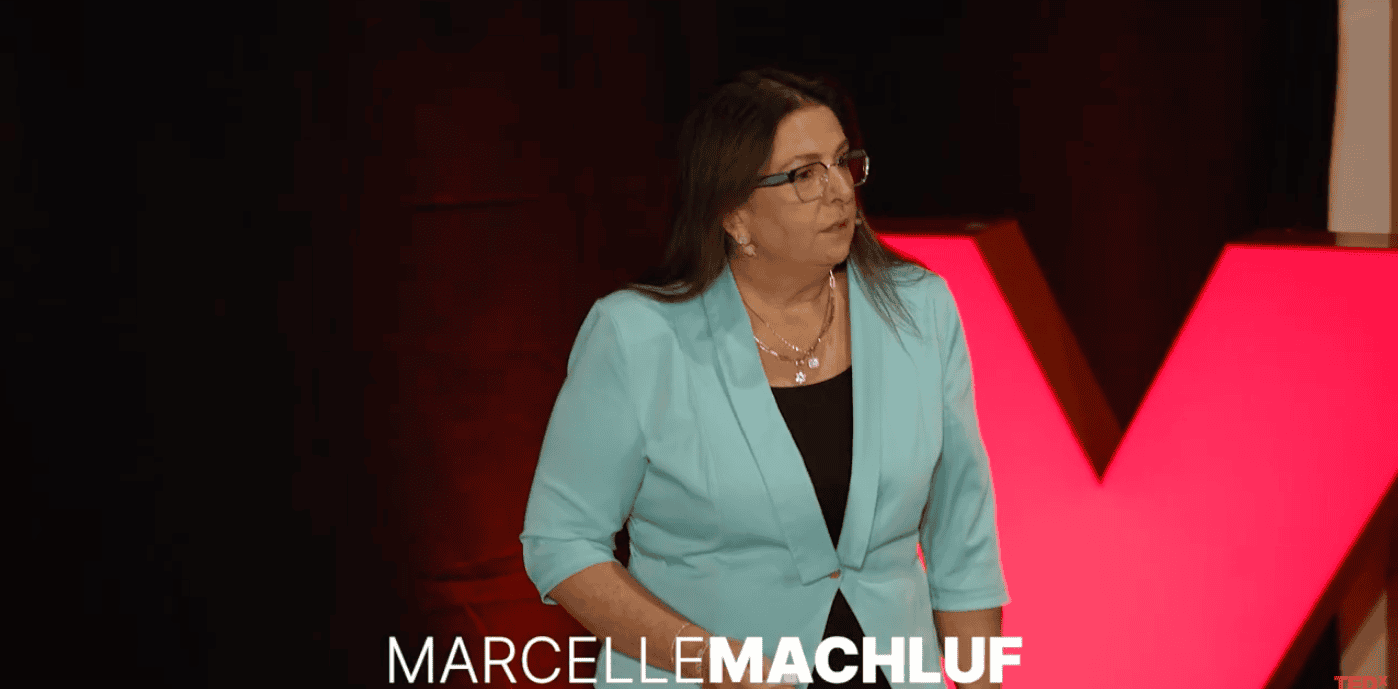
I’m Professor Marcelle Machluf, the f– the dean o– the former dean of the Faculty of Biotechnology and Food Engineering, a- and a scientist and entrepreneur, two world that don’t usually mix. And these two worlds ask and answer different questions, and soon I will explain how difficult it is to merge these two worlds.
But when they do, when science and entrepreneurship merge, amazing things can happen, things that can change our lives. This is the story of my journey from the lab to a startup. In science, we ask ourself, “What’s the mechanism? How does it work? When?” Our success is measured by paper, citation, and grants, not startups.
But outside the lab, entrepreneur ask different questions: “What’s the business plan? How much? How long it will take?” Two completely different languages, creating gaps between discovery and impact, keeping life-savings idea outside of the lab. To change that, as scientists, we must learn how to make technologies simple to execute, to understand that knowledge needs to bring it simply to the bridge, answer this question.
But entrepreneurs and investor must also change. They need to understand that innovation starts in the lab, not in the boardrooms. They need not to dismiss the science, identify innovation behind the science. And in the world of biotechnology, bringing innovation to the clinics takes time and huge investments.
Only then, by merging science and entrepreneurship, can discoveries become cures. So my journey into entrepreneurship did not start with a business plan. It started in my lab, driven by my passion for research and mentoring brilliant team of students. That’s where we created NanoGhost. The raw material for this NanoGhost is mesenchymal stem cells, cells that reside in the bone marrow.
This cell possess a unique and remarkable natural ability to locate and interact with all tumor cells in our body, an ability that is encoded in their outer membrane, like a biological GPS. We ask ourself, “What if we could harness this natural targeting ability? What if we could transform these cells to targeted nano delivery system that can treat tumors?”
We started by growing the cells in our lab and in large scale, and this is similar to my lab, so this video. And these cells, we took them, and afterward, we, we moved their content and left only the outer membrane, the one that have this GPS, and turned them into this tiny NanoGhost, like keeping the envelope without the letter.
This membrane still carry, again, all the information, and we can load them with different drugs. We can load them with protein, chemo drugs, and even mRNA. Afterward, this NanoGhost can be injected into the bloodstream, and this NanoGhost can travel all over the body, the entire body, and without damaging any other cells in any other organ.
And a patient that receive this NanoGhost can be safely treated. This NanoGhost will find all the tumor cells, even if they are hidden in the brain, and eventually destroy these tumor cells and sparing the healthy cells. A true magic bullet. Simple, selective, safe, and act as a targeted universal platform that can actually target not only one type of tumor, but multiple type of tumor In our studies, when nanoghost were placed on a tumor cell, they entered the cells immediately, dumping their drug and destroying them from within.
In mice with lung cancer, for instance, a single nanoghost injection decreased the tumor by eighty-five percent in just two weeks. In mice with brain cancer, nanoghost not only shrank the tumor, but increased the survival of this animal and reduced significantly the side effect. But beyond the data, beyond the numbers, we are working on bringing this technology to the clinic to help patient.
Nanoghost isn’t approved yet for clinical application, but it’s on its way. The transition from the research to commercialization wasn’t simple. At some point, I realized paper don’t save life. Patient don’t read scientific journal. Patient need new therapy, need new treatment. So I understood that if I wanted to take this technology and bring it to the clinic, I had to do it myself.
I had to become an entrepreneur, and that’s how my journey from the lab as a researcher to entrepreneurship started. But I wanted to make sure also that in our case, we will take our science outside the lab and la– not leave it trapped inside. It wasn’t easy. It was even intimidated. The business world spoke a different language A language that I had to learn.
Words like valuation, market fee, shares, option, go-to-market strategy. At first, I thought that investor didn’t understand the science. But as they s- only smiled and said, “It sounds like science fiction. It isn’t real, and if it was, someone probably was already discovering it.” But I believed in my technology.
I kept going because I believed, I knew, that if I take NanoGhost to the clinic, we can one day change life. Then COVID-19 came. Suddenly, the world understood that what we as biotechnologists already understood, that health and food are the foundation of everything. Without health, there is no economy, no innovation, no startups, no future, and NanoGhost is part of it.
It took me more than a decade of research and huge data, first of all, to prove that NanoGhost can overcome a lot of limitation that other drug delivery system had. But also, it helped me to secure my first investment. And five years ago, I opened NanoGhost, a startup company that takes this technology to the clinic.
NanoGhost is more than a company for me. It’s a symbol. It’s a symbol of what happen when you take an amazing scientific idea and turn it into great hope. Our vision is simple. We want to take this technology to the clinic, bring new hope for cancer patient with no remaining option. Founding, founding NanoGhost didn’t drive me out of my research, as research is my passion, and research makes new discoveries, fueling, fueling my path to new therapies.
But NanoGhost is part of a greater story. It’s the story of Israel, a nation known as the startup nation, which is becoming the biotech nation. And for me, and to my belief, the biotech is the high tech of tomorrow, and NanoGhost is part of it, as a biotechnology is in the essence of our science, our innovation, and our education.
And we hope that this biotechnology will secure our health in the future, and NanoGhost is part of this future. Thank you.
Why do so many life-saving technologies never make it out of the lab? Prof. Marcelle Machluf demonstrates how combining scientific rigor with business vision is the only way to bring practical solutions to the patients who need them most. As a case in point, she shares her personal transformation from researcher to entrepreneur.
This talk was given at a TEDx event using the TED conference format but independently organized by a local community.