Something Fresh in the State of Denmark
October 06, 2026
























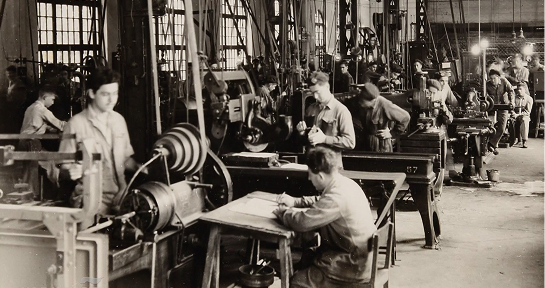
The Technion’s story has been intertwined with Israel’s for more than a century, from laying the foundations for a new nation to shaping its future.

Step inside Israeli innovation at the David and Janet Polak Visitors Center. Experience our 360° immersive movie and tech exhibition. Open to individuals and groups.
Learn More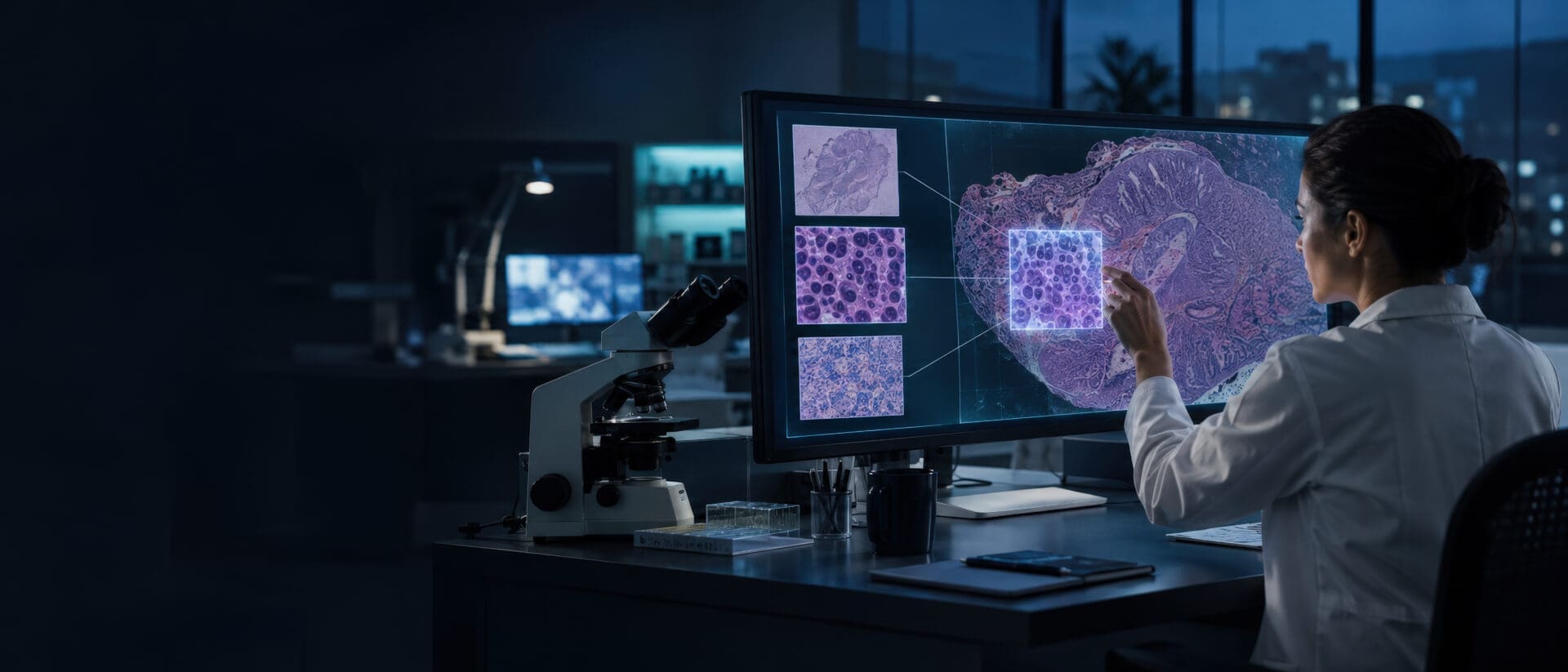

For many people diagnosed with early-stage breast cancer, the steps are well defined: tests, diagnosis, and surgery to remove the tumor. What comes next is far less certain — and often leads to one of the most difficult decisions a patient will face: whether to undergo chemotherapy.
Large randomized clinical trials have shown that many patients with early-stage breast cancer do not benefit from chemotherapy — meaning a patient may choose chemotherapy, endure its physical and emotional side effects, and still see no improvement in outcomes.
“The central challenge is identifying which patients are likely to benefit from chemotherapy, and which are not,” said Dr. Gil Shamai, a postdoctoral researcher in the Geometric Image Processing Laboratory at the Technion – Israel Institute of Technology.
Until now, doctors have relied on genomic tests to help answer that question. While these tests have improved care, they are expensive, can take weeks to return results, and are unavailable to many patients worldwide.
Together with collaborators from leading medical centers in Israel, the United States, Europe, and Australia, Shamai and his team at the Technion have developed an AI model that predicts both the risk that breast cancer will return and whether a patient is likely to benefit from chemotherapy — offering a faster, more accessible alternative to existing approaches.
The study, which was recently published in The Lancet Oncology (opens in a new tab) and presented at the European Society for Medical Oncology conference, is the first AI model of its kind to be validated in a large, randomized clinical trial.
Led by Shamai, together with Prof. Ron Kimmel of the Henry and Marilyn Taub Faculty of Computer Science and Prof. Dvir Aran of the Faculty of Biology, the research brings together expertise in artificial intelligence, computer vision, biology, and medicine.
Each year, approximately 2.3 million people worldwide are diagnosed with breast cancer. About 70% have the hormone receptor-positive, HER2‑negative subtype — the group for whom chemotherapy decisions are especially complex. The AI tool developed at the Technion was designed and validated primarily for people in this group. In this population, genomic tests such as Oncotype DX are commonly used to guide treatment. However, these tests come with significant limitations:
As a result, health care systems spend hundreds of millions of dollars each year on testing, while many patients still face unnecessary chemotherapy and its long-term consequences.
Instead of relying on costly genomic tests, AI analyzes routine pathology slides: the microscope images taken from tumor tissue at diagnosis. Using deep learning, it examines digital images of tumor tissue stained with hematoxylin and eosin, a standard stain used in pathology labs worldwide. It evaluates visual patterns across the tumor and its surrounding environment — including how cancer cells are structured, how they divide, and how the immune system interacts with the tumor — to generate a score that reflects both recurrence risk and the likelihood that chemotherapy will provide benefit.
“These are complex biological signals that the human eye cannot consistently quantify,” said Shamai. “By combining them, the model produces a score that reflects both recurrence risk and expected benefit from chemotherapy.”
Once the tissue is scanned, the analysis takes just minutes and requires no additional procedures, samples, or laboratory work
Rather than recruiting new patients or running a new chemotherapy trial, the team validated their AI model using data from the TAILORx trial, one of the largest and most influential breast cancer studies ever conducted. More than 10,000 patients with early-stage breast cancer had already participated ‑in this trial.
Crucially, patients in TAILORx were randomly assigned to either receive chemotherapy or not and then followed over time to see how they did. Because treatment decisions were random, researchers could confidently determine whether chemotherapy truly improved outcomes or whether patients fared just as well without it.
The Technion researchers were granted access to the trial’s existing pathology slides and clinical outcomes. They applied their AI model to these slides and compared the model’s predictions to what actually happened to patients.
This made it possible to answer a critical question: Would the AI have correctly identified, in advance, which patients benefited from chemotherapy and which did not? Because the outcomes were already known, the team could test the model’s accuracy without putting new patients at risk and without waiting years for results.
The results showed that the AI:
The model was further validated using patient data from hospitals in Israel, the United States, Australia, and Europe, demonstrating consistent performance across populations, equipment, and health care systems.
“This is the first AI model shown to predict treatment benefit in breast cancer directly from routine pathology samples,” said Prof. Dvir Aran, a coleader of the study.
“In developing countries, where genomic testing is largely unavailable, this tool could dramatically expand access to personalized cancer care,” Aran said. “In high-income countries, it could reduce costs, shorten diagnosis time, and improve decision accuracy.”
An added advantage of the tool is its ability to analyze multiple slides from different parts of the tumor, capturing tumor diversity that may be missed when only a single tissue sample is tested.
The research team is now taking steps toward real-world clinical use. Trials are being prepared in Brazil and India, where access to genomic testing is limited and the potential impact is especially large. Additional work is underway to extend the approach to other treatments and cancer types.
Based on these results, the researchers plan to establish a company to bring this technology into routine clinical practice, making acancer treatment decisions more accurate, faster, and far more accessible worldwide.
By transforming routine pathology images into powerful decision-making tools, Technion researchers are helping reshape how breast cancer is treated: offering patients clearer answers, fewer unnecessary treatments, and greater confidence at a critical moment in their care.