Why the Perfect Pitch is Your Biggest Mistake
September 23, 2026

























The Technion’s story has been intertwined with Israel’s for more than a century, from laying the foundations for a new nation to shaping its future.

Step inside Israeli innovation at the David and Janet Polak Visitors Center. Experience our 360° immersive movie and tech exhibition. Open to individuals and groups.
Learn More

This time of year, pomegranates are piled high in produce aisles, stacked in bins at the farmers market, and decorating Rosh HaShanah tables. When it comes to extracting the juicy seeds, everyone has their own unique technique. Some score the crown and pull the fruit apart in a bowl of water so the seeds sink […]

The dangers of antibiotic overuse have become increasingly clear in recent decades. Excessive use accelerates the evolution of bacterial resistance to antibiotics, raising the alarming prospect of infections that no longer respond to existing drugs and pose a serious threat to public health. Against this backdrop, Prof. Roy Kishony and Dr. Idan Yelin in the Technion – Israel Institute of Technology’s Faculty of Biology have published a study in Nature Microbiology revealing a previously unknown rapid pathway that bacteria use to develop antibiotic resistance. The newly identified mechanism is based on an “inflation” in the number of copies of specific…

For decades, elementary students learned the same tale of the Solar System: first come rocky terrestrial planets such as Earth, followed by gas giants such as Jupiter and ice giants such as Neptune, with lovable Pluto bringing up the rear. Then 20 years ago, planetary scientists downgraded Pluto to a “dwarf planet.” And now, they say, it’s time to revisit our idea of Neptune and Uranus, too—for the so-called ice giants likely contain very little ice. The term is “a little bit misleading,” says Ravit Helled, a planetary scientist at the University of Zürich. “We really don’t know what these…

A study published in Oncogene presents an innovative strategy for the particularly complex medical challenge of destroying aggressive, treatment-resistant tumors. The research was jointly led by early-career scientists Dr. Avital Oknin Vaisman and Dr. Deepanjan Panda from the laboratories of Prof. Amir Orian, head of the Rappaport Center for Cancer Research at the Technion – Israel Institute of Technology, and a faculty member in the Ruth and Bruce Rappaport Faculty of Medicine, and Prof. Ashraf Brik of the Schulich Faculty of Chemistry. Aggressive cancers such as bone tumors (sarcomas) and melanoma that do not respond to molecular therapies have very…

Seven researchers from Israel have won prestigious ERC Advanced Grants from the European Union’s Horizon Europe program, awarded to senior scientists with exceptional research achievements over the past decade. Four of the recipients are from the Weizmann Institute of Science, two are from the Hebrew University of Jerusalem, and one is affiliated with both the Technion – Israel Institute of Technology and Rambam Health Care Campus. The grants give outstanding researchers the opportunity to pursue ambitious, curiosity-driven projects that could lead to major breakthroughs. They cover a broad range of fields at the forefront of research, from life sciences and exact sciences…

Concrete shapes the world you live in, but its environmental toll is massive. Imagine, though, if the buildings around you could grow and breathe, helping to heal the planet. This isn’t science fiction. It’s the vision of CyanoCement. Developed by researchers from the Technion – Israel Institute of Technology, this innovative biocement uses ancient microbes to redefine how we think about construction materials. At the heart of CyanoCement are cyanobacteria, tiny photosynthetic organisms responsible for Earth’s first oxygen-rich atmosphere. By leveraging these extraordinary capabilities, the team—Perla Armaly, Yuval Berger, Lubov Iliassafov, Keren Rosenblau, Yechezkel Kashi, and Shany Barath—crafted a process where these microbes bind minerals…

The first small satellite of the CloudCT network has been integrated, tested, and prepared for launch from California in June 2026. This precursor mission will be followed, if successful, by the launch of 10 additional CloudCT satellites in 2027, helping to fill gaps in our understanding of clouds and their role in climate. This marks the culmination of seven years of intensive research by Israeli and German scientists from the Weizmann Institute of Science (led by Prof. Ilan Koren), the Technion – Israel Institute of Technology (led by Prof. Yoav Schechner), and Zentrum für Telematik (led by Prof. Klaus Schilling)….

For more than two millennia, mathematicians have produced a growing heap of pi equations in their ongoing search for methods to calculate pi faster and faster. The pile of equations has grown into the thousands, and algorithms now can generate an infinitude. Each discovery has arrived alone, as a fragment, with no obvious connection to the others. But now, for the first time, centuries of pi formulas have been shown to be part of a unified, formerly hidden structure. Divide any circle’s circumference by its diameter and you get pi. But what, exactly, are its digits? Measuring physical circles won’t…

From regenerative implants to smarter therapies, Israel’s innovation ecosystem keeps delivering life-saving advances. Researchers from Haifa’s Technion – Israel Institue of Technology unveiled a breakthrough biological implant that could end daily insulin injections for millions with Type 1 diabetes by producing insulin inside the body without rejection. Hebrew University discovered a tiny RNA molecule that bacteriophages use to combat bacteria, offering fresh hope in the fight against antibiotic-resistant “superbugs.”

Long before a star ignites, its birth is shaped by invisible particles racing through space at near-light speed. These cosmic rays quietly alter the chemistry and temperature inside dark clouds, helping determine when the clouds can collapse and begin forming stars. For the first time, astronomers have directly measured the influence of these particles inside a dense, starless cloud, providing a long-sought reading from the heart of a stellar nursery. The discovery offers a more precise way to understand how stars – and eventually planets – begin. A measurable stellar cloud Barnard 68 is a small, cold cloud of gas…

At the Zimin Institute for AI Solutions in Health Care, innovation meets impact. Founded in 2022 through a partnership between the Zimin Foundation and the Technion’s Tech.AI.BioMed arm, the institute supports transformative research that applies artificial intelligence to real-world medical challenges. From diagnostics to drug discovery and patient care, AI is redefining what’s possible in […]
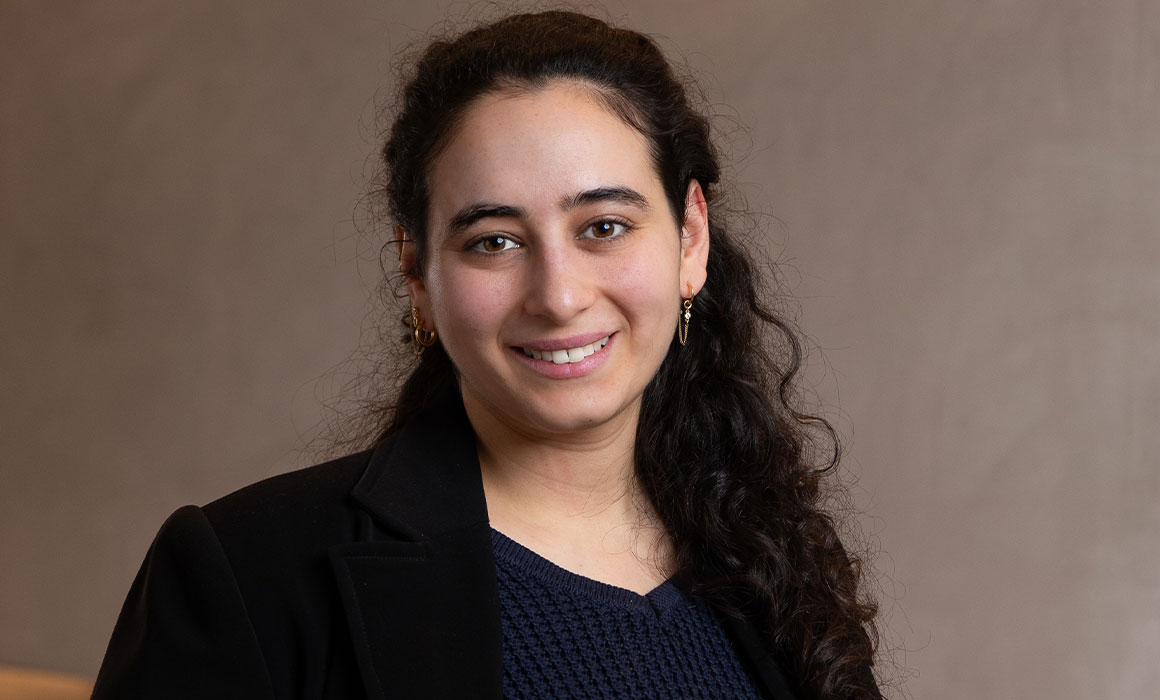
Ever since I was a little girl growing up in Haifa, I dreamed about studying at the Technion. My parents have no scientific background, but they gave me the best education they could afford, including an annual pass to the Israel National Museum of Science, Technology, and Space. That led to my falling in love […]