The Technion’s story has been intertwined with Israel’s for more than a century, from laying the foundations for a new nation to shaping its future.
From medicine to security, explore how the Technion is advancing Israel and improving lives around the world.
View All Impact Areas
Explore stories, news, insights, and data across articles, videos, and podcasts.
view all content types
of all universities in the world*
students
locations
The Technion’s story has been intertwined with Israel’s for more than a century, from laying the foundations for a new nation to shaping its future.
Explore ATS, the Technion, and the people behind the breakthroughs redefining what's possible for Israel and the world.
Learn More About ATSATS is a community of supporters, innovators, and champions of possibility united by one mission: transforming Israel and the world through science and discovery.
Learn MoreFor more than 100 years, the Technion has been Israel's technological engine and leading driver of innovation, technology, and entrepreneurship, transforming ideas into impact.
Learn More
Step inside Israeli innovation at the David and Janet Polak Visitors Center. Experience our 360° immersive movie and tech exhibition. Open to individuals and groups.
Learn MoreFrom medicine to security, explore how the Technion is advancing Israel and improving lives around the world.
View All Impact AreasExplore stories, news, insights, and data across articles, videos, and podcasts.
view all content typesExplore ATS, the Technion, and the people behind the breakthroughs redefining what's possible for Israel and the world.
Learn More About ATSAs Seen in Phys.org
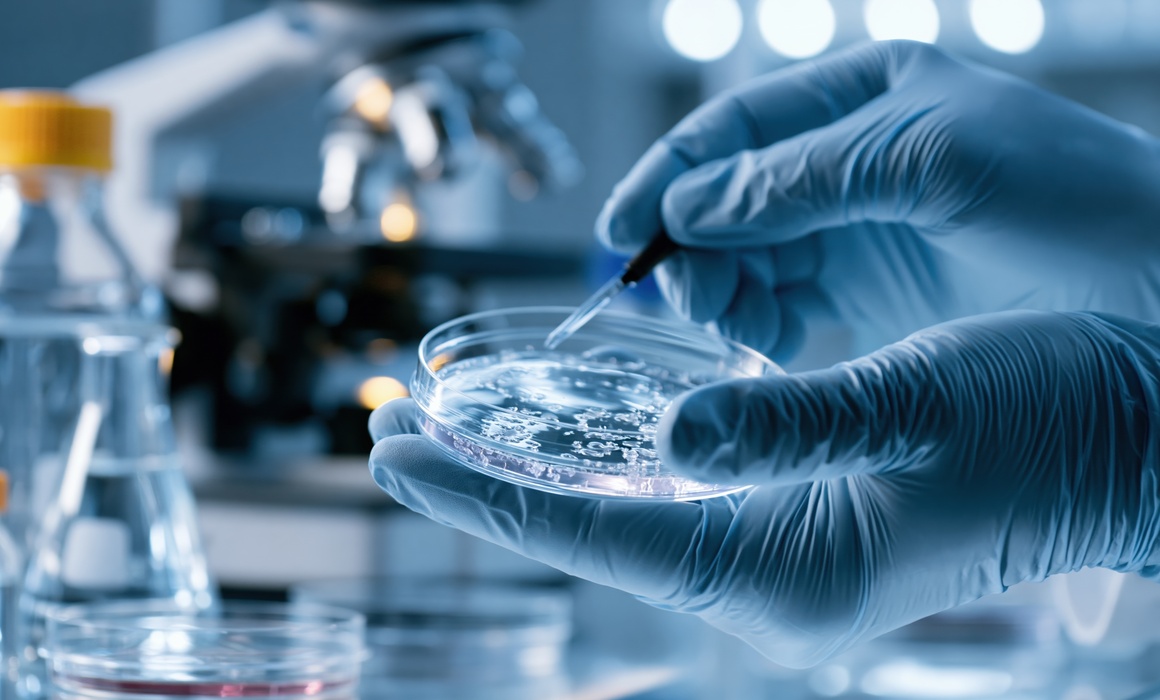
The dangers of antibiotic overuse have become increasingly clear in recent decades. Excessive use accelerates the evolution of bacterial resistance to antibiotics, raising the alarming prospect of infections that no longer respond to existing drugs and pose a serious threat to public health.
Against this backdrop, Prof. Roy Kishony and Dr. Idan Yelin in the Technion – Israel Institute of Technology’s Faculty of Biology have published a study in Nature Microbiology revealing a previously unknown rapid pathway that bacteria use to develop antibiotic resistance.
The newly identified mechanism is based on an “inflation” in the number of copies of specific genes that provide bacteria with a survival advantage, including resistance to antibiotics. The discovery was made using AmpliFinder, a new computational tool developed by the researchers, which they used to analyze more than 10,000 laboratory-evolved bacterial samples.
by
phys.org (opens in a new tab)
on
July 27, 2026

Discover how a hidden DNA-copying mechanism may accelerate antibiotic resistance, helping bacteria adapt and survive faster.
1 min
X (opens in a new tab) / Facebook (opens in a new tab) / LinkedIn (opens in a new tab) / Email / Copy Link
Data Sciences / Faculty / Medicine / Natural Sciences /
Bringing these diverse fields together under one roof is intended to shorten the journey from discovery to application, creating an environment where medical needs can spark new research and promising innovations can move more quickly toward the patients who need them. “The combination of a research hospital and a technological university provides the entire value […]
Prof. Hossam Haick of the Technion – Israel Institute of Technology, one of Israel’s most successful scientists, is really a frustrated karate fighter. As a boy in Nazareth, he joined a karate class and seemed to have found his calling. “I was incredibly competitive,” he says. “I went from one achievement to the next.” But […]
The Nobel Assembly at Karolinska Institutet announced Monday that professors Karl Deisseroth, Peter Hegemann, and Georg Nagel were awarded the 2026 Nobel Prize in Medicine, with two of the three laureates having received the Technion-Israel Institute of Technology Harvey Prize. Prof. Deisseroth of the Howard Hughes Medical Institute and Stanford University, USA, and Prof. Hegemann […]
Stay on top of the latest breaking scientific discoveries from Israel and the Technion. Subscribe to the ATS newsletter.