The Technion’s story has been intertwined with Israel’s for more than a century, from laying the foundations for a new nation to shaping its future.

From medicine to security, explore how the Technion is advancing Israel and improving lives around the world.
View All Impact Areas
Explore stories, news, insights, and data across articles, videos, and podcasts.
view all content types
in Europe and #21 in the world for aerospace engineering*
of the student body are Arab Israeli
locations
The Technion’s story has been intertwined with Israel’s for more than a century, from laying the foundations for a new nation to shaping its future.
Explore ATS, the Technion, and the people behind the breakthroughs redefining what's possible for Israel and the world.
Learn More About ATSATS is a community of supporters, innovators, and champions of possibility united by one mission: transforming Israel and the world through science and discovery.
Learn MoreFor more than 100 years, the Technion has been Israel's technological engine and leading driver of innovation, technology, and entrepreneurship, transforming ideas into impact.
Learn More
Step inside Israeli innovation at the David and Janet Polak Visitors Center. Experience our 360° immersive movie and tech exhibition. Open to individuals and groups.
Learn MoreFrom medicine to security, explore how the Technion is advancing Israel and improving lives around the world.
View All Impact AreasExplore stories, news, insights, and data across articles, videos, and podcasts.
view all content typesDiscover ways to support, connect, and help drive innovation.
Get InvolvedExplore ATS, the Technion, and the people behind the breakthroughs redefining what's possible for Israel and the world.
Learn More About ATS
Among Mediterranean academics, there’s a playful rivalry over which country was first to cure and eat olives. Turns out, Israel has the bragging rights.
An archeological discovery made by researchers from several Israeli universities including the Technion shows that the process of pickling olives for eating started in the Haifa area at least 6,600 years ago. The finding, published in Scientific Reports-Nature, presents the earliest evidence of olive production for consumption.
Archeologists uncovered a site in the Mediterranean Sea about 12 feet off Israel’s northern beaches containing two stone structures filled with thousands of olive pits. The structures, just barely breaking the water’s surface, were set perpendicular to the ground and were encircled with small rooms containing thousands of olive pits. Nearby were other installations, possibly wells or storage areas. Most of the pits were well preserved and whole, suggesting they were used not for making olive oil, which ancient farmers discovered 500 years prior, but for consumption.
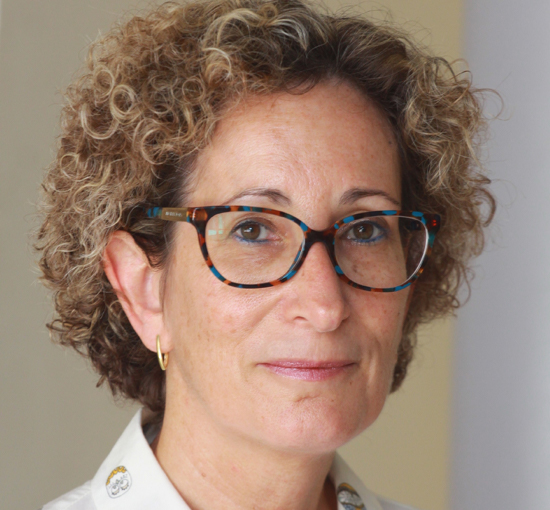
And the location of the site, called Hishulei Carmel, indicates the olives were probably manufactured in a brining process similar to today’s, using salt from the Mediterranean. “The pickling of olives in the utensils discovered there could have taken place after the fruit was washed repeatedly in seawater in order to reduce the bitterness, and then soaked in seawater, possibly with the addition of sea salt,” said Technion Professor Ayelet Fishman, one of the study’s researchers.
The prehistoric stone slabs were discovered in 2011, but their purpose remained a mystery until now. The discovery sheds light on when olive trees were first domesticated, a development connected to the growth of more complex societies.
July 15, 2021
Uncover the rich history of olives with new archaeological discoveries showcasing their early production in Israel.
1 min
X (opens in a new tab) / Facebook (opens in a new tab) / LinkedIn (opens in a new tab) / Email / Copy Link
Faculty /
Artificial intelligence is not simply changing higher education — it is detonating old assumptions about how students learn and how professors teach. As universities worldwide grapple with how to respond, the Technion is working to confront the questions head-on. Here, AI is not treated as a threat but a catalyst, prompting careful reexamination at every […]
Galit Shmueli is the Tsing Hua Distinguished Professor at the Institute of Service Science, College of Technology Management, National Tsing Hua University in Taiwan.Prof. Shmueli also serves as Vice President for Global Affairs at the university, and is the author of multiple books. She is a truly world-renowned authority in her fields of data science […]
“I thought it was fake,” she recalled. “There was no chance.” As reports continued to emerge, reality became impossible to ignore. By 7 a.m., L.’s brigade commanders had convened an emergency call. Within 20 minutes, L. had packed her things and was helping mobilize reserve battalions, distribute weapons and equipment, and prepare soldiers to enter […]
Stay on top of the latest breaking scientific discoveries from Israel and the Technion. Subscribe to the ATS newsletter.