The Technion’s story has been intertwined with Israel’s for more than a century, from laying the foundations for a new nation to shaping its future.

From medicine to security, explore how the Technion is advancing Israel and improving lives around the world.
View All Impact Areas
Explore stories, news, insights, and data across articles, videos, and podcasts.
view all content types
in the world for producing entrepreneurs
in Israel and Europe for research on artificial intelligence
in Europe and #21 in the world for aerospace engineering*
The Technion’s story has been intertwined with Israel’s for more than a century, from laying the foundations for a new nation to shaping its future.
Explore ATS, the Technion, and the people behind the breakthroughs redefining what's possible for Israel and the world.
Learn More About ATSATS is a community of supporters, innovators, and champions of possibility united by one mission: transforming Israel and the world through science and discovery.
Learn MoreFor more than 100 years, the Technion has been Israel's technological engine and leading driver of innovation, technology, and entrepreneurship, transforming ideas into impact.
Learn More
Step inside Israeli innovation at the David and Janet Polak Visitors Center. Experience our 360° immersive movie and tech exhibition. Open to individuals and groups.
Learn MoreFrom medicine to security, explore how the Technion is advancing Israel and improving lives around the world.
View All Impact AreasExplore stories, news, insights, and data across articles, videos, and podcasts.
view all content typesDiscover ways to support, connect, and help drive innovation.
Get InvolvedExplore ATS, the Technion, and the people behind the breakthroughs redefining what's possible for Israel and the world.
Learn More About ATS
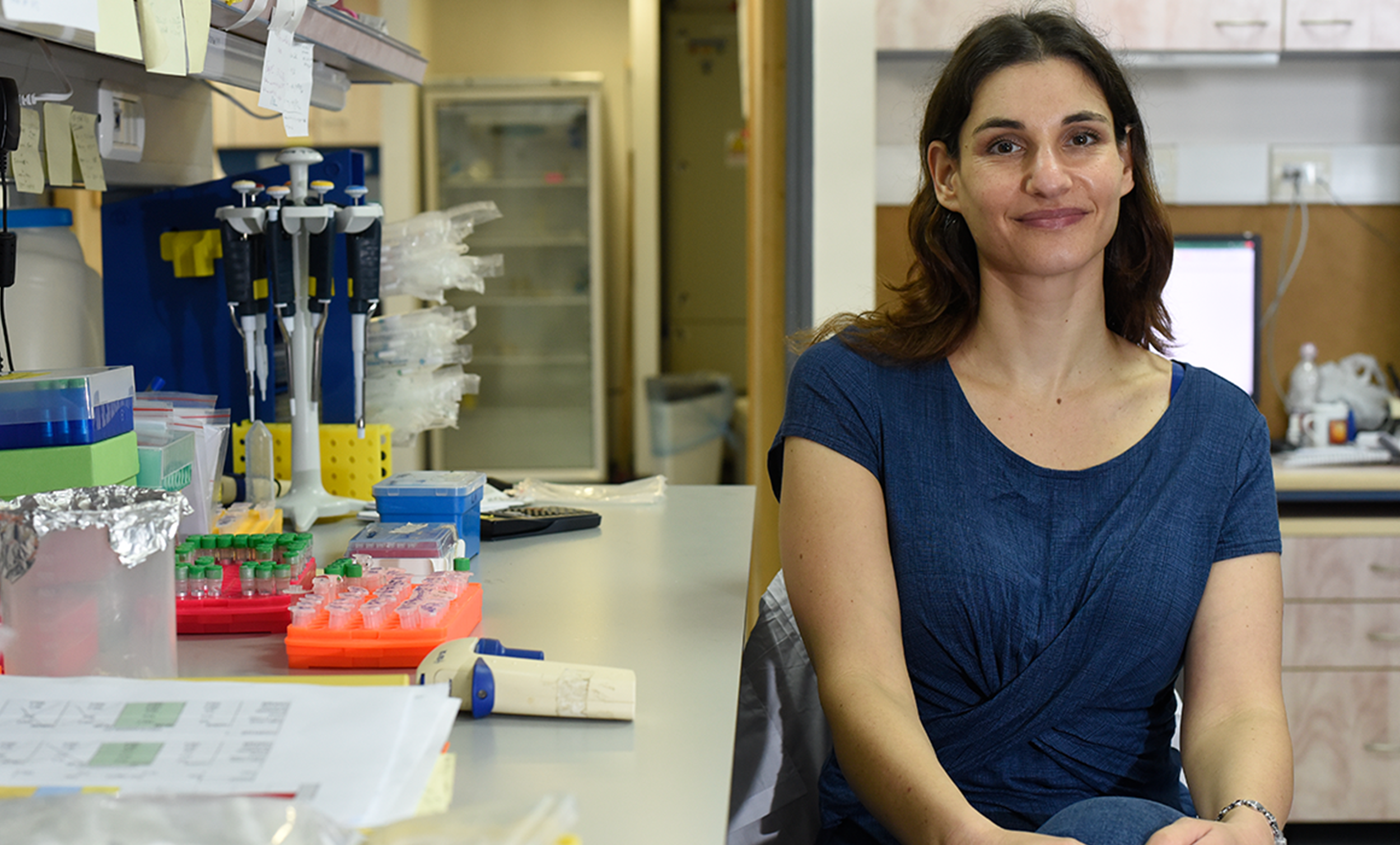
Antibiotics remain a powerful weapon against bacteria, but their overuse has led to the spread of dangerous antibiotic-resistant strains. Nearly 3 million antibiotic-resistant infections occur each year in the U.S., resulting in 35,000 deaths. Technion researchers are developing new methods to fight bacteria without encouraging antibiotic resistance.
A team led by Associate Professor Meytal Landau has discovered a novel way to combat bacteria like Salmonella by inhibiting the formation of biofilms, bacterial colonies that can cling to surfaces like drain pipes and hospital equipment. Her team has identified compounds that disrupt the web of secreted proteins that knit these biofilms together. Because this approach neutralizes but does not kill bacteria, Prof. Landau hopes it will discourage the rapid evolution of antibiotic-resistant bacteria.
This new approach relies on a class of drugs from an unlikely source. Based on similarities between biofilm proteins and amyloids, protein aggregates associated with Alzheimer’s disease, the researchers repurposed anti-amyloid drugs and found they could inhibit biofilm formation in Salmonella bacteria. Drug development typically takes a long time, but because these drugs have already undergone clinical trials for treating Alzheimer’s, approval for this new application may come a lot sooner.
July 15, 2020
Explore the rise of antibiotic-resistant infections and discover new strategies to combat bacteria without promoting resistance.
1 min
X (opens in a new tab) / Facebook (opens in a new tab) / LinkedIn (opens in a new tab) / Email / Copy Link
Faculty /
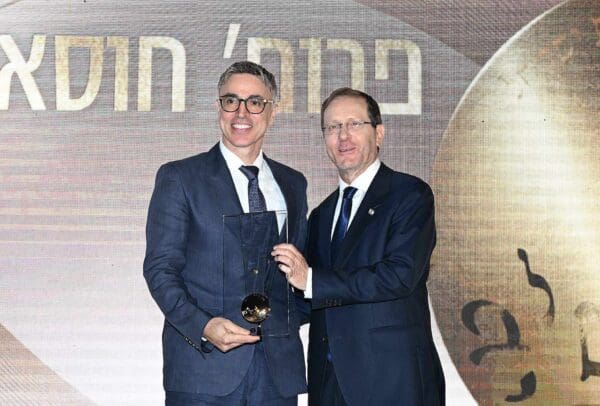
What if diagnosing cancer, Parkinson’s disease, or other serious illnesses could be as simple as breathing into a handheld device? That possibility is moving closer to reality thanks to the work of the Technion’s Prof. Hossam Haick, whose groundbreaking research is changing how diseases are detected around the world. In recognition of his extraordinary achievements, […]
Every year, the European Research Council (ERC) identifies some of the world’s most promising early-career researchers and gives them the freedom to pursue bold ideas. This year, two of those ideas came from the Technion – Israel Institute of Technology. From cancer research to artificial intelligence (AI), breakthroughs that shape the future often begin with […]
As more people turn to AI chatbots for companionship, life advice, or even as a stand-in for therapy, experts say the technology offers both new opportunities and risks when it comes to mental health. Prof. Tanzeem Choudhury is the chief of health innovation in the Joan & Irwin Jacobs Technion-Cornell Institute and has been studying AI and mental health for 15 years. She said AI tools are available any time, often at low cost, making it easier for people to access some form of mental health support.
Stay on top of the latest breaking scientific discoveries from Israel and the Technion. Subscribe to the ATS newsletter.