The Technion’s story has been intertwined with Israel’s for more than a century, from laying the foundations for a new nation to shaping its future.

From medicine to security, explore how the Technion is advancing Israel and improving lives around the world.
View All Impact Areas
Explore stories, news, insights, and data across articles, videos, and podcasts.
view all content types
companies founded by graduates and faculty in the last 10 years
students
of all universities in the world*
The Technion’s story has been intertwined with Israel’s for more than a century, from laying the foundations for a new nation to shaping its future.
Explore ATS, the Technion, and the people behind the breakthroughs redefining what's possible for Israel and the world.
Learn More About ATSATS is a community of supporters, innovators, and champions of possibility united by one mission: transforming Israel and the world through science and discovery.
Learn MoreFor more than 100 years, the Technion has been Israel's technological engine and leading driver of innovation, technology, and entrepreneurship, transforming ideas into impact.
Learn More
Step inside Israeli innovation at the David and Janet Polak Visitors Center. Experience our 360° immersive movie and tech exhibition. Open to individuals and groups.
Learn MoreFrom medicine to security, explore how the Technion is advancing Israel and improving lives around the world.
View All Impact AreasExplore stories, news, insights, and data across articles, videos, and podcasts.
view all content typesDiscover ways to support, connect, and help drive innovation.
Get InvolvedExplore ATS, the Technion, and the people behind the breakthroughs redefining what's possible for Israel and the world.
Learn More About ATS
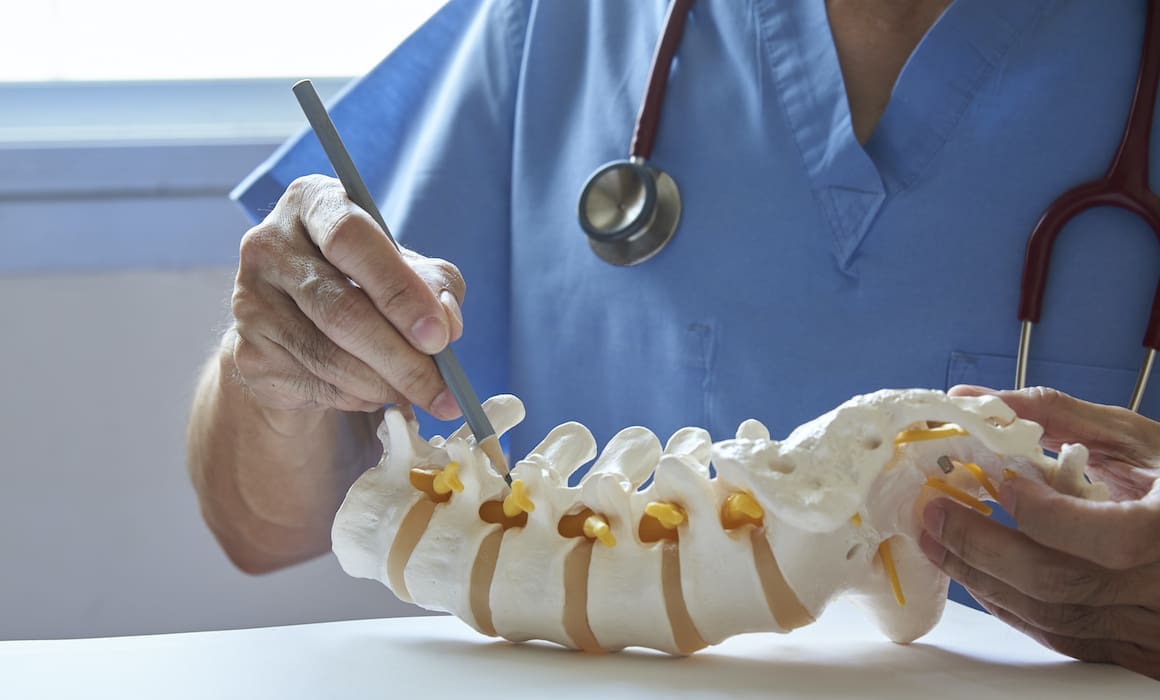
Going back as far as World War I, surgeons have been using the so-called “Robbing Peter to Pay Paul” principle to do reconstructive surgery. That means transplanting a patient’s healthy body tissue from one part of the body to the damaged site. In rebuilding the lower jaw, for example, surgeons might use part of a patient’s fibula bone and surrounding soft tissue for the implantation.
But this approach carries significant disadvantages, namely considerable pain and potential complications associated with the surgery at the donor site. Now Technion researchers have made a major breakthrough in developing an alternative to traditional tissue replacement. Their method would help build new tissue in the lab from scratch for implantation, a process known as de novo generation. No longer would surgeons have to relocate the tissue from another part of the patient’s body.
The discovery is rooted in Professor Shulamit Levenberg’s Stem Cell and Tissue Engineering Laboratory, which focuses on creating lab-grown tissues and the complex blood vessel networks needed to nourish them. Last year, Prof. Levenberg, dean of the Technion Faculty of Biomedical Engineering, and her team demonstrated that by using these methods they could promote regeneration of spinal cord injuries in rats.
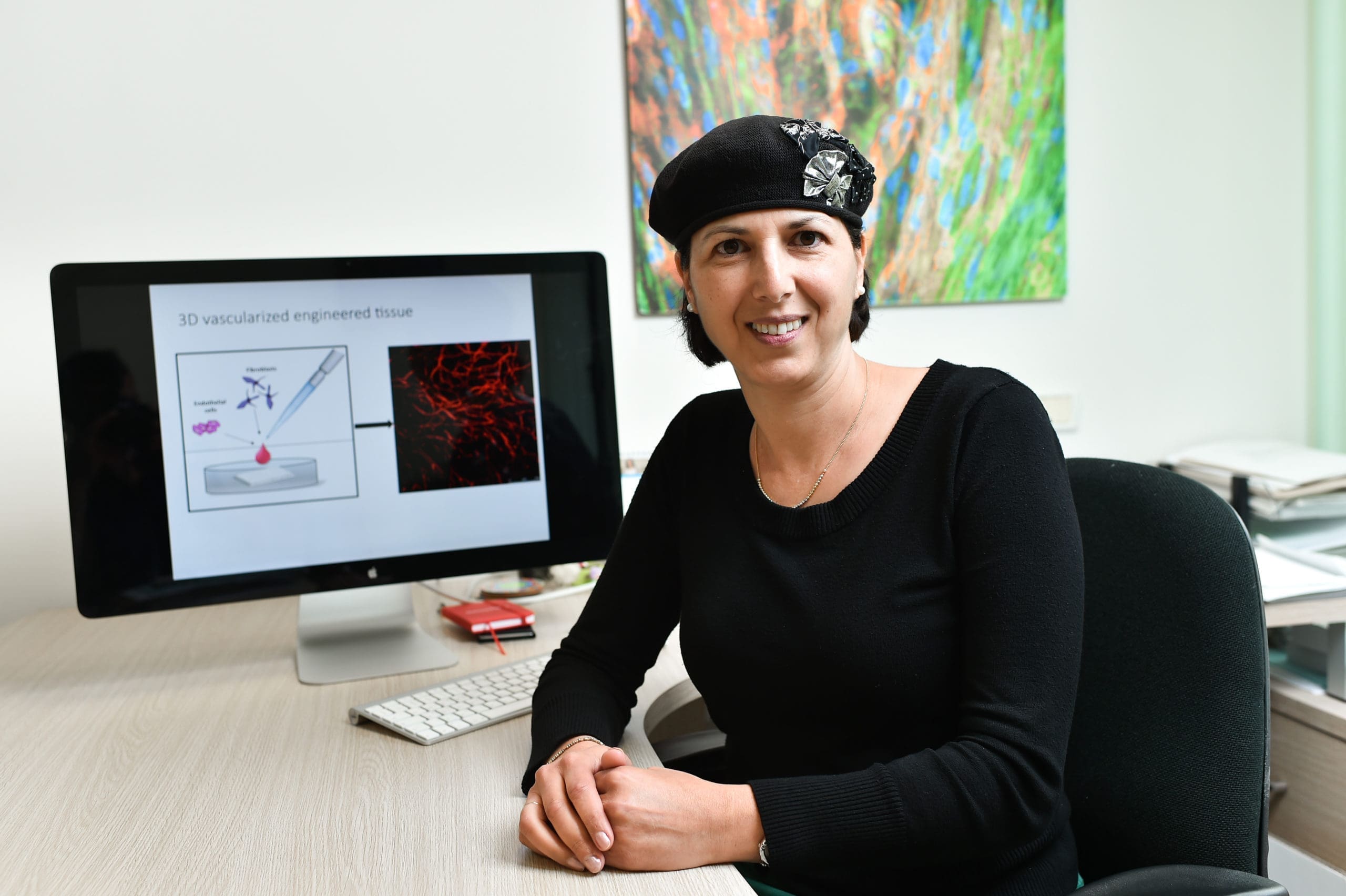
Prof. Shulamit Levenberg
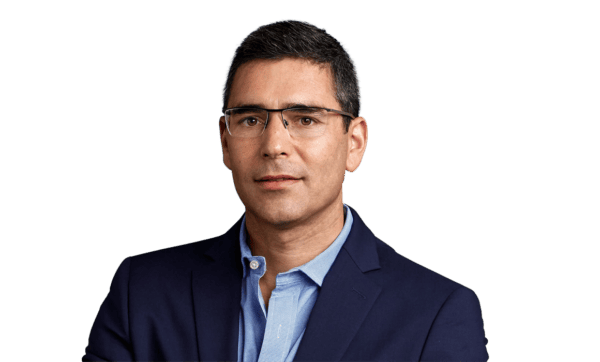
Building on that work, Dr. Idan Redenski conducted a recent study to advance these methods in bone implantation. His team put together their own technology with biological bone implants developed at Columbia University to create a de novo tissue flap containing live bone supported by vascularized soft tissue.
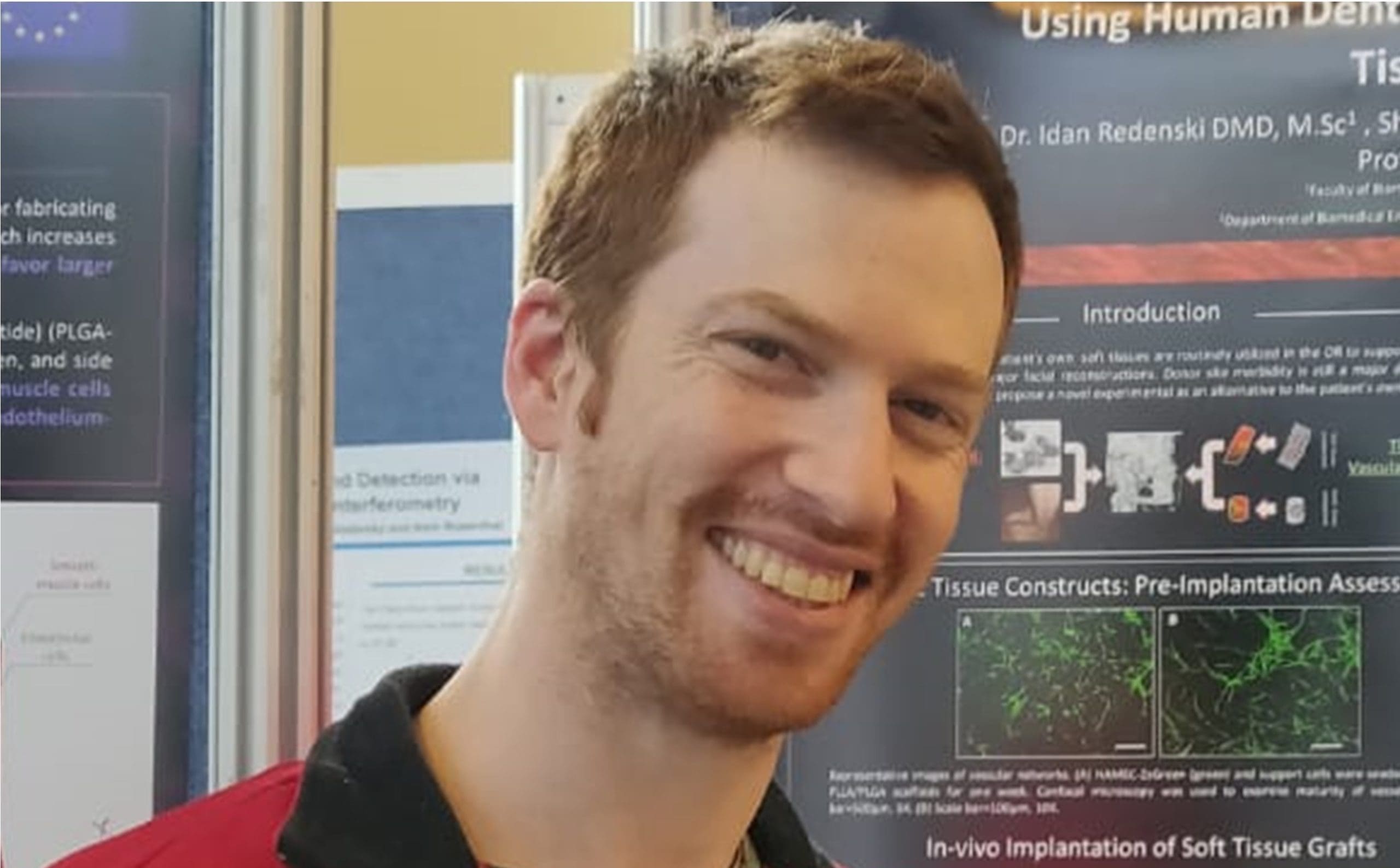
Dr. Idan Redenski
They then used the new methodology to repair a bone defect in rats. The rat recovered completely, and its cells grew around and replenished the implant. The researchers’ study, published in Advanced Functional Materials (opens in a new tab), took the concept of implantable bone tissue to a whole different level — demonstrating the success of reconstructive surgery without damage to other parts of the patient’s body.
Returning to the idea of a jaw implant, the researchers hope that in the near future a patient will be able to receive a lab-grown bone perfectly matching the shape of his face, surrounded by lab-grown soft tissues cultivated on 3-dimensional biomaterials.
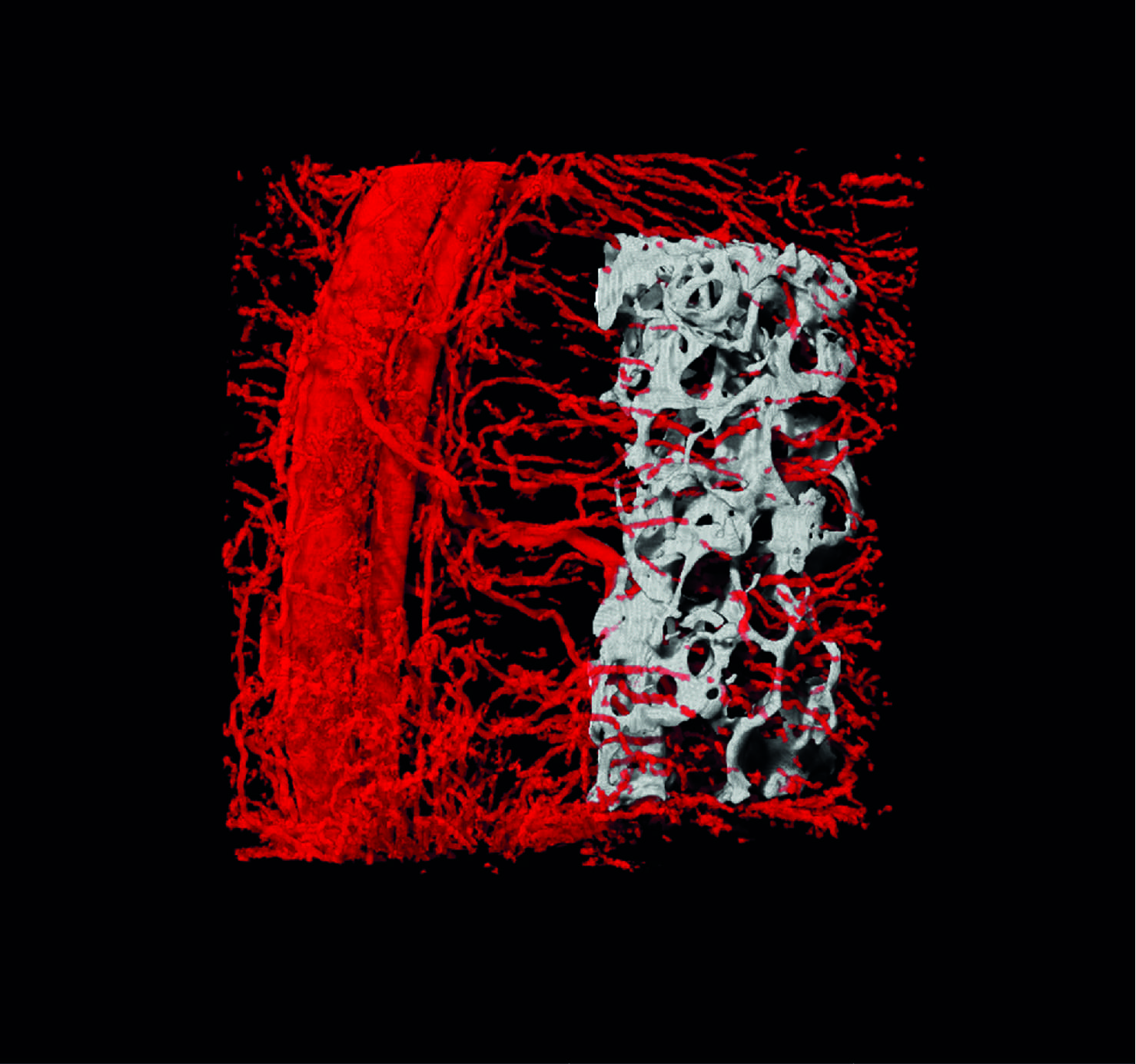
A 3-dimensional CT scan depicting blood vessels penetrating into the embedded bone, grown within the engineered flap.
April 28, 2021
Understand the latest developments in bone surgery which focus on creating new tissues, changing traditional reconstructive practices.
1 min
X (opens in a new tab) / Facebook (opens in a new tab) / LinkedIn (opens in a new tab) / Email / Copy Link
What if diagnosing cancer, Parkinson’s disease, or other serious illnesses could be as simple as breathing into a handheld device? That possibility is moving closer to reality thanks to the work of the Technion’s Prof. Hossam Haick, whose groundbreaking research is changing how diseases are detected around the world. In recognition of his extraordinary achievements, […]
Every year, the European Research Council (ERC) identifies some of the world’s most promising early-career researchers and gives them the freedom to pursue bold ideas. This year, two of those ideas came from the Technion – Israel Institute of Technology. From cancer research to artificial intelligence (AI), breakthroughs that shape the future often begin with […]
As more people turn to AI chatbots for companionship, life advice, or even as a stand-in for therapy, experts say the technology offers both new opportunities and risks when it comes to mental health. Prof. Tanzeem Choudhury is the chief of health innovation in the Joan & Irwin Jacobs Technion-Cornell Institute and has been studying AI and mental health for 15 years. She said AI tools are available any time, often at low cost, making it easier for people to access some form of mental health support.
Stay on top of the latest breaking scientific discoveries from Israel and the Technion. Subscribe to the ATS newsletter.