Why the Perfect Pitch is Your Biggest Mistake
September 23, 2026























The Technion’s story has been intertwined with Israel’s for more than a century, from laying the foundations for a new nation to shaping its future.

Step inside Israeli innovation at the David and Janet Polak Visitors Center. Experience our 360° immersive movie and tech exhibition. Open to individuals and groups.
Learn More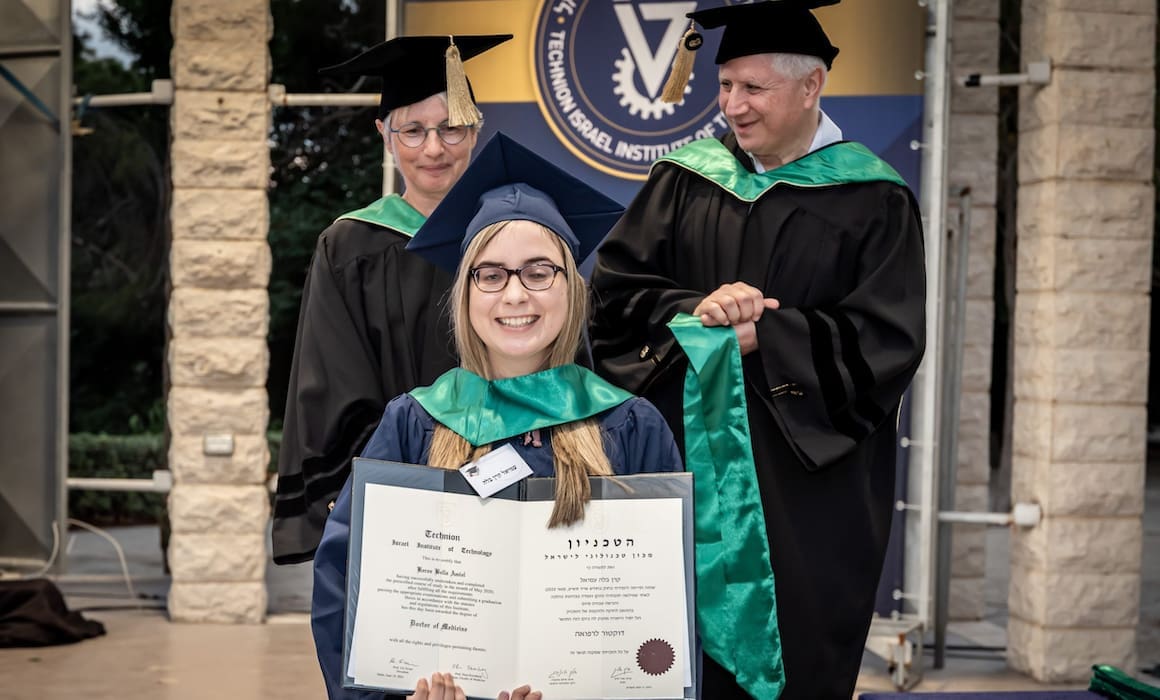
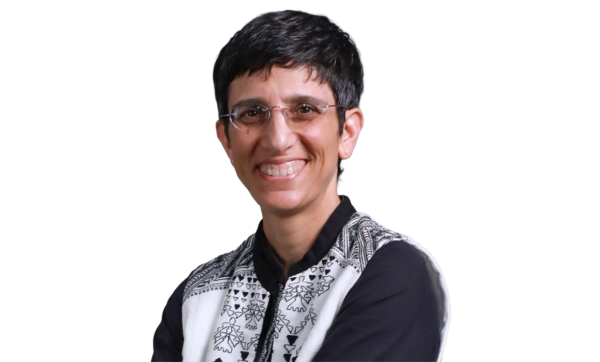
Pictured above: Dr. Amiel receiving her MD diploma
Among the 241 new M.D.s who received their Technion diplomas in June, visually impaired Dr. Keren Amiel stands out for overcoming unusual challenges.
“I’ve always wanted to be a doctor, ever since I was a child,” Dr. Amiel said. “I knew it was going to be a challenge, so initially I was apprehensive, but I decided to try.”
Amiel suffers from congenital nystagmus, a condition she inherited from her father that causes her eyes to “dance” uncontrollably, resulting in significant visual impairment.
In June, 241 Technion graduates of the Ruth and Bruce Rappaport Faculty of Medicine received their Doctor of Medicine diplomas. For half of them, the ceremony comes two years after their graduation, as no ceremonies were held at the height of the COVID-19 pandemic.
For Dr. Amiel, the apprehensions were over when she finally held her M.D. diploma. And if that was not impressive enough, over the past year, she completed her internship at the Tel Aviv Sourasky Medical Center, and started residency in child and adolescent psychiatry at Schneider Children’s Medical Center.
Excelling while thinking outside the box
The chief challenge for Dr. Amiel was being the first to do something. “The Faculty was very supportive and willing to make the necessary adjustments,” she shared. “But we had to figure out together what these adjustments were – identify the problems, and figuring out how to overcome them. It took some out-of-the-box thinking.”
For example, in anatomy classes, where one has to recognize structures in the human body, she used surgical loupes like those used by surgeons when performing delicate operations. From the very beginning, she agreed with the faculty that in no way would her education be compromised; there would be no lowering the bar.
“The Technion encourages one to excel,” she said. “It poses a challenge, and an opportunity to learn from the very best. That’s why I wanted to study here.”
Currently, in her work with young patients, Dr. Amiel’s disability offers an unexpected advantage: it helps her to connect with patients. A doctor can be quite intimidating, but a doctor who is also a human being – less so. “I often ask children what they want to be when they grow up,” said Dr. Amiel. “If a child is afraid he or she won’t be able to achieve their dreams, I can encourage them through telling them about the challenges I’ve overcome.”
Paving the way for more people with disabilities
Commenting on integration of people with disabilities, she opined that, “I think visibility is important. The first time my colleagues in the hospital saw me with my nose glued to the computer screen, I suppose it looked weird. But the more common it is, the less weird it becomes, and that opens the way for more people with disabilities.”
While Dr. Amiel is the first visually impaired doctor in Israel, a few have passed this hurdle previously around the world. The first was Jacob Bolotin, who graduated from the Chicago Medical School in 1912. In more recent times, David Hartman earned his medical degree at Temple University in Philadelphia in 1975, followed by Tim Cordes graduating from the University of Wisconsin-Madison in 2005. The knowledge that she might be the first in Israel, but others around the world have succeeded before her, helped Dr. Amiel persevere, and find the way to achieve the goal she has set for herself.