Video

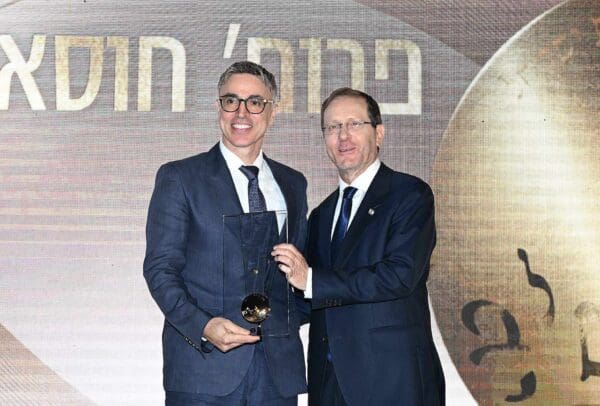
Why the Perfect Pitch is Your Biggest Mistake

September 23, 2026

Go
Video

When the Newsroom Meets the Algorithm

September 18, 2026
Go
disease detection
Article

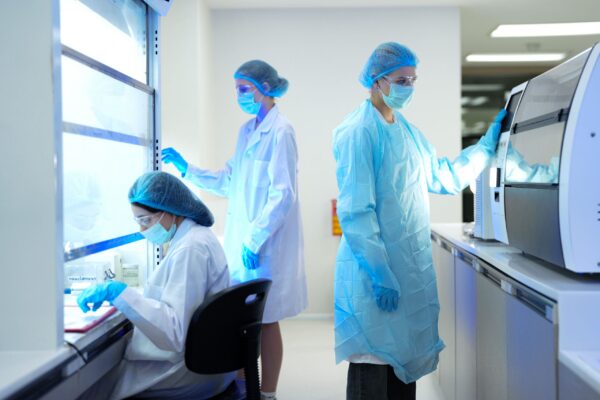
A Breathalyzer Test for Cancer?

September 17, 2026
Go
Podcast

Everything In-House

August 11, 2026
Go
disease detection
Article

A Breathalyzer Test for Cancer?

September 17, 2026
Go
artificial intelligence health care
Article

Europe Is Betting on Technion Innovation

September 04, 2026
Go
Chatbot | American Technion Society | Donate to Israel
In The News

Can AI Chatbots Support Mental Health?

August 07, 2026
Go
Cancer Research | American Technion Society | Donate to Israel
In The News

Advancing Cancer Research Through Discovery

August 04, 2026
Go
AI in education
Article

Rethinking Education in the Age of AI 

September 25, 2026
Go
artificial intelligence health care
Article

Europe Is Betting on Technion Innovation

September 04, 2026
Go
Tree Canopy | American Technion Society | Donate to Israel
In The News

Cornell Tech’s Tree Canopy Project Builds a Cooler New York City

August 11, 2026
Go
Wildfire detection | American Technion Society | Donate to Israel
In The News

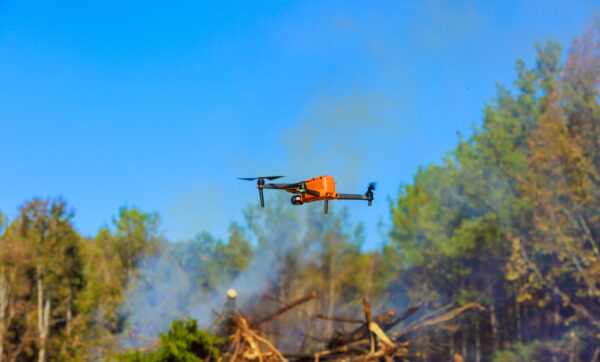
Wildfire Detection Takes Flight With AI-Powered Drones

August 04, 2026
Go
strength in every step | American Technion Society | Donate to Israel
Article

Strength in Every Step: Recovery, Resilience, and a Walk to Remember

August 21, 2026
Go
Student Resilience | American Technion Society | Donate to Israel
Article

Never Too Late for a New Challenge

August 17, 2026
Go
coexistence | American Technion Society | Donate to Israel
In The News

The Technion’s Model of Coexistence

August 07, 2026
Go
Sirens | American Technion Society | Donate to Israel
Article

When the Sirens Sound

August 07, 2026
Go
Reuven Aronashvili
Video

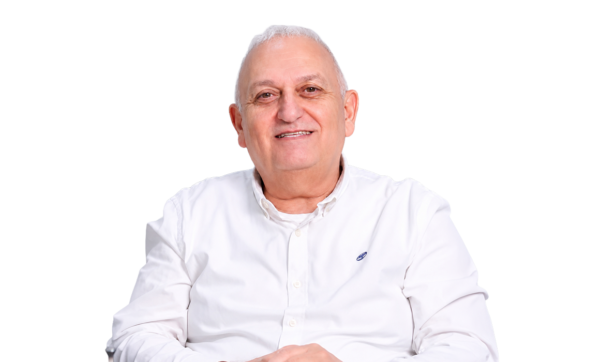
From a Poor Town to Leading Paradigms in Cyber

September 25, 2026
Go
earthquake rescue | American Technion Society | Donate to Israel
In The News

Israeli Drones Aid Earthquake Rescue Efforts in Venezuela

July 08, 2026
Go
No GPS or Communication Drones flying in the background as a soldier's shadowy silhouette fills the foreground
Video

When GPS Fails, This Drone Keeps Going

June 10, 2026
Go
Article

Technion Innovations: Safeguarding Israel and the World

May 28, 2026
Go
Article

Seeds of a New Community

September 08, 2026
Go
Tree Canopy | American Technion Society | Donate to Israel
In The News

Cornell Tech’s Tree Canopy Project Builds a Cooler New York City

August 11, 2026
Go
Wildfire detection | American Technion Society | Donate to Israel
In The News

Wildfire Detection Takes Flight With AI-Powered Drones

August 04, 2026
Go
Energy Tower | American Technion Society | Donate to Israel
In The News

The Energy Tower: A Vision Ahead of Its Time Finds New Life

July 08, 2026
Go
AI in education
Article

Rethinking Education in the Age of AI 

September 25, 2026
Go
Podcast

Predictions from The Himalayas

September 17, 2026
Go
Student Resilience | American Technion Society | Donate to Israel
Article

Never Too Late for a New Challenge

August 17, 2026
Go
Video

Technion: The Vision to Do Good

August 17, 2026
Go
Video

Technion: The Vision to Do Good

August 17, 2026
Go
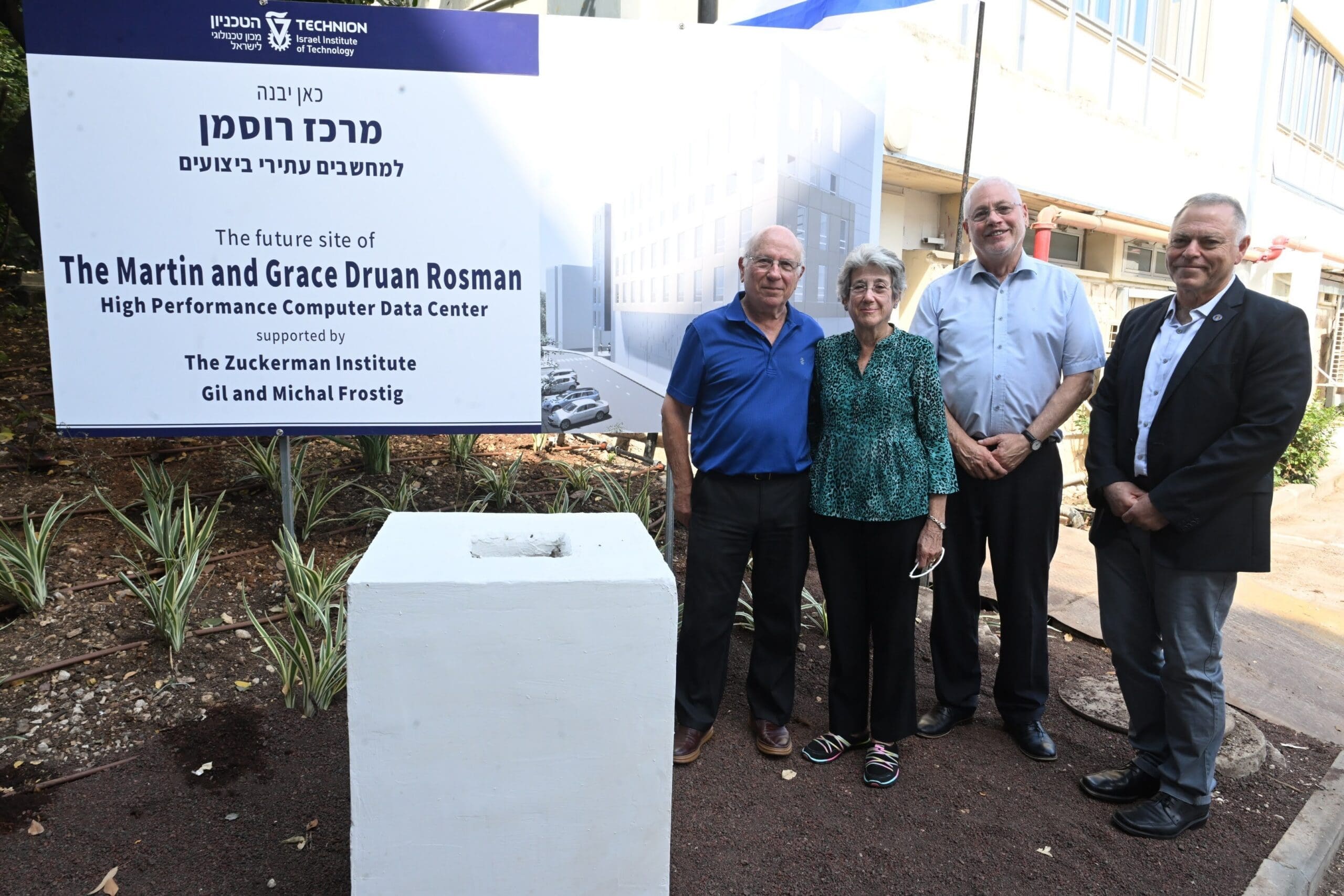
From left: Dr. Martin Rosman; Grace Druan Rosman; Technion President Prof. Uri Sivan; and Dr. Rafi Aviram, executive vice president and director general of the Technion, at the cornerstone ceremony for the Martin and Grace Druan Rosman High-Performance Computer Data Center building. | American Technion Society | Donate to Israel
Article

A Vision Built Around Students

June 29, 2026
Go
1912 - Today | Technion flag with Israeli flag | Donate to Israel | Technion University
Video

1912 to Today: The Institution That Helped Build Israel

June 10, 2026
Go
Article

Doing Well by Doing Good

May 23, 2026
Go

Watch, Read & Listen

Explore stories, news, insights, and data across articles, videos, and podcasts.

view all content types
AI in education
Article

Rethinking Education in the Age of AI 

September 25, 2026
Go
disease detection
Article

A Breathalyzer Test for Cancer?

September 17, 2026
Go
Article

Seeds of a New Community

September 08, 2026
Go
artificial intelligence health care
Article

Europe Is Betting on Technion Innovation

September 04, 2026
Go
Reuven Aronashvili
Video

From a Poor Town to Leading Paradigms in Cyber

September 25, 2026
Go
Video

Why the Perfect Pitch is Your Biggest Mistake

September 23, 2026

Go
Video

When the Newsroom Meets the Algorithm

September 18, 2026
Go
Video

Technion: The Vision to Do Good

August 17, 2026
Go
Podcast

Predictions from The Himalayas

September 17, 2026
Go
Podcast

Everything In-House

August 11, 2026
Go
the heart | American Technion Society | Donate to Israel
Podcast

The Heart Will Go On

July 15, 2026
Go
Or Yochanan | American Technion Society | Donate to israel
Podcast

Reinventing the American Dream in Austin

June 10, 2026
Go
In The News

Can Decart Put Israel on the AI Map?

September 18, 2026
Go
Tree Canopy | American Technion Society | Donate to Israel
In The News

Cornell Tech’s Tree Canopy Project Builds a Cooler New York City

August 11, 2026
Go
coexistence | American Technion Society | Donate to Israel
In The News

The Technion’s Model of Coexistence

August 07, 2026
Go
Chatbot | American Technion Society | Donate to Israel
In The News

Can AI Chatbots Support Mental Health?

August 07, 2026
Go
25 %

of the student body are Arab Israeli

# 1

in Israel and Europe for research on artificial intelligence

3

locations

The Technion’s story has been intertwined with Israel’s for more than a century, from laying the foundations for a new nation to shaping its future.

About ATS

ATS is a community of supporters, innovators, and champions of possibility united by one mission: transforming Israel and the world through science and discovery.

Learn More

About the Technion

For more than 100 years, the Technion has been Israel's technological engine and leading driver of innovation, technology, and entrepreneurship, transforming ideas into impact.

Learn More

Fuel of the Future

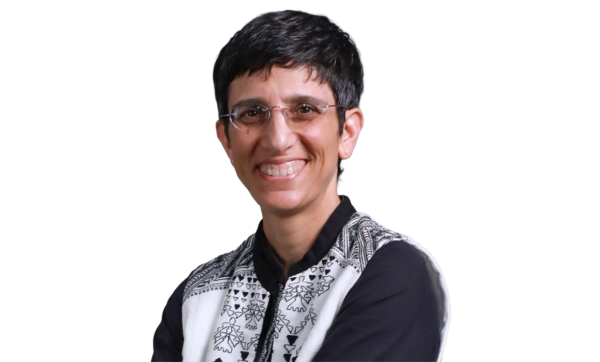
Associate Professor Lilac Amirav, Schulich Faculty of Chemistry at the Technion, fuel researcher | Donate to Support the Technion University | How to Donate to Support Israel

Scientists struggling to perfect an efficient new way to produce hydrogen might feel an understandable touch of envy as they look out the window and see all those low-tech trees and plants doing the trick with such ease.

Hydrogen, the world’s most abundant element, has the highest energy per mass of any fuel. As such, it holds exciting potential as an emissions-free energy carrier. Small hydrogen fuel cells can power laptop computers and cellphones, while large fuel cells can provide electricity to power buildings. Hydrogen-powered electric cars, in their infancy, are far more efficient than traditional vehicles. Today’s challenge is to produce hydrogen fuel cheaply and in large quantities.

Most hydrogen fuel is still produced from methane or natural gas, a process that requires large amounts of energy and releases greenhouse gases. Instead, scientists are developing ways to use the sun to produce hydrogen. Mimicking nature’s photosynthesis, researchers are tinkering with “water splitting,” the chemical process that separates hydrogen and oxygen into distinct gases.

“This is not only about technological advancement, but about discovering the secrets of the universe, since hydrogen production is also done in nature,” says Assistant Professor Maytal Caspary Toroker of the Faculty of Materials Science and Engineering. “Once we understand how nature works, we will be able to produce energy.” Associate Professor Lilac Amirav of the Schulich Faculty of Chemistry notes, “The energy that comes from the sun in one hour could supply global demand for a year.” But solar-powered splitting is not yet potent enough to power our cars, homes, and factories.

Energy research at the Technion is done under the umbrella of the Nancy and Stephen Grand Technion Energy Program (opens in a new tab) (GTEP). “GTEP, as an interdisciplinary and interdepartmental program, strives to promote research that tackles energy-related challenges from different angles and reduces ‘barriers’ between departments and research areas,” says Professor Yoed Tsur, GTEP’s director.

Profs. Amirav and Toroker both lead GTEP teams seeking solutions. And they’re closing in on the answers from sharply different directions.
Separating the H2 from the O

To split a water molecule (H2O), run a current through it. You’ll watch protons and electrons play musical chairs as oxygen and hydrogen sort themselves out for separate storage, thanks to this simple electrolysis. To do it cleanly and greenly, scientists are investigating methods of photocatalytic water splitting, in which a semiconductor absorbs solar power to drive the reaction, aided by some kind of catalyst to accelerate the process.

As in photosynthesis, the solar energy is then converted into chemical energy. The newly created chemical bonds now hold the energy in fuel form, far easier to store than heat or electricity. The basic concept, Prof. Amirav explains, has been around for 40 years. But a truly practical system for large-scale use will need a much more efficient and stable semiconductor that is powerful, corrosion-free, and affordable.
Nickel for Your Thoughts

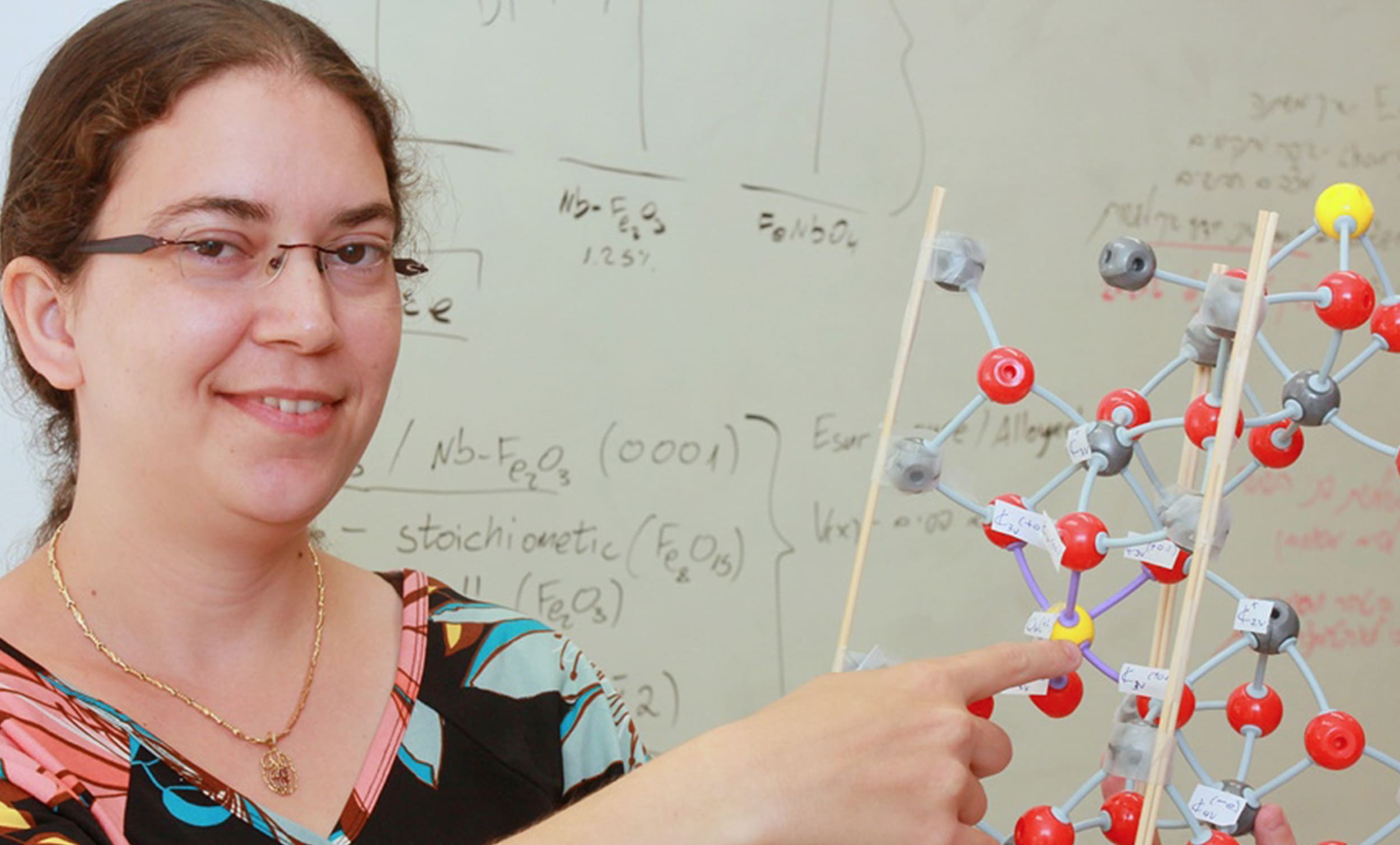
Scientists have been testing an arcane assortment of semiconductors and catalysts. Prof. Toroker’s team, for example, is gaining notice with their research on nickel oxyhydroxide, combined or “doped” with iron.

An accidental contamination hinted that this combo, in common use as a commercial battery, might be a winner. “I heard about this material at some international conferences and my curiosity was intrigued,” Prof. Toroker recalls. “Why does it work so well? It is still not well understood, but we do know iron can lose and receive electrons very easily. Our calculations show that especially in a nickel environment the electrons come loose and can activate the water.”

Those painstaking calculations involve “studying a material atom by atom,” says Prof. Toroker, a faculty member since 2013 with a Technion Ph.D. in theoretical chemistry. “With this bottom-up approach, we can explain correlations between material atomic composition and larger-scale functionality. This includes water-splitting photoelectrochemical cells and other devices for the betterment of society.”

Sculpting a Solution

Prof. Amirav’s team, meanwhile, has been designing new photocatalysts at the incredibly tiny nano-level.

“The nice thing about nano,” explains Prof. Amirav, who is affiliated with the Technion’s Russell Berrie Nanotechnology Institute, “is that in this region the properties of a material start to change, and you can tune these properties by controlling the particles’ size and shape.” These tweaks are key for promoting water splitting. “I often feel like a kid with the best Lego set ever, because our lab can make such a variety of semiconductors and metal ‘building blocks,’ and expertly assemble them into sophisticated systems. We’re actually sculpting on the nano-scale, making a gallery of complex new designs.”

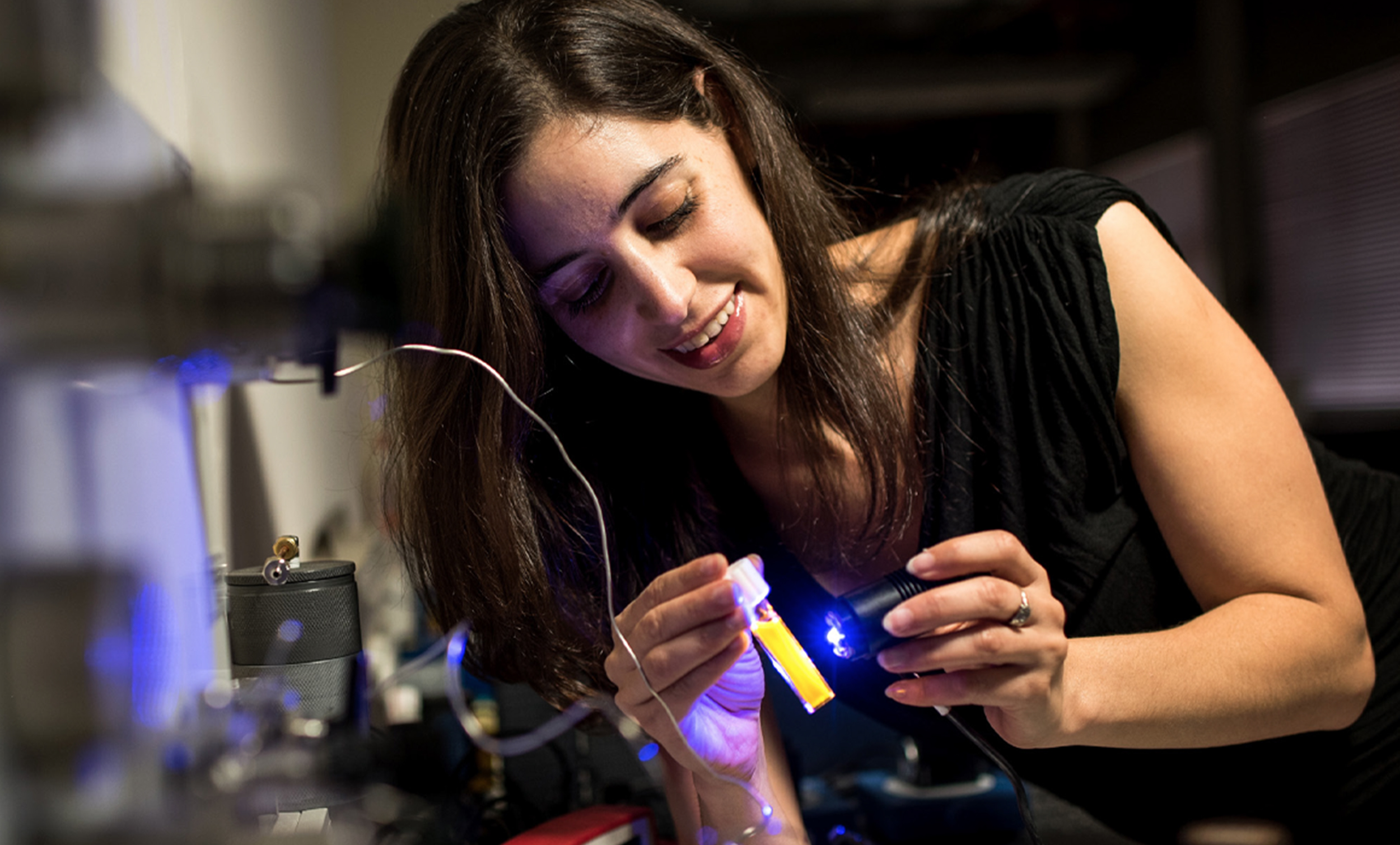
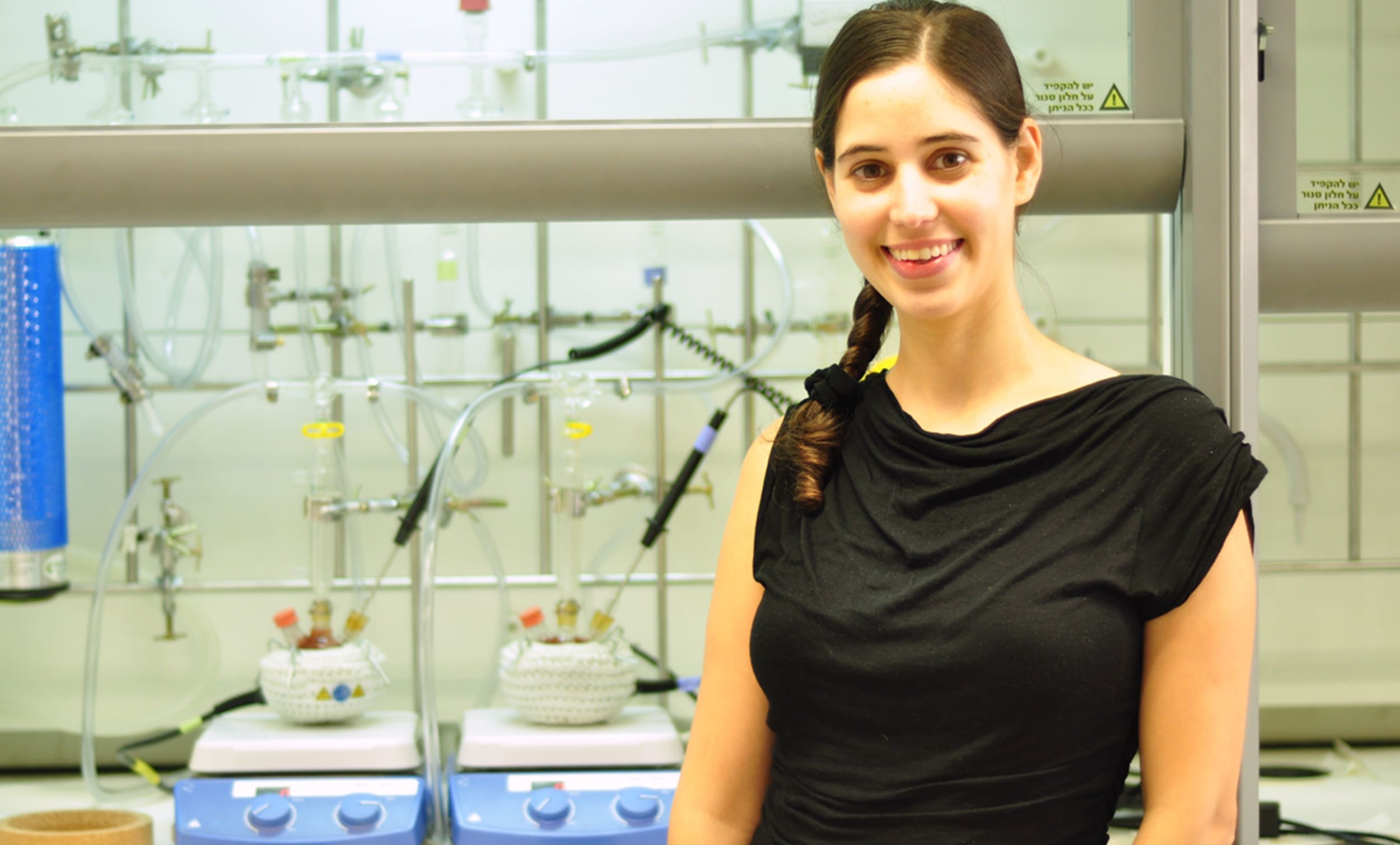
One masterpiece in this gallery is a system featuring a quantum dot of one semiconductor compound, cadmium selenide, embedded in a rod of a second semiconductor with a platinum particle at its tip. The positive charges head for the dot while the negative charges, the electrons, are pulled toward the platinum. This dual-catalyst combination has helped boost light-to-hydrogen conversion to 100% efficiency, one key stage in the splitting process, notes Prof. Amirav, a faculty member since 2011 who earned her Technion Ph.D. in physical chemistry after serving as a chemist in Israel’s defense intelligence unit.

“This is a really nice breakthrough. It tells us we have materials that are really good at absorbing light. And that we can produce charge carriers that are not lost, and are fully utilized to promote the chemistry reactions,” says Prof. Amirav. Along with other GTEP researchers, she is examining new strategies for harnessing unique nano-phenomena to take their photocatalysts to unexplored frontiers.

While renewable energy sources do face hurdles, “it’s important to invest in all potential directions to provide a better future,” says Prof. Toroker. “I’ve always wanted to understand how things work. There are many points of fulfillment each time you succeed in making a breakthrough.”

As mothers of three young children each, Profs. Amirav and Toroker share yet another reason to work toward an eco-friendly solution. “If you solve the energy crisis, you impact everything,” Prof. Amirav pointed out. “War, hunger, pollution, all the problems we have to face as humankind over the next 25 years. This is our responsibility to the next generation.”

Related Stories

AI in education
Article

Rethinking Education in the Age of AI 

September 25, 2026

Artificial intelligence is not simply changing higher education — it is detonating old assumptions about how students learn and how professors teach. As universities worldwide grapple with how to respond, the Technion is working to confront the questions head-on.  Here, AI is not treated as a threat but a catalyst, prompting careful reexamination at every […]

Go
Podcast

Predictions from The Himalayas

September 17, 2026

Galit Shmueli is the Tsing Hua Distinguished Professor at the Institute of Service Science, College of Technology Management, National Tsing Hua University in Taiwan.Prof. Shmueli also serves as Vice President for Global Affairs at the university, and is the author of multiple books. She is a truly world-renowned authority in her fields of data science […]

Go
Student Resilience | American Technion Society | Donate to Israel
Article

Never Too Late for a New Challenge

August 17, 2026

“I thought it was fake,” she recalled. “There was no chance.” As reports continued to emerge, reality became impossible to ignore. By 7 a.m., L.’s brigade commanders had convened an emergency call. Within 20 minutes, L. had packed her things and was helping mobilize reserve battalions, distribute weapons and equipment, and prepare soldiers to enter […]

Go

Love Israel and Science? 

Stay on top of the latest breaking scientific discoveries from Israel and the Technion. Subscribe to the ATS newsletter.

Secret Link