Why the Perfect Pitch is Your Biggest Mistake
September 23, 2026

















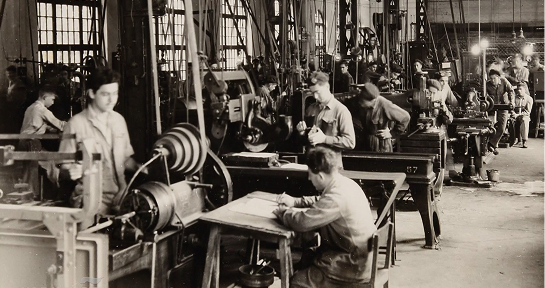
The Technion’s story has been intertwined with Israel’s for more than a century, from laying the foundations for a new nation to shaping its future.

Step inside Israeli innovation at the David and Janet Polak Visitors Center. Experience our 360° immersive movie and tech exhibition. Open to individuals and groups.
Learn More
As a young physician in the early 1980s, Alfred M. (Al) was riveted by a presentation on sleep disorders. The speaker, Professor Peretz Lavie, would go on to become President of the Technion. But he was also inspired by the words of the American Technion Society (ATS) director hosting the event. “When you get involved with the ATS, you become part of our family,” he recalls him saying.
“Maybe because I’m a survivor of the Holocaust, those words really appealed to me,” he said.
Al rose to become Director of Pulmonary Medicine at a Washington, D.C. area Hospital, and President of the American Lung Association. But the odds were certainly against him.
Born in the Netherlands during World War II, Al was just nine months old when his family went into hiding from the Nazis. His two older sisters were given up to the authorities and killed in Auschwitz. His father lived to be liberated, but died soon after. Al survived because he was hidden with a Dutch-Indonesian family that adored him. The only other family members to survive were his mother Gisele and his maternal uncle, who escaped Europe before the war to start a new life in Bolivia with his wife and son, Norbert.
Al and his mother, with whom he was reunited at age four, immigrated to the United States in 1958, where he earned his medical degree at the State University of New York, Downstate Medical Center in Brooklyn. He eventually settled in Washington D.C., where he attended President Lavie’s lecture and became involved with the ATS. Through the Planned Giving program, Al found a way to support the Technion while helping his relatives in Bolivia. Al set up two Charitable Remainder Trusts (CRT) that generated a steady income stream for his chosen beneficiaries — one to cousin Norbert and the other to Norbert’s daughter. He earmarked the remainder for the ATS.
“These trusts give me the opportunity to help my relatives by providing them with income on a regular basis,” said Al. “So we’re helping people in need, helping the Technion, and providing some healing to the horrors of the Holocaust — all in one program. It is very gratifying.”
After a trip to the Technion on an ATS Mission in 2006, Al felt even more committed to the university. “Visiting the campus and meeting the students was very special. Seeing their excitement about their research really motivated me,” he said. Upon his return, he created a substantial bequest in his will to endow a fellowship fund. Though the money is not immediately transferred to the Technion, he receives satisfaction during his lifetime of having one fellow named in his honor yearly. After his passing, the fund is used to support several fellowships in perpetuity.
As he started to wind down his professional career (eventually retiring in May 2015), Al assumed leadership positions in the ATS. He has been a member of the Washington D.C. Region Board of Directors for more than a decade, and joined the National Board in 2012. He has hosted numerous speaker programs, and has helped with the local committee for scholarships to the Technion SciTech summer program. He is also involved with the U.S. Holocaust Memorial Museum. He sees a connection in the two organizations that brings him back full circle to his family. “The Holocaust Museum honors the memory of the victims, while the Technion represents the rebirth of the Jewish people,” he said.
His parents came from Polish “shtetls” that gave the world the Nobel-winning physicist Isadore Isaac Rabi and psychiatrist Abraham Brill, who introduced psychoanalysis and the works of Sigmund Freud to the U.S. “I’ve always wondered how many great scholars and potential Nobel Prize winners lie among the ashes of Auschwitz or Belzec. The Technion is the counterpoint to that.”
Support the ATS while achieving your personal financial goals. Bequests are easy to create, and can be the basis of a memorial or tribute. The ATS can also accept gifts of real estate, artwork, fine jewelry and even deposits made to senior living facilities. For more information on how you can make a difference, please contact Judy Sager.