The Technion’s story has been intertwined with Israel’s for more than a century, from laying the foundations for a new nation to shaping its future.

From medicine to security, explore how the Technion is advancing Israel and improving lives around the world.
View All Impact Areas
Explore stories, news, insights, and data across articles, videos, and podcasts.
view all content types
of the student body are women
of all universities in the world*
among universities worldwide for producing undergrad entrepreneurs
The Technion’s story has been intertwined with Israel’s for more than a century, from laying the foundations for a new nation to shaping its future.
Explore ATS, the Technion, and the people behind the breakthroughs redefining what's possible for Israel and the world.
Learn More About ATSATS is a community of supporters, innovators, and champions of possibility united by one mission: transforming Israel and the world through science and discovery.
Learn MoreFor more than 100 years, the Technion has been Israel's technological engine and leading driver of innovation, technology, and entrepreneurship, transforming ideas into impact.
Learn More
Step inside Israeli innovation at the David and Janet Polak Visitors Center. Experience our 360° immersive movie and tech exhibition. Open to individuals and groups.
Learn MoreFrom medicine to security, explore how the Technion is advancing Israel and improving lives around the world.
View All Impact AreasExplore stories, news, insights, and data across articles, videos, and podcasts.
view all content typesDiscover ways to support, connect, and help drive innovation.
Get InvolvedExplore ATS, the Technion, and the people behind the breakthroughs redefining what's possible for Israel and the world.
Learn More About ATS
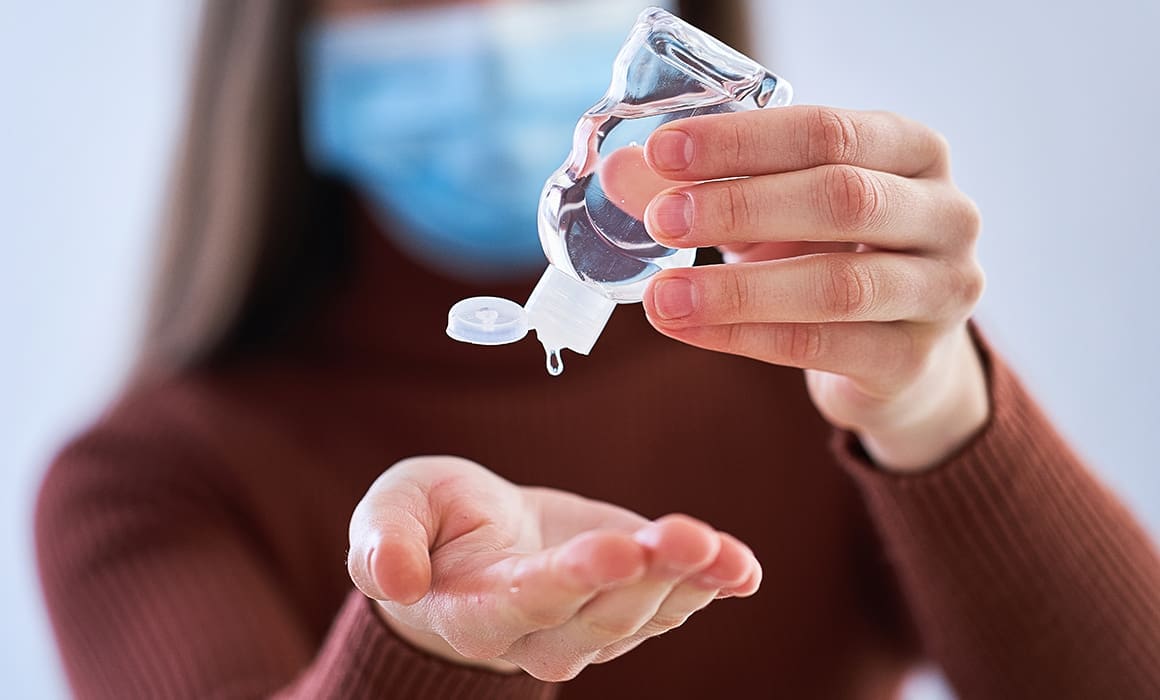
Most hand sanitizers with at least 60% alcohol are effective against the coronavirus. But they don’t provide long-lasting protection and can disrupt the body’s microbiomes, killing off the good bacteria with the bad.
Second-year students at the Technion developed a gel that works for hours and selectively attracts just the SARS-CoV-2 virus. The ingenious research won the Technion student team a gold medal at the prestigious synthetic biology competition, iGEM (International Genetically Engineered Machine).
“We knew that when it came to the COVID-19 crisis we could not just wait in hope of positive developments,” said Tomer Antman ’23, one of the team leaders. “We decided to ACT,” he added, punning on what they call Anti COVID-19 Technology.
People can become severely infected when the spiked protein on the surface of the coronavirus binds to a particular host protein called angiotensin-converting enzyme 2, or ACE2 receptor. The students created an innovative gel containing synthetic particles that mimic ACE2 receptors. These decoy proteins trick and capture the virus, trapping it on the surface of the skin. Once we wash our hands, the virus is removed, preventing its spread.
“We compare the virus to a fish and the system to fishing,” Antman said. Their engineered ACE2 protein is the bait, “which entices particles to attach . . . and the fishing rod is the gel” that reels the virus in.
The iGEM Competition was initiated by MIT in 2004 to provide students an opportunity to experiment in synthetic biology. Technion teams have been participating and winning since 2012, under Professor Roee Amit, head of the Synthetic Biology Laboratory for the Decipherment of Genomic Codes. “The achievements of the Technion’s iGEM teams are significant,” said Prof. Amit. “They do not merely amount to medals, since we have accumulated research and meaningful intellectual property that are expressed in scientific articles and in a patent published by two of our teams.”
This year’s team members were: Mr. Antman, Hadas Yung, Amir Betker, Dor Josef, Ella Samuel, Ilana Elizarov, Niv Skarbianskis, Noa Weiss, Shanny Ackerman, Shany Greenstein, Shay Bamany, Yara Zeibaq, Saar Shaviv, and Zixuan Li.
December 10, 2020
Discover how a new gel developed by students offers long-lasting protection against the coronavirus while preserving good bacteria.
1 min
X (opens in a new tab) / Facebook (opens in a new tab) / LinkedIn (opens in a new tab) / Email / Copy Link
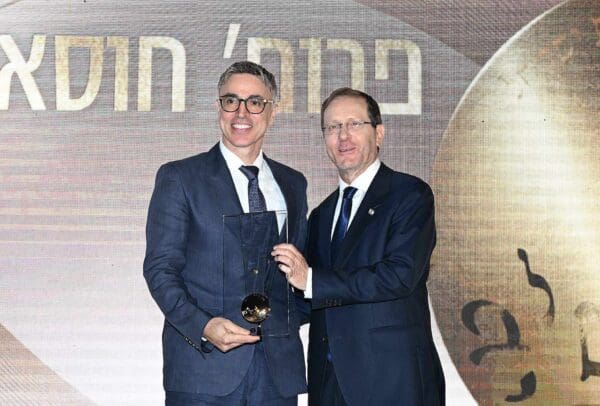
What if diagnosing cancer, Parkinson’s disease, or other serious illnesses could be as simple as breathing into a handheld device? That possibility is moving closer to reality thanks to the work of the Technion’s Prof. Hossam Haick, whose groundbreaking research is changing how diseases are detected around the world. In recognition of his extraordinary achievements, […]
Every year, the European Research Council (ERC) identifies some of the world’s most promising early-career researchers and gives them the freedom to pursue bold ideas. This year, two of those ideas came from the Technion – Israel Institute of Technology. From cancer research to artificial intelligence (AI), breakthroughs that shape the future often begin with […]
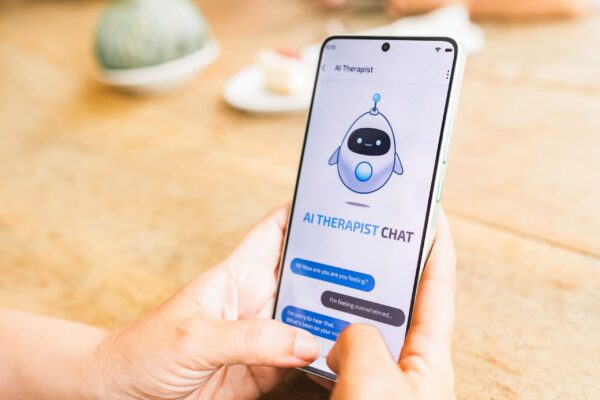
As more people turn to AI chatbots for companionship, life advice, or even as a stand-in for therapy, experts say the technology offers both new opportunities and risks when it comes to mental health. Prof. Tanzeem Choudhury is the chief of health innovation in the Joan & Irwin Jacobs Technion-Cornell Institute and has been studying AI and mental health for 15 years. She said AI tools are available any time, often at low cost, making it easier for people to access some form of mental health support.
Stay on top of the latest breaking scientific discoveries from Israel and the Technion. Subscribe to the ATS newsletter.