Video

Why the Perfect Pitch is Your Biggest Mistake

September 23, 2026

Go
Video

When the Newsroom Meets the Algorithm

September 18, 2026
Go
disease detection
Article

A Breathalyzer Test for Cancer?

September 17, 2026
Go
Podcast

Everything In-House

August 11, 2026
Go
disease detection
Article

A Breathalyzer Test for Cancer?

September 17, 2026
Go
artificial intelligence health care
Article

Europe Is Betting on Technion Innovation

September 04, 2026
Go
Chatbot | American Technion Society | Donate to Israel
In The News

Can AI Chatbots Support Mental Health?

August 07, 2026
Go
Cancer Research | American Technion Society | Donate to Israel
In The News

Advancing Cancer Research Through Discovery

August 04, 2026
Go
AI in education
Article

Rethinking Education in the Age of AI 

September 25, 2026
Go
artificial intelligence health care
Article

Europe Is Betting on Technion Innovation

September 04, 2026
Go
Tree Canopy | American Technion Society | Donate to Israel
In The News

Cornell Tech’s Tree Canopy Project Builds a Cooler New York City

August 11, 2026
Go
Wildfire detection | American Technion Society | Donate to Israel
In The News

Wildfire Detection Takes Flight With AI-Powered Drones

August 04, 2026
Go
strength in every step | American Technion Society | Donate to Israel
Article

Strength in Every Step: Recovery, Resilience, and a Walk to Remember

August 21, 2026
Go
Student Resilience | American Technion Society | Donate to Israel
Article

Never Too Late for a New Challenge

August 17, 2026
Go
coexistence | American Technion Society | Donate to Israel
In The News

The Technion’s Model of Coexistence

August 07, 2026
Go
Sirens | American Technion Society | Donate to Israel
Article

When the Sirens Sound

August 07, 2026
Go
Reuven Aronashvili
Video

From a Poor Town to Leading Paradigms in Cyber

September 25, 2026
Go
earthquake rescue | American Technion Society | Donate to Israel
In The News

Israeli Drones Aid Earthquake Rescue Efforts in Venezuela

July 08, 2026
Go
No GPS or Communication Drones flying in the background as a soldier's shadowy silhouette fills the foreground
Video

When GPS Fails, This Drone Keeps Going

June 10, 2026
Go
Article

Technion Innovations: Safeguarding Israel and the World

May 28, 2026
Go
Article

Seeds of a New Community

September 08, 2026
Go
Tree Canopy | American Technion Society | Donate to Israel
In The News

Cornell Tech’s Tree Canopy Project Builds a Cooler New York City

August 11, 2026
Go
Wildfire detection | American Technion Society | Donate to Israel
In The News

Wildfire Detection Takes Flight With AI-Powered Drones

August 04, 2026
Go
Energy Tower | American Technion Society | Donate to Israel
In The News

The Energy Tower: A Vision Ahead of Its Time Finds New Life

July 08, 2026
Go
AI in education
Article

Rethinking Education in the Age of AI 

September 25, 2026
Go
Podcast

Predictions from The Himalayas

September 17, 2026
Go
Student Resilience | American Technion Society | Donate to Israel
Article

Never Too Late for a New Challenge

August 17, 2026
Go
Video

Technion: The Vision to Do Good

August 17, 2026
Go
Video

Technion: The Vision to Do Good

August 17, 2026
Go
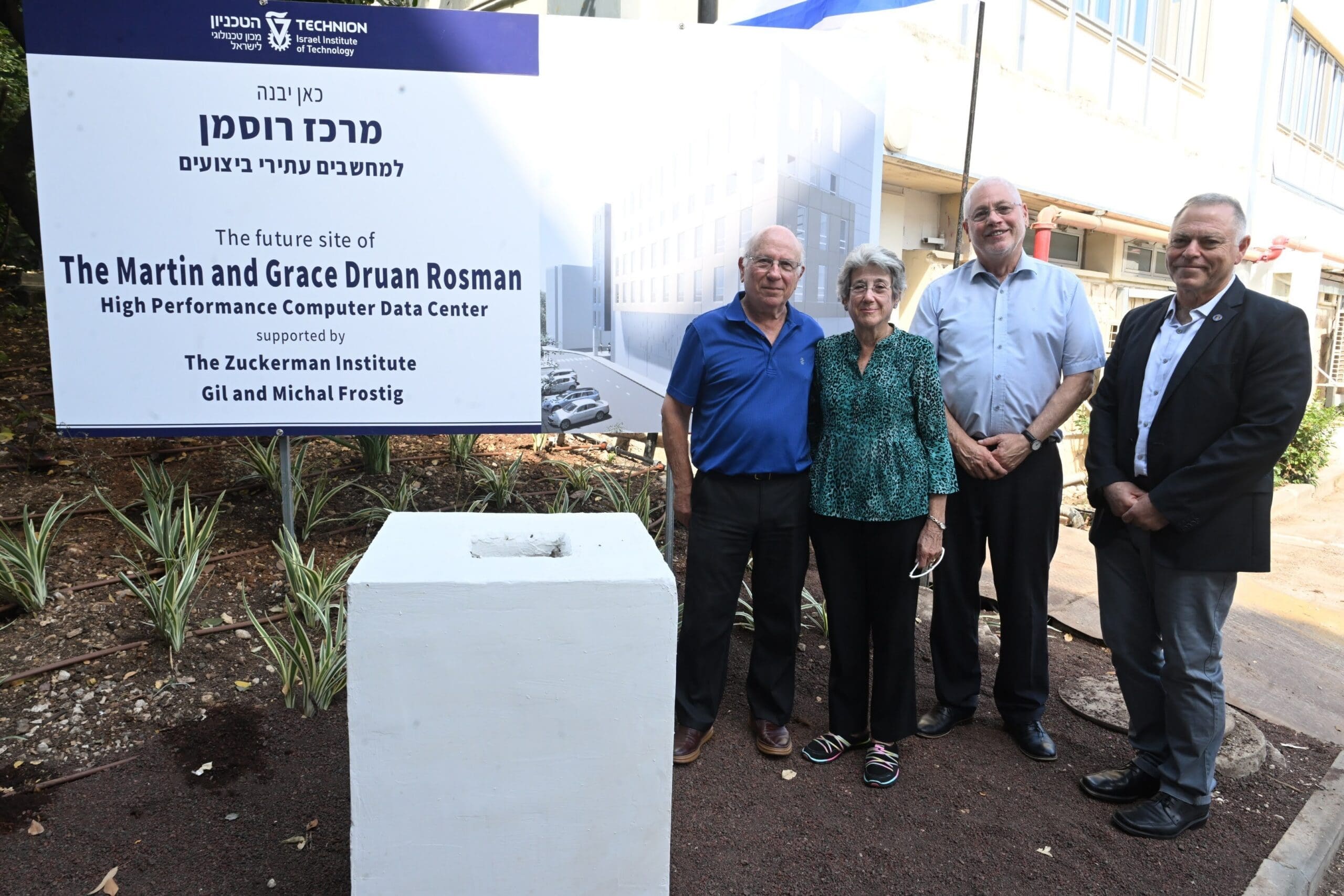
From left: Dr. Martin Rosman; Grace Druan Rosman; Technion President Prof. Uri Sivan; and Dr. Rafi Aviram, executive vice president and director general of the Technion, at the cornerstone ceremony for the Martin and Grace Druan Rosman High-Performance Computer Data Center building. | American Technion Society | Donate to Israel
Article

A Vision Built Around Students

June 29, 2026
Go
1912 - Today | Technion flag with Israeli flag | Donate to Israel | Technion University
Video

1912 to Today: The Institution That Helped Build Israel

June 10, 2026
Go
Article

Doing Well by Doing Good

May 23, 2026
Go

Watch, Read & Listen

Explore stories, news, insights, and data across articles, videos, and podcasts.

view all content types
AI in education
Article

Rethinking Education in the Age of AI 

September 25, 2026
Go
disease detection
Article

A Breathalyzer Test for Cancer?

September 17, 2026
Go
Article

Seeds of a New Community

September 08, 2026
Go
artificial intelligence health care
Article

Europe Is Betting on Technion Innovation

September 04, 2026
Go
Reuven Aronashvili
Video

From a Poor Town to Leading Paradigms in Cyber

September 25, 2026
Go
Video

Why the Perfect Pitch is Your Biggest Mistake

September 23, 2026

Go
Video

When the Newsroom Meets the Algorithm

September 18, 2026
Go
Video

Technion: The Vision to Do Good

August 17, 2026
Go
Podcast

Predictions from The Himalayas

September 17, 2026
Go
Podcast

Everything In-House

August 11, 2026
Go
the heart | American Technion Society | Donate to Israel
Podcast

The Heart Will Go On

July 15, 2026
Go
Or Yochanan | American Technion Society | Donate to israel
Podcast

Reinventing the American Dream in Austin

June 10, 2026
Go
In The News

Can Decart Put Israel on the AI Map?

September 18, 2026
Go
Tree Canopy | American Technion Society | Donate to Israel
In The News

Cornell Tech’s Tree Canopy Project Builds a Cooler New York City

August 11, 2026
Go
coexistence | American Technion Society | Donate to Israel
In The News

The Technion’s Model of Coexistence

August 07, 2026
Go
Chatbot | American Technion Society | Donate to Israel
In The News

Can AI Chatbots Support Mental Health?

August 07, 2026
Go
# 1

in Israel and Europe for research on artificial intelligence

16K +

students

# 11

in Europe and #21 in the world for aerospace engineering*

The Technion’s story has been intertwined with Israel’s for more than a century, from laying the foundations for a new nation to shaping its future.
About ATS

ATS is a community of supporters, innovators, and champions of possibility united by one mission: transforming Israel and the world through science and discovery.

Learn More

About the Technion

For more than 100 years, the Technion has been Israel's technological engine and leading driver of innovation, technology, and entrepreneurship, transforming ideas into impact.

Learn More

This DNA Can Hold a Million Thumb Drives

storing digital data in DNA, technion researcher conducting experiment in a lab | Donate to Israel | Support the Technion University

In today’s digitally driven world, as we type, snap, record, and save, we accumulate a veritable avalanche of data. This data is currently stored in buildings the size of football fields that consume vast quantities of energy. Is there a better, more efficient way?

A team of Technion researchers, led by Prof. Eitan Yaakobi in the Henry and Marilyn Taub Faculty of Computer Science, says yes. By encoding data in microscopic strands of DNA, Yaakobi’s team is leveraging nature to significantly reduce the space and energy needed to archive our digital lives.

“Nature uses DNA to store information, so we wondered, ‘Why not do the same’”? he says.

A Process of Translation

This work builds on decades of prior research. In the late 1950s, the well-known American physicist Richard Feynman first proposed the idea of storing information in DNA. Then, in the 2010s, research teams from Harvard and Oxford independently conducted the first large-scale proof-of-concept experiments, inspiring the contemporary wave of research that Prof. Yaakobi is riding.

Prof. Yaakobi’s method works by translating the language of computers, 0s and 1s or “bits,” into the language of DNA, molecules known as nucleotides. The four nucleotides that comprise DNA are adenine (A), thymine (T), guanine (G), and cytosine (C). The nucleotides couple to form base pairs, which in turn are strung together like rungs on a ladder to form DNA’s double helix structure, which resembles a winding staircase.

Like an alphabet, nucleotides convey meaning through the order in which they are arranged. In Prof. Yaakobi’s storage method, each nucleotide corresponds to a different combination of 0s and 1s. When strung together, the nucleotides encode a full series of bits. These series of bits, in turn, encode digital data such as text files, audio files, photos, or videos.

Prof. Yaakobi’s method relies on the creation of actual DNA strands using a machine known as a synthesizer, which sews together base pairs to form DNA. The DNA is then stored, spaghetti-like, in a tiny container.

On the other side of the process, the information encoded in the DNA is retrieved through a process known as DNA sequencing, which reverses the steps carried out by the synthesizer. The DNA is fed into a device known as a sequencer, which reads the DNA like a book and displays a long series of letters onto a computer: A, T, C, and G. The computer then translates this series of letters into a series of 0s and 1s.

This method of storing data is superior to existing methods in that it requires significantly less space and energy, thus preserving natural resources and eliminating harms to the environment.

Toward a More Efficient Future

“The information contained in a million thumb drives can be captured in DNA the size of one thumb drive,” Prof. Yaakobi explains. “To put it another way, the DNA contained in one human body could theoretically store more bits than exist in the entire universe.”
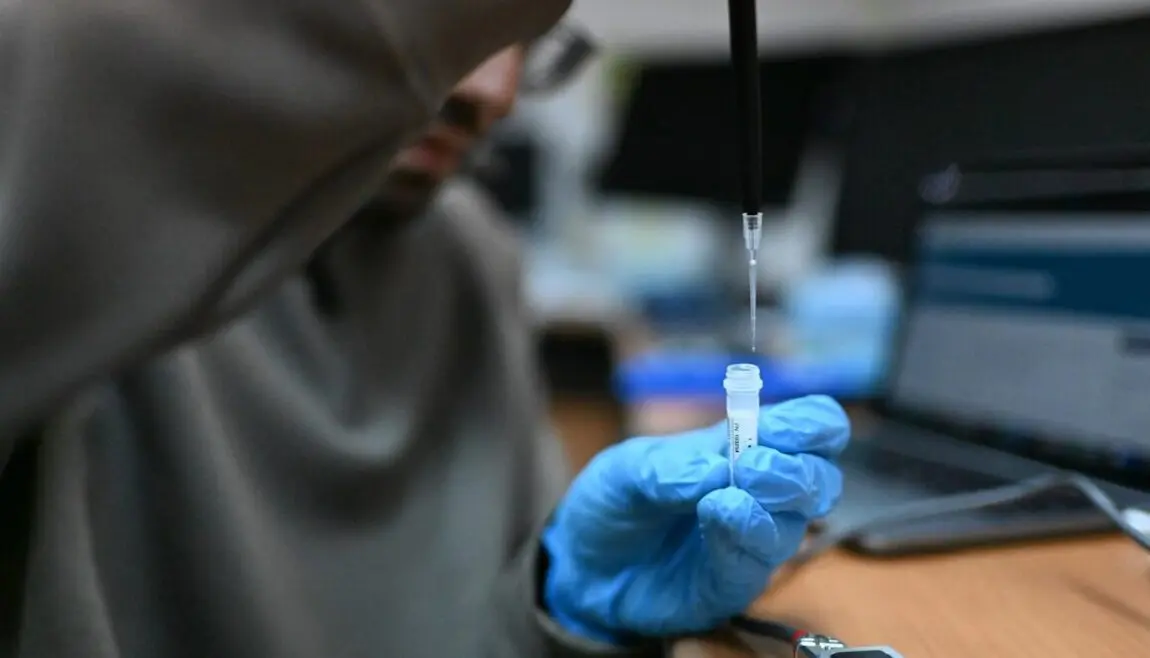
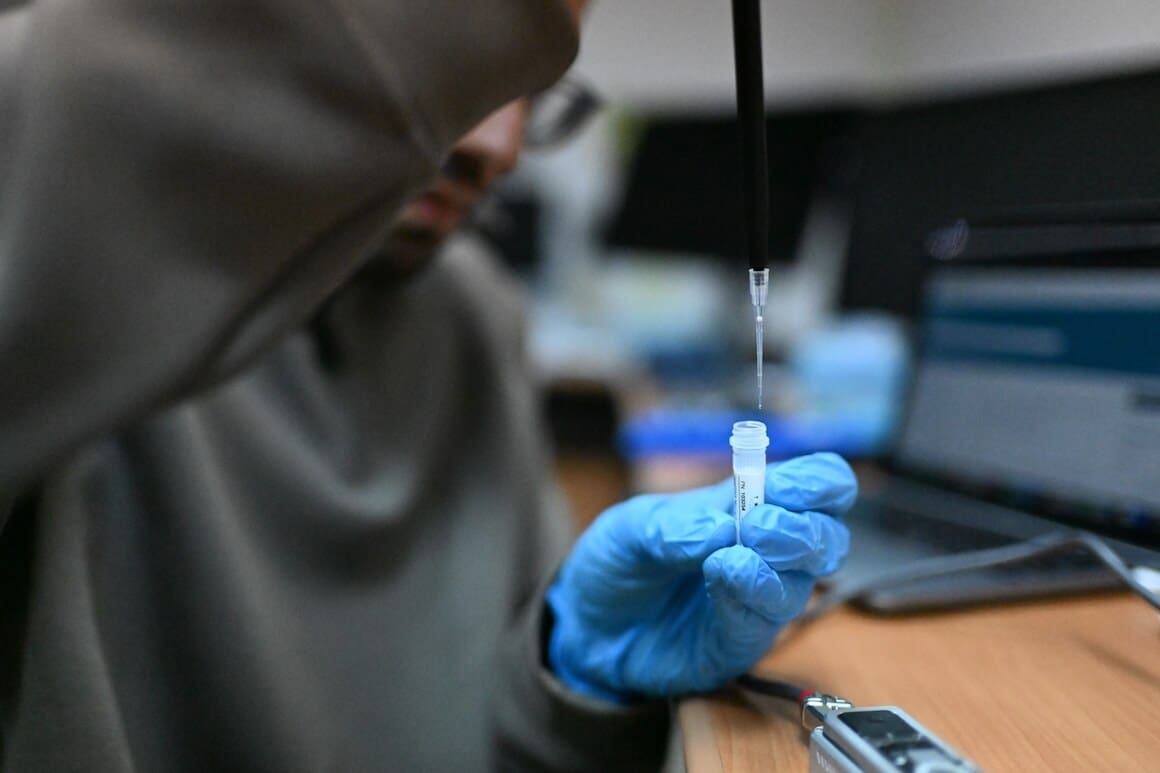
Realizing the promise of DNA data storage hinges on researchers’ ability to refine the method. The DNA synthesis process is extremely expensive, and both the synthesis and retrieval processes are very slow. What’s more, both processes are prone to errors, with the equivalent of typos occurring when writing and subsequently reading the DNA.

Prof. Yaakobi’s research focuses on correcting these errors using a mechanism known as DNAformer. The system works by comparing multiple copies of a given DNA sequence to identify and correct errors. It pieces together the “truth” by finding commonalities across the copies, in the same way a criminal investigator arrives at the truth by interviewing multiple witnesses. Prof. Yaakobi explains that future research efforts will focus not only on correcting errors, but also on reducing the cost of DNA synthesis.

The method’s real-world applications, as Yaakobi explains it, are vast. Most directly, the DNA storage method would transform how we store digital data, rending large, energy-hungry data centers irrelevant. Refining the data retrieval process would, moreover, transform our ability to sequence biological DNA, with implications for genetic engineering, medicine, and criminal justice. Finally, we could use DNA for authentication purposes: imagine, for instance, tagging a luxury car with unique DNA. While a criminal could easily replace a license plate and erase a VIN number, he would have a much harder time eliminating microscopic strands of DNA scattered throughout the cabin.

For Yaakobi, the Technion is the perfect place to move this research forward.

“I can’t imagine a better place to conduct this research than the Technion, which is home to outstanding faculty members and the brightest students in the world,” he says. “At the Technion, we can collaborate with leading researchers in biology, chemistry, bioinformatics, and mechanical engineering, enabling us to advance this research much more quickly than would otherwise be possible.”
Related Stories

AI in education
Article

Rethinking Education in the Age of AI 

September 25, 2026

Artificial intelligence is not simply changing higher education — it is detonating old assumptions about how students learn and how professors teach. As universities worldwide grapple with how to respond, the Technion is working to confront the questions head-on.  Here, AI is not treated as a threat but a catalyst, prompting careful reexamination at every […]

Go
artificial intelligence health care
Article

Europe Is Betting on Technion Innovation

September 04, 2026

Every year, the European Research Council (ERC) identifies some of the world’s most promising early-career researchers and gives them the freedom to pursue bold ideas. This year, two of those ideas came from the Technion – Israel Institute of Technology. From cancer research to artificial intelligence (AI), breakthroughs that shape the future often begin with […]

Go
Tree Canopy | American Technion Society | Donate to Israel
In The News

Cornell Tech’s Tree Canopy Project Builds a Cooler New York City

August 11, 2026

Despite New York City Mayor Zohran Mamdani’s past calls to boycott Cornell Tech because of its partnership with Israel’s Technion-Israel Institute of Technology, city officials and Jewish community leaders on Wednesday announced a $250,000 investment in a Cornell Tech research initiative aimed at expanding New York City’s tree canopy to combat rising temperatures. New York City Council Speaker Julie Menin, the first Jewish woman to hold the post, and other officials unveiled the funding for Cornell Tech’s Urban Tech Hub at the Jacobs Technion-Cornell Institute on Roosevelt Island. The grant will launch the Generative Tree Canopy Project, which will use…

Go

Love Israel and Science? 

Stay on top of the latest breaking scientific discoveries from Israel and the Technion. Subscribe to the ATS newsletter.

Secret Link