Why the Perfect Pitch is Your Biggest Mistake
September 23, 2026
















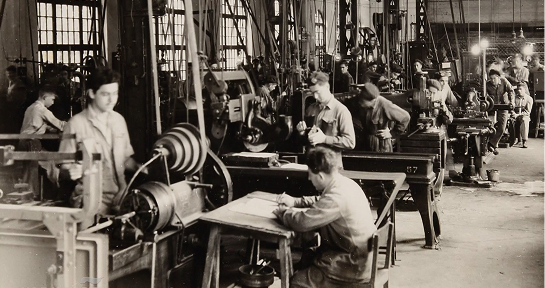
The Technion’s story has been intertwined with Israel’s for more than a century, from laying the foundations for a new nation to shaping its future.

Step inside Israeli innovation at the David and Janet Polak Visitors Center. Experience our 360° immersive movie and tech exhibition. Open to individuals and groups.
Learn More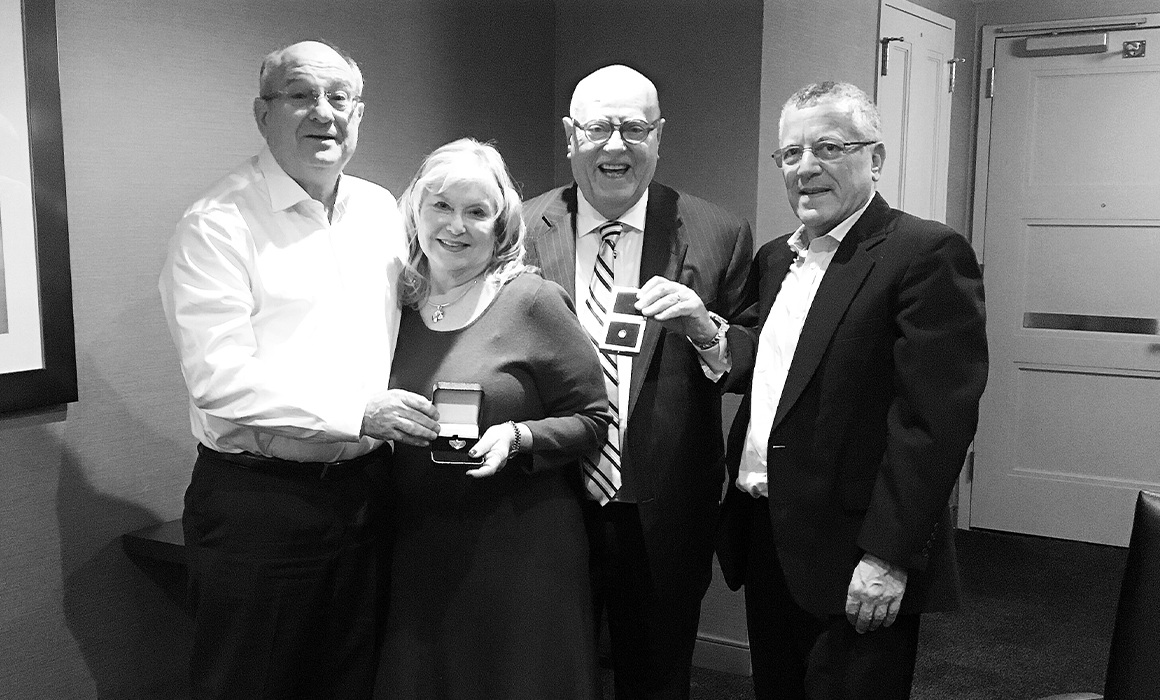
Modern-day Israel was built by hardworking pioneers, people like Avraham Ashkenazi ’66, M.S. ’72. Fleeing war-torn Europe, he studied engineering at the Technion and forged the nation’s infrastructure and industry.
After a successful career in Israel, Iran, and the U.S., Mr. Ashkenazi can now pull back — and give back. He and his late wife Patricia have contributed to numerous causes, including Friends of the IDF, Jewish Film Festival, Israel Guide Dog Center, Chabad Beth El, and other synagogues in Hampton Roads, Va., near his home in Norfolk. But the American Technion Society holds a special allure.
“The Technion is very important for Israel,” he said. “It’s a melting pot and a research hub for so many fields in the forefront of the world today, everything from engineering to medicine and nanotechnology.” Mr. Ashkenazi is active on the ATS National Board of Directors and serves on the Technion Board of Governors. He is a Technion Guardian, the designation for those whose support reaches the highest level, and established the Avraham and Patricia Ashkenazi Endowed Graduate Fellowship and the Avraham Ashkenazi Space Defense Research Fund, or what he calls a “small insurance policy for Israel’s future.”
For alumni considering if they should get involved, he said: “Get started with a small step. If you go the road, it will become interesting. You’ll pass through
mountains and forests, a lot will start happening when you start walking.” His advice could be the road map of his life.
Growing up in Bulgaria, Mr. Ashkenazi attended a Jewish school and was a member of a Jewish youth organization, the Young Pioneers. His mother, Shoshana, sang in a Jewish choir, while his father, Shemuel, played the violin and saxophone at the local Jewish orchestra. His grandfather trained youth to work the land in preparation for kibbutz life.
In 1948, at age 10, he and his parents sailed on the “Atzmaut” (Hebrew for “independence”) to Haifa, settling in a refugee camp. The family eventually found an abandoned house in Haifa, without electricity or water, and started building a life in Israel.
He attended a technical high school run by the Technion, and then joined the intelligence division of the Israel Defense Forces. “That was in 1957, just nine years after the creation of Israel,” he said. “Everything was fresh, and we were enthusiastic and did amazing things for the security of Israel.” After the service, he was accepted into the Technion.
“The Technion was my dream. I wanted to become an engineer — period,” he said. “It was Israel’s only engineering school so when we graduated, we filled most of the country’s engineering jobs, from water management to aerospace.” His studies were not easy, but he credits his education in industrial engineering for shaping his career. He started as a consultant for a variety of factories, then landed a job at Israel’s leading defense company, Rafael.
In 1970 he joined Koor Industries, a holding company started by Israel’s Histadrut labor union that was established to create jobs for Jews in Israel and those making aliyah after World War II. Mr. Ashkenazi managed a factory that manufactured steel and wire mesh for use in the construction industry. In 1977, he was sent to Iran to work for Koor’s business operations. He was there during the Iranian Revolution and was on one of the last El Al flights from Tehran to Tel Aviv in February 1979.
After he returned from Iran, he managed Koor’s MTLAM, a precision manufacturing plant for aviation and computer assemblies. He eventually moved to Norfolk and founded IAT International Inc. in 1985, which he still runs today. IAT International provides equipment and services for the railway industry and maintains offices in the U.S., Israel, and the Czech Republic.
About six years ago, Mr. Ashkenazi and his wife were invited to an American Technion Society event, where then Technion President Peretz Lavie was speaking about recruiting Technion Ph.D.s from postdoc programs abroad, back to Israel to teach on the Technion faculty. The Ashkenazis were instantly inspired, committing to support three postdocs on the spot.
Soon after, Mr. Ashkenazi told his late wife Patricia he was thinking of getting involved in the Technion “a little bit,” he recalled. “That was it,” he said of his first step on a new road.
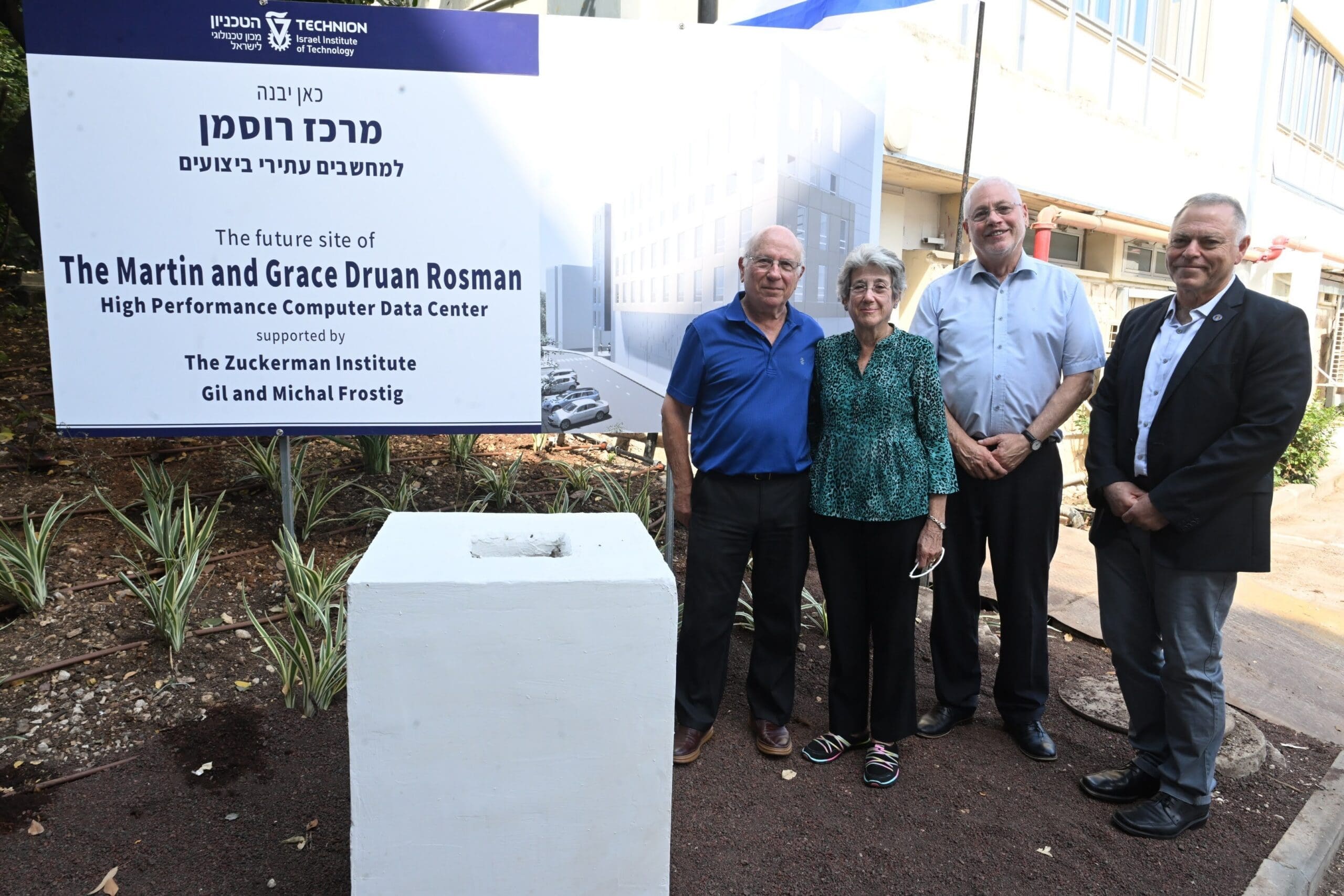
Pictured Top / Patricia z”l and Avraham Ashkenazi (center) receiving their Guardian pins from then President Peretz Lavie (l) and then Vice President Boaz Golany (r)