Why the Perfect Pitch is Your Biggest Mistake
September 23, 2026

























The Technion’s story has been intertwined with Israel’s for more than a century, from laying the foundations for a new nation to shaping its future.

Step inside Israeli innovation at the David and Janet Polak Visitors Center. Experience our 360° immersive movie and tech exhibition. Open to individuals and groups.
Learn More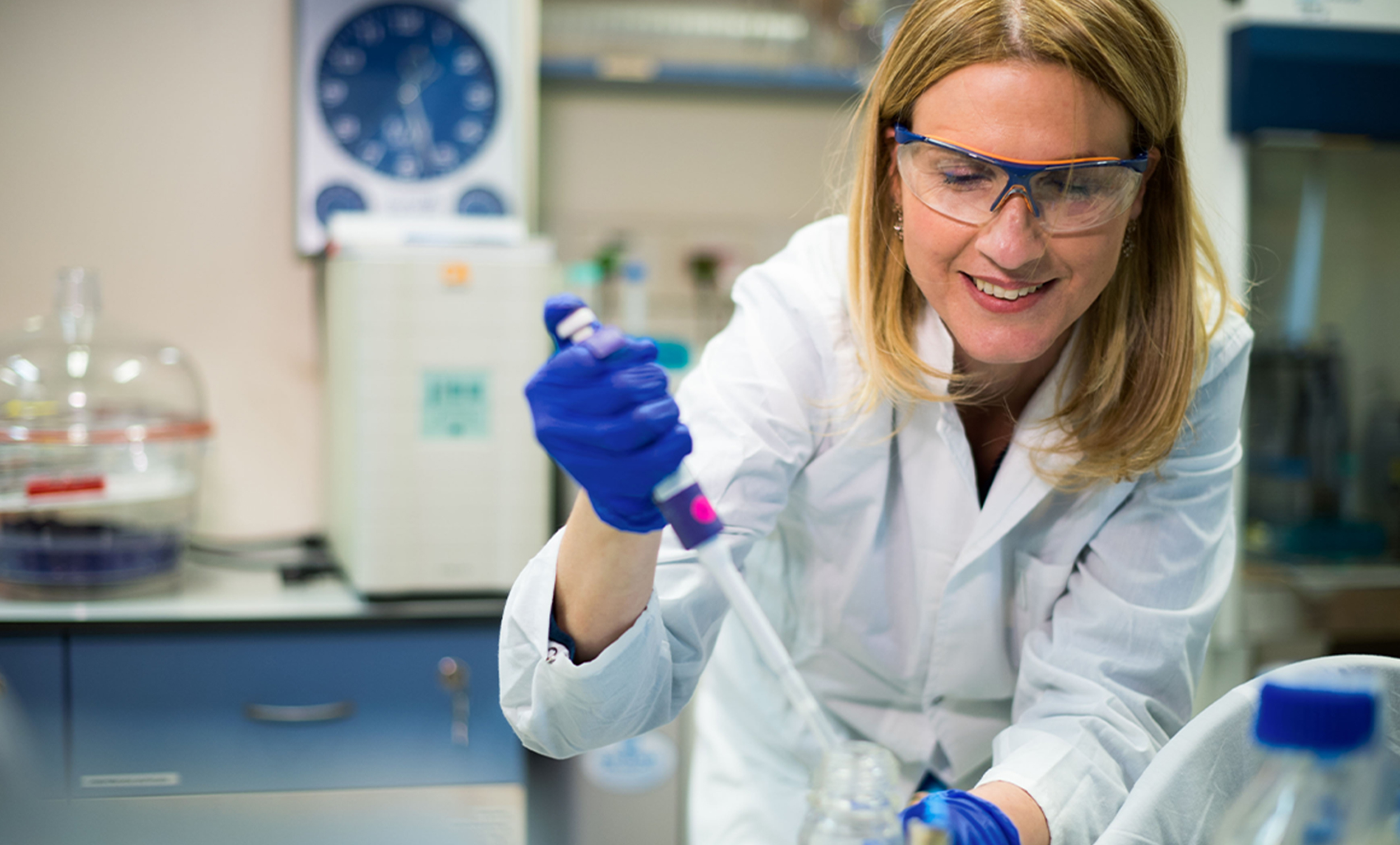
Virtually everyone has been impacted by either Alzheimer’s or Parkinson’s disease. Watching as a beloved grandparent or friend experiences cognitive decline is heartbreaking. And as the number of older Americans grows, so too will the number of cases. Americans with Alzheimer’s are slated to rise from about 5.8 million people today to 13.8 million by midcentury, while the number of Americans age 45 or older with Parkinson’s is forecasted to jump from about 930,000 today to 1,238,000 in a decade.
Technion researchers are on the front lines battling both degenerative diseases. Professor Ester Segal, who often speaks with American Technion Society supporters, along with her Ph.D. student Michal Rosenberg in the Technion Faculty of Biotechnology and Food Engineering, and scientists from Bar-Ilan University, are studying a novel approach to treatment.
Conducted with the support of the Russell Berrie Nanotechnology Institute (opens in a new tab) at the Technion and tested in mice, their approach hinges on a probable cause of Alzheimer’s: the accumulation of the protein amyloid beta, which blocks and kills neurons and damages motor function. Existing research suggests that treating Alzheimer’s patients with another protein, neural growth factor, can inhibit the disease’s progression. But there is a real barrier to success: the “blood–brain barrier,” a filtering mechanism that restricts drugs’ passage from bloodstream to brain.
As a work-around, Prof. Segal and her team have developed a nanoscale silicon chip with a porous structure that can carry large amounts of neural growth factor. Measuring just 2 millimeters on each side and 10 microns thick, the chip is small enough to get through the blood–brain barrier. And consisting of 70% holes, it acts like a sponge that can be tailored to carry the neural growth factor, releasing it over a span of a month to the target brain region. After doing so, the chips
safely dissolve.
The Segal team has described two methods of chip delivery: either implanting it into the tissue surrounding the brain or injecting it via a gene gun. Developed for a separate purpose, the gene gun was reworked by Bar-Ilan Associate Professor Orit Shefi into a spray that can propel the chip into the brain through the nose, avoiding the blood–brain barrier. Experiments so far have been restricted to animals and are ongoing.
Dozens of people from all over the world have contacted us since the publication of our work,” said Prof. Segal. “I was devastated from some of their stories and the depression of early-diagnosed Alzheimer’s patients and their families.
The Technion has a notable history in neurodegenerative research. Professor Emeritus Moussa Youdim co-created the first anti-Parkinson’s drug, rasagiline, now marketed as Azilect®. Other Technion researchers are following suit. Associate Professor Simone Engelender, for example, has posited a new theory that better accounts for the progression of Parkinson’s symptoms than the conventional model.
Although clinical studies enrolling Alzheimer’s and Parkinson’s patients are required to gauge the long-term significance of Technion research, the advances that Prof. Segal and others are making provide solid hope for an improved standard of care for both nefarious diseases.