Why the Perfect Pitch is Your Biggest Mistake
September 23, 2026

























The Technion’s story has been intertwined with Israel’s for more than a century, from laying the foundations for a new nation to shaping its future.

Step inside Israeli innovation at the David and Janet Polak Visitors Center. Experience our 360° immersive movie and tech exhibition. Open to individuals and groups.
Learn More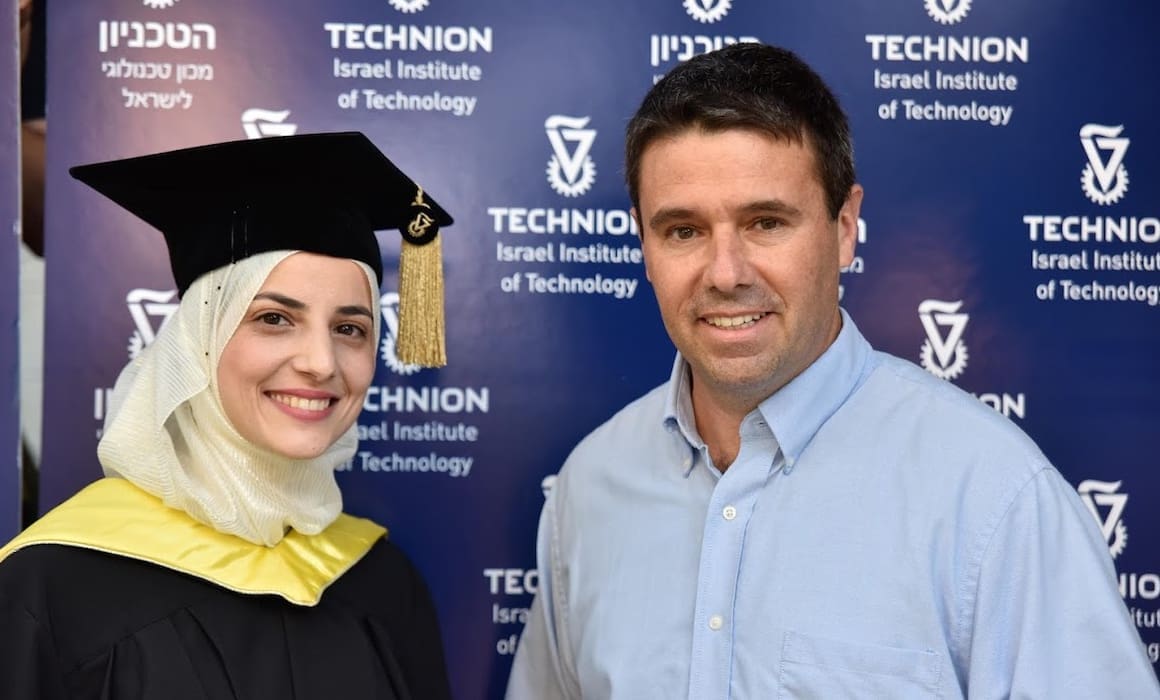
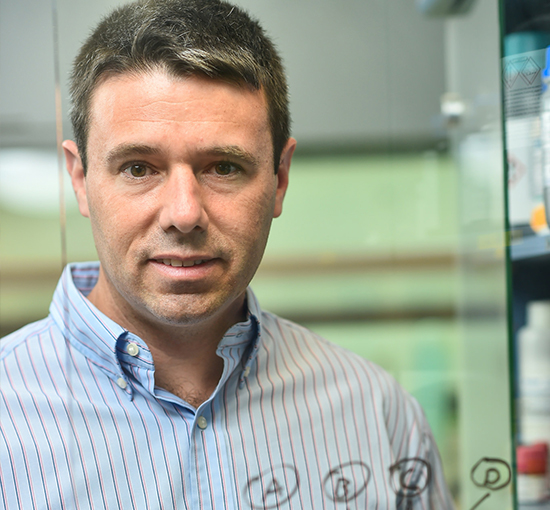
Pictured above: Dr. Hanan Abumanhal Masarweh and Prof. Avi Schroeder
Researcher behind the discovery is Dr. Hanan Abumanhal Masarweh, of the Russell Berrie Nanotechnology Institute at the Technion. She received her Ph.D. for her research under the supervision of Professor Avi Schroeder of the Technion’s Wolfson Faculty of Chemical Engineering.
Baking soda, that simple product available at any supermarket, could revolutionize breast cancer treatment, according to Technion researchers who have found that this substance changes the acidity of the cancerous tumor and thus increases the efficacy of chemotherapy.
The researcher behind the intriguing study is Dr. Hanan Abumanhal Masarweh. In May 2021, she received her Ph.D. from the Technion after completing her bachelor’s and master’s degrees at the Hebrew University’s School of Pharmacy in an excellence program called “Medication Science.” As part of her master’s research, she investigated nanotechnology-assisted protein transport through the skin. After completing her master’s degree, she enrolled in doctoral studies at the Technion.
In a 2019 study, Dr. Masarweh focused on a particularly aggressive form of breast cancer – a version that is produced by a combination of mutations and is therefore relatively resistant to existing treatments. Now, she and other Technion researchers have developed nanometric particles containing baking soda (sodium bicarbonate) that home in on cancerous tumors. In this fashion, they changed the tissue’s acidity and increased its permeability to chemotherapeutic drugs.
“Baking soda will reduce side effects”
Dr. Abumanhal explains that cancerous cells are characterized by a more acidic environment than the one that prevails in the rest of the body’s tissues. This acidity is due to metabolic changes related to the energy generation pathways in cancer cells.
“In healthy cells, too, there is an increase in acidity when rapid energy production is required, but in cancer cells it is the dominant energy-generating pathway; acidity makes cancer cells more aggressive and more metastatic,” she said. “Introducing baking soda into the method we developed will reduce the necessary drug dosage and therefore could reduce side effects.”
The findings of the study show that the aforementioned treatment, which affects the tumor’s environment, intensifies the anti-cancer activity of chemotherapy drugs. They also show the positive effects of a combined treatment, which attacks several components at the same time and weakens the tumor environment.
“Suffocating” the tumor
The innovation of her doctoral research is not limited to the original use of baking soda but includes a more comprehensive view of the cancerous tumor and, more importantly, its environment.
“Many studies show and emphasize the importance of the tumor environment in supporting cancer cells, and in facilitating the cancer cells’ ability to penetrate nearby tissues and metastasize throughout the body,” she said. “In addition, changes in the environment of the cancerous tumor tissue may affect the tumor’s response to treatments and promote the development of resistance to the anti-cancer treatment. Therefore, it is important to develop a synergetic treatment that changes the tumor’s environmental balance and thus ‘suffocates’ it.”
“A successful research experience”
“In my undergraduate degree, I realized that I was not only interested in finding the molecule that would cure the disease, but in finding a way to lead the molecule in the most effective way to the target site,” said Dr. Abumanhal. “When I moved up north, I was looking for a laboratory at the Technion that specialized in nanotechnology and pharmacological distribution. That is how I got to Prof. Avi Schroeder of the Wolfson Faculty of Chemical Engineering. I enjoyed working in his lab, because I was exposed to new knowledge and had a successful research experience.”
During this period, Abumanhal won the Baroness Ariane de Rothschild Fellowship for Ph.D. studies – a prestigious scholarship from the Edmond de Rothschild Foundations that supports outstanding Ph.D. students at the beginning of their research careers.