The Technion’s story has been intertwined with Israel’s for more than a century, from laying the foundations for a new nation to shaping its future.

From medicine to security, explore how the Technion is advancing Israel and improving lives around the world.
View All Impact Areas
Explore stories, news, insights, and data across articles, videos, and podcasts.
view all content types
companies founded by graduates and faculty in the last 10 years
of all universities in the world*
of the student body are women
The Technion’s story has been intertwined with Israel’s for more than a century, from laying the foundations for a new nation to shaping its future.
Explore ATS, the Technion, and the people behind the breakthroughs redefining what's possible for Israel and the world.
Learn More About ATSATS is a community of supporters, innovators, and champions of possibility united by one mission: transforming Israel and the world through science and discovery.
Learn MoreFor more than 100 years, the Technion has been Israel's technological engine and leading driver of innovation, technology, and entrepreneurship, transforming ideas into impact.
Learn More
Step inside Israeli innovation at the David and Janet Polak Visitors Center. Experience our 360° immersive movie and tech exhibition. Open to individuals and groups.
Learn MoreFrom medicine to security, explore how the Technion is advancing Israel and improving lives around the world.
View All Impact AreasExplore stories, news, insights, and data across articles, videos, and podcasts.
view all content typesDiscover ways to support, connect, and help drive innovation.
Get InvolvedExplore ATS, the Technion, and the people behind the breakthroughs redefining what's possible for Israel and the world.
Learn More About ATS
It’s been called the “21st century plague,” a “gray epidemic” attacking our loved ones.
It’s Alzheimer’s disease, the most common form of dementia, and its prevalence is growing as life expectancies are increasing.
The Gray Epidemic
We understand the major cause of Alzheimer’s: an accumulation of the protein amyloid beta (Aβ) in brain tissues. The excess amyloid beta protein kills neurons, or nerve cells, in the brain.
The result includes memory loss, speech impairments, orientation problems, and significant impairment of motor functions.
But for a disease that is devastatingly common — more than 30% of people over the age of 85 will develop Alzheimer’s disease — a way of stopping the growth of Alzheimer’s has been out of reach for decades. Until Technion researchers stepped in.
New hope for Alzheimer’s patients
Professor Ester Segal and Ph.D. student Michal Rosenberg of the Technion Faculty of Biotechnology and Food Engineering, along with their partners at Bar Ilan University, have developed a new technology to inhibit the development of Alzheimer’s disease.
They knew a protein called neural growth factor could prevent Alzheimer’s from attacking neurons in the brain. The challenge was how to get neural growth factor to affected areas of the brain. The brain rests beneath the blood-brain barrier (BBB), which protects the central nervous system (including the brain) from being infiltrated by bacteria and harmful substances from the blood. It also, unfortunately, prevents drugs that could treat Alzheimer’s from flowing from the bloodstream to the brain.
Enter nanoscale silicon chips
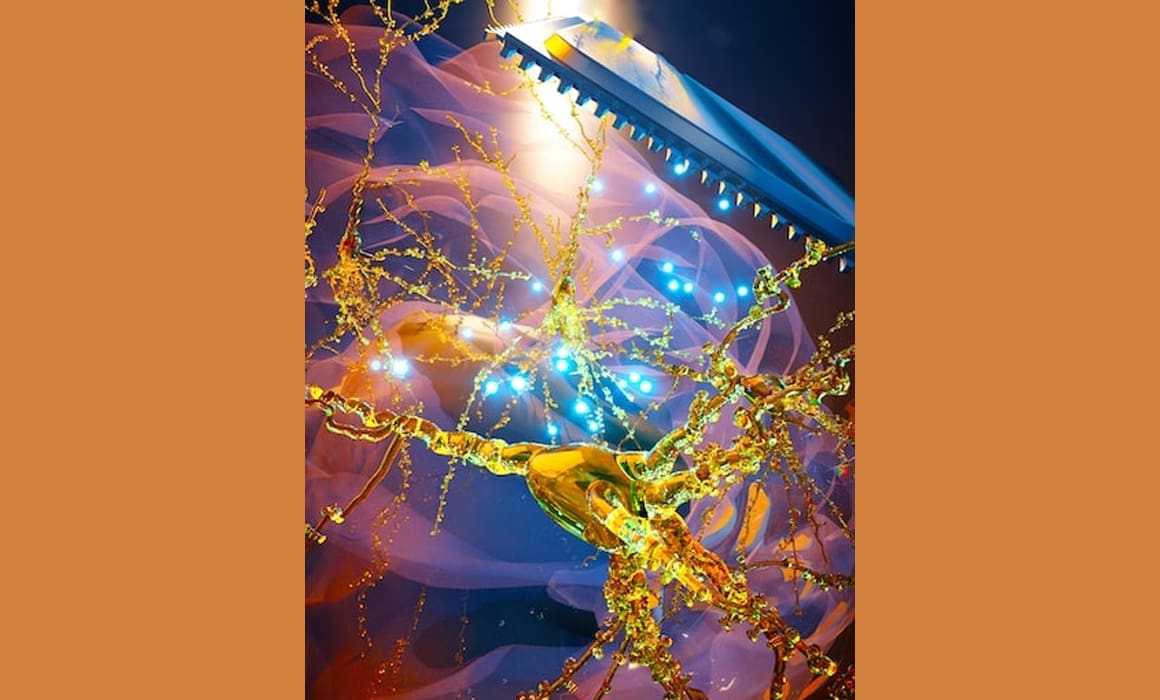
Technion researchers, alongside their partners at Bar Ilan University, discovered an innovative solution to this challenge: silicon chips with a nanoscale porous structure that can be loaded with large amounts of protein and inserted directly into the brain, bypassing the BBB altogether.
The chips, developed in Prof. Segal’s lab at the Technion, are designed to retain the neural growth factor protein in its optimal form and release the protein into the brain gradually over a month. Afterwards, the chip safely dissolves into the brain.
In lab tests, the gradual release of neural growth factor protein via chip has rescued nerve cells damaged by Alzheimer’s disease. This opens up the potential for reversing the destructive impact of Alzheimer’s and other neurodegenerative diseases.

November 19, 2019
Find out how Technion nanoscale chips may offer insights into stopping the growth of Alzheimer's in patients as life expectancy rises.
1 min
X (opens in a new tab) / Facebook (opens in a new tab) / LinkedIn (opens in a new tab) / Email / Copy Link
What if diagnosing cancer, Parkinson’s disease, or other serious illnesses could be as simple as breathing into a handheld device? That possibility is moving closer to reality thanks to the work of the Technion’s Prof. Hossam Haick, whose groundbreaking research is changing how diseases are detected around the world. In recognition of his extraordinary achievements, […]
Every year, the European Research Council (ERC) identifies some of the world’s most promising early-career researchers and gives them the freedom to pursue bold ideas. This year, two of those ideas came from the Technion – Israel Institute of Technology. From cancer research to artificial intelligence (AI), breakthroughs that shape the future often begin with […]
As more people turn to AI chatbots for companionship, life advice, or even as a stand-in for therapy, experts say the technology offers both new opportunities and risks when it comes to mental health. Prof. Tanzeem Choudhury is the chief of health innovation in the Joan & Irwin Jacobs Technion-Cornell Institute and has been studying AI and mental health for 15 years. She said AI tools are available any time, often at low cost, making it easier for people to access some form of mental health support.
Stay on top of the latest breaking scientific discoveries from Israel and the Technion. Subscribe to the ATS newsletter.