Why the Perfect Pitch is Your Biggest Mistake
September 23, 2026



















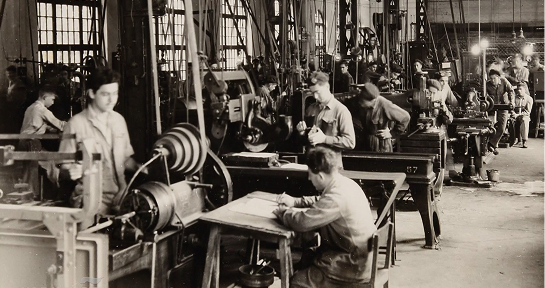
The Technion’s story has been intertwined with Israel’s for more than a century, from laying the foundations for a new nation to shaping its future.
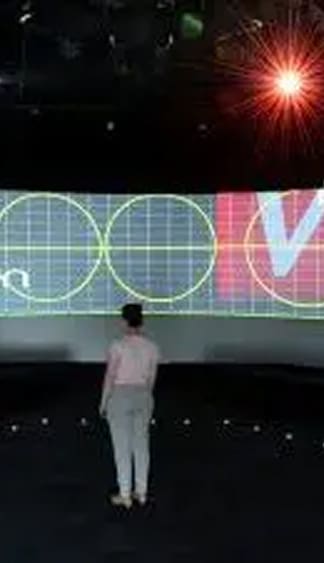
Step inside Israeli innovation at the David and Janet Polak Visitors Center. Experience our 360° immersive movie and tech exhibition. Open to individuals and groups.
Learn More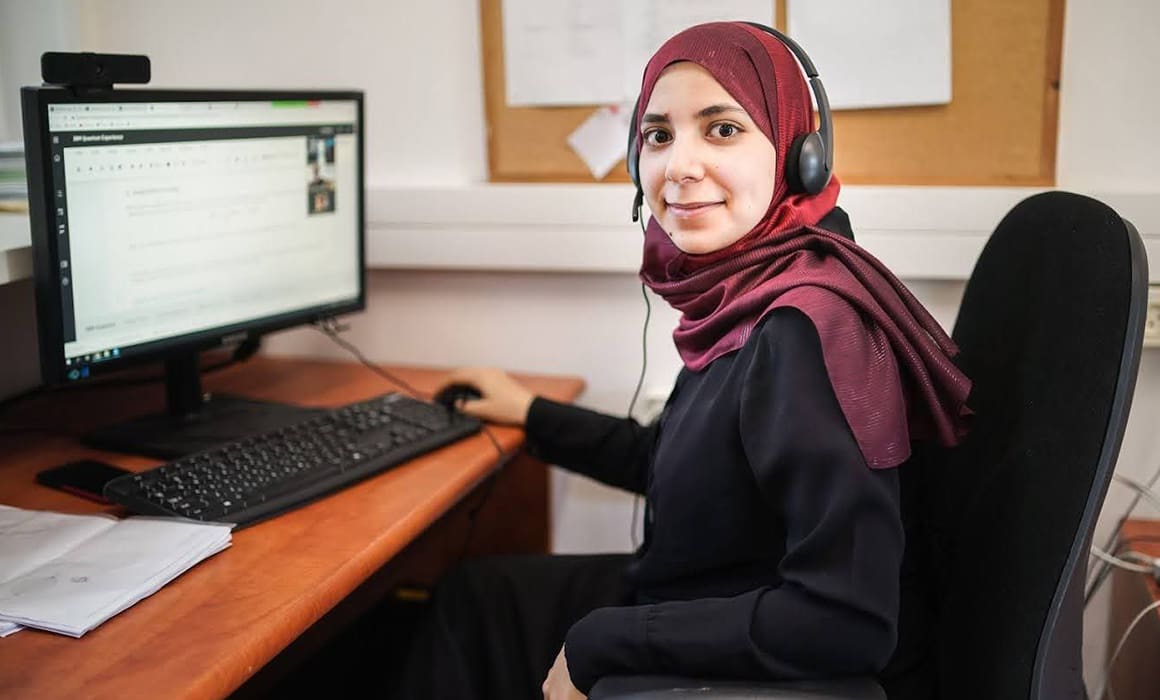
Quantum computing is surely poised to shape the future of computer science and technology in a big way. Companies including IBM, Google, and Honeywell are racing to build super-fast, quantum-based computers, while potential users like Pfizer are preparing for the quantum era.
The Technion also has fully embraced the next-generation technology.
In 2018, the Technion established the Helen Diller Center for Quantum Science, Matter and Engineering, building on its strengths in computer science, quantum physics, and engineering. And in October 2020, just before classes began, the Technion held its first, highly popular quantum computing “summer school.”
More than 220 students took part in the massive online week-long program taught through the Quantum Computing Primer School, led by Assistant Professor Netanel Lindner, at the Helen Diller Center. Participants were introduced to the foundations of quantum computing theory along with practical programming on an IBM quantum minicomputer. The program did not assume prior knowledge of quantum science, though some participants, who hailed from the fields of computer science, physics, and chemistry as well as from industry, had earlier exposure.
Why was the program so sought-after? “Somehow the future will depend on this, and people understand that,” said Ph.D. candidate and alumna Tasneem Watad ’16, M.Sc. ’19, who taught the practical portion of the course with Dr. Yossi Weinstein. “Think of it as when the Internet started. The quantum revolution is in those first steps and people want to be part of it.”
Classical computers use binary codes of 0 and 1 to represent information, where the value of 1 is represented by a higher electrical voltage relative to that of 0. Quantum computing, on the other hand, is based on the mind-bending concept that atomic particles can be in multiple states at the same time. Instead of analyzing 1 and 0 sequentially, quantum computing uses ones, zeros, and “superpositions,” or overlaps of ones and zeros, to look at all the different combinations of data simultaneously.
As a result, quantum computing can deal with larger sets of variables while crunching the data exponentially quicker. Scientists believe quantum computing will revolutionize computation and have a significant impact on every field. Specifically, it will make communications more secure, and lead to revolutionary developments in biomedicine, defense, and energy-saving devices.
In the Technion’s recent program, participants were trained to create quantum computing programs using the Quiskit software developed by IBM. “This software makes it possible to implement a wide range of quantum applications, experiments, and algorithms, and run them on IBM real quantum devices” said Ms. Watad. “The participants got used to working in this world and will be able to discover by themselves the possibilities that are hidden in the field of quantum computing.”
Ms. Watad is one of five siblings, three of whom are attending the Technion, and is married to a Technion alumnus. “I had a passion for math and physics in high school and knew then that was the world I would explore,” she said. Ms. Watad earned her Technion bachelor’s and master’s degrees in physics, making the Dean’s Honor List for Excellence four times. She is scheduled to receive her doctorate in 2023. After that, quantum is her oyster.
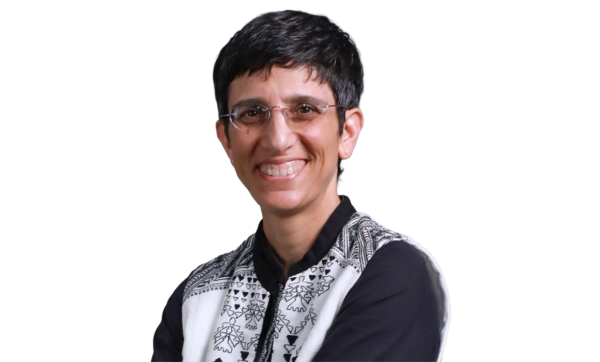
Photo pictured above: Captions for photo: Ph.D. student Tasneem Watad ’16, M.Sc. ’19