Something Fresh in the State of Denmark
October 06, 2026






























The Technion’s story has been intertwined with Israel’s for more than a century, from laying the foundations for a new nation to shaping its future.

Step inside Israeli innovation at the David and Janet Polak Visitors Center. Experience our 360° immersive movie and tech exhibition. Open to individuals and groups.
Learn More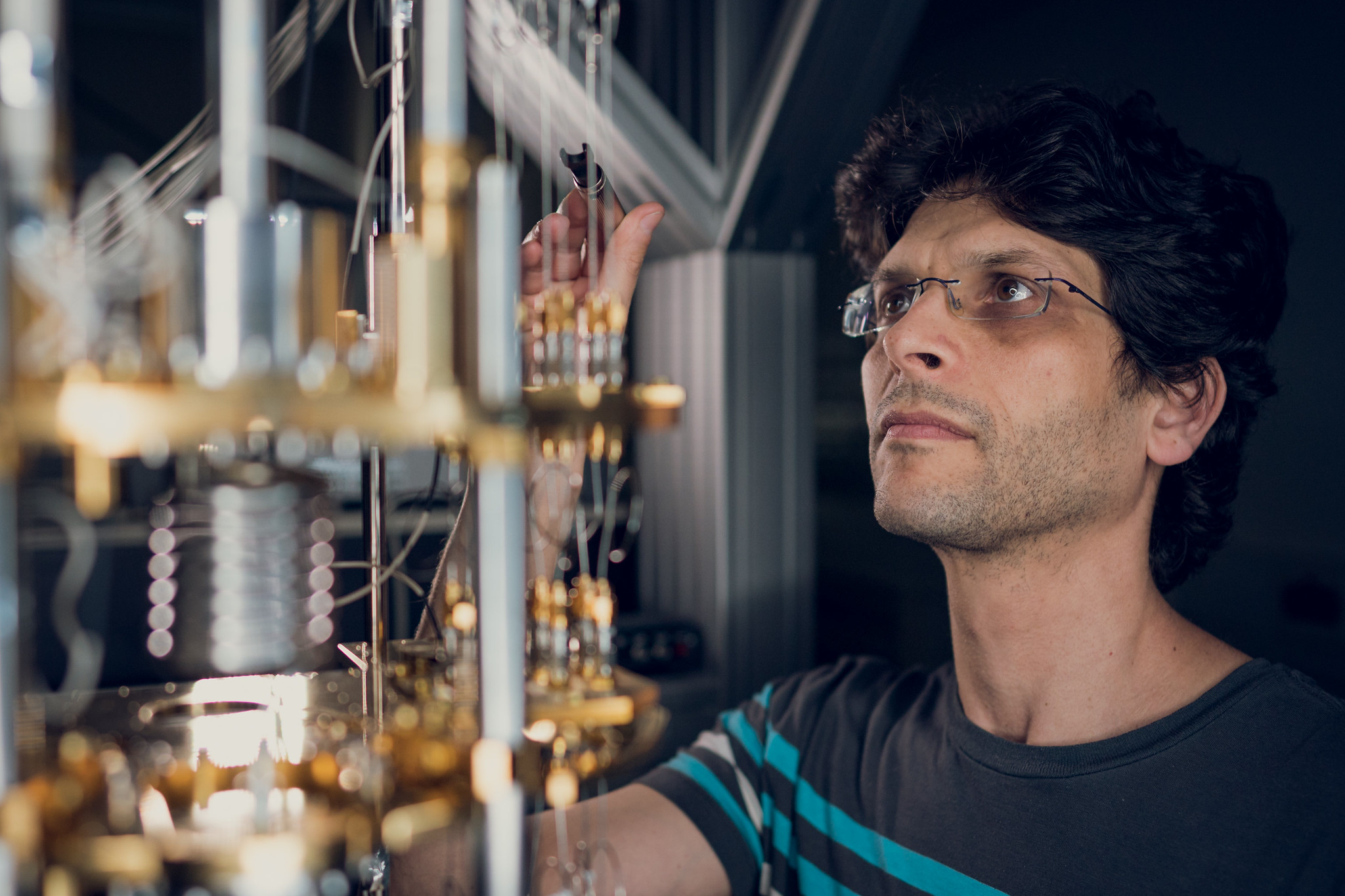

At the Technion, Israel Institute of Technology, the future often begins with a deceptively simple question: What can we do today that we could not do before? “Science and engineering have never been about yesterday’s tasks. They’ve always been about the future,” said Prof. Lihi Zelnik-Manor, vice president of External Relations and Resource Development at […]

Generations of faculty, students, and alumni have helped build the technologies, companies, and industries that earned Israel its reputation as the “Startup Nation,” with Technion – Israel Institute of Technology graduates founding hundreds of startups and driving breakthroughs in fields ranging from AI and cybersecurity to semiconductors and robotics. Here’s a look at some recent […]

Israeli startup Q-Factor had operated largely under the radar until today, but it has already attracted significant attention within the industry due to its unusually strong academic pedigree. The company, which is developing a full-scale quantum computer based on neutral atom technology, was founded by four leading physicists from the Weizmann Institute of Science and the Technion, each of whom heads a prominent laboratory in the field. It is now emerging from stealth with a $24 million Seed round, completed just months after its founding. The round was led by NFX and TPY Capital, with participation from Intel Capital, Korea…
Patent registration involves prestige as well as significant money. Commercial companies file patents and reap major profits, but academic institutions also benefit from the innovations developed by their researchers. Israel holds a respected position in this arena, and for the fifth consecutive year, the Technion – Israel Institute of Technology ranked among the Top 100 institutions for U.S. patent approvals. The latest ranking places the Technion first in Israel, second in Europe, and within the list of the world’s 100 leading institutions for U.S. patent approvals in 2025. The Technion ranked 81st globally, with 46 patents approved during the year,…

Israel’s quantum computing sector is experiencing a breakout year. In 2025 alone, five Israeli quantum companies have raised almost $500 million, an influx of capital that places the country among the most active and diversified quantum hubs in the world. The companies – Quantum Art, Classiq, QuamCore, Qedma, and Quantum Machines – span nearly every layer of the quantum stack, from hardware and scaling architectures to control systems and error-correction software. Quantum Art announced a $100 million Series A, bringing its total funding to $124 million. The round was led by Bedford Ridge Capital with participation from Battery Ventures, Destra…

A groundbreaking study from the Technion – Israel Institute of Technology unveils a newly discovered form of quantum entanglement in the total angular momentum of photons confined in nanoscale structures – just a thousandth the width of a human hair. This discovery could play a key role in the future miniaturization of quantum communication and computing components. The study, published in Nature, was led by Ph.D. student Amit Kam and Dr. Shai Tsesses (now a postdoctoral researcher at MIT) from Prof. Guy Bartal’s research group, in collaboration with the groups of Distinguished Prof. Moti Segev and Prof. Meir Orenstein. Additional…

Frankly, I think 100 years is too far to look into the future because we will see dramatic new scientific areas emerge 20 years from now. My grandfather immigrated to Israel in 1946 from Holland to be a Technion student in civil engineering. At that time, civil engineering and mechanical engineering were the most prestigious […]

The Israel-U.S. Binational Industrial Research and Development (BIRD) Foundation has announced that it has approved $8 million in funding for nine new projects between U.S. and Israeli companies. Alongside grants from BIRD, the projects will access private-sector funding and boost the total investment in all projects to $23 million. As well as conditional grants of up to $1.5 million, the BIRD Foundation assists by working with companies to identify potential strategic partners and facilitate introductions. The submitted projects are reviewed by evaluators appointed by the National Institute of Standards and Technology (NIST) of the U.S. Department of Commerce and the…

US gaming and computer graphics giant Nvidia has joined forces with an Israeli startup to roll out a new hardware system to connect the quantum computer with classical computers. The new system, Nvidia DGX Quantum, built together with Israel’s Quantum Machines, a developer of a standard universal language for quantum computers, is expected to be first deployed at Israel’s quantum computing research center at the end of this year. The quantum computing R&D center funded by the Israel Innovation Authority at an investment of NIS 100 million ($27 million), which is headed by Quantum Machines, was established to help Israel build a…

What’s your password? The question makes most of us cringe because we all have a gazillion passwords for banking, shopping and everything else we do online. But with passkeys, there’s nothing to remember or type in. Touching our finger or showing our face to a device for authentication is so much easier. And it is safer, too, says Tal Zamir, CTO of Tel Aviv-based Perception Point, whose software detects, investigates and remediates any kind of hack attack across a company’s email, web browsers and cloud collaboration channels.

One of the things that sets the quantum world apart from our everyday classical one is the capacity for entanglement—when two or more objects share an invisible connection that entwines their fates. Entanglement is the most extreme version of a quantum connection, where measuring one particle can tell you everything you need to know about another. Short of that, particles can still sync up in decidedly quantum ways, where measuring one particle will give you some incomplete information about another. Such quantum correlations can be used to make more precise measurements than classical ones. For example, they can help us detect gravitational waves….

Researchers have theorized a new mechanism to generate high-energy “quantum light,” which could be used to investigate new properties of matter at the atomic scale. The researchers, from the University of Cambridge, along with colleagues from the U.S., Israel and Austria, developed a theory describing a new state of light, which has controllable quantum properties over a broad range of frequencies, up as high as X-ray frequencies. Their results are reported in the journal Nature Physics. The world we observe around us can be described according to the laws of classical physics, but once we observe things at an atomic scale,…