Something Fresh in the State of Denmark
October 06, 2026






















The Technion’s story has been intertwined with Israel’s for more than a century, from laying the foundations for a new nation to shaping its future.
Step inside Israeli innovation at the David and Janet Polak Visitors Center. Experience our 360° immersive movie and tech exhibition. Open to individuals and groups.
Learn More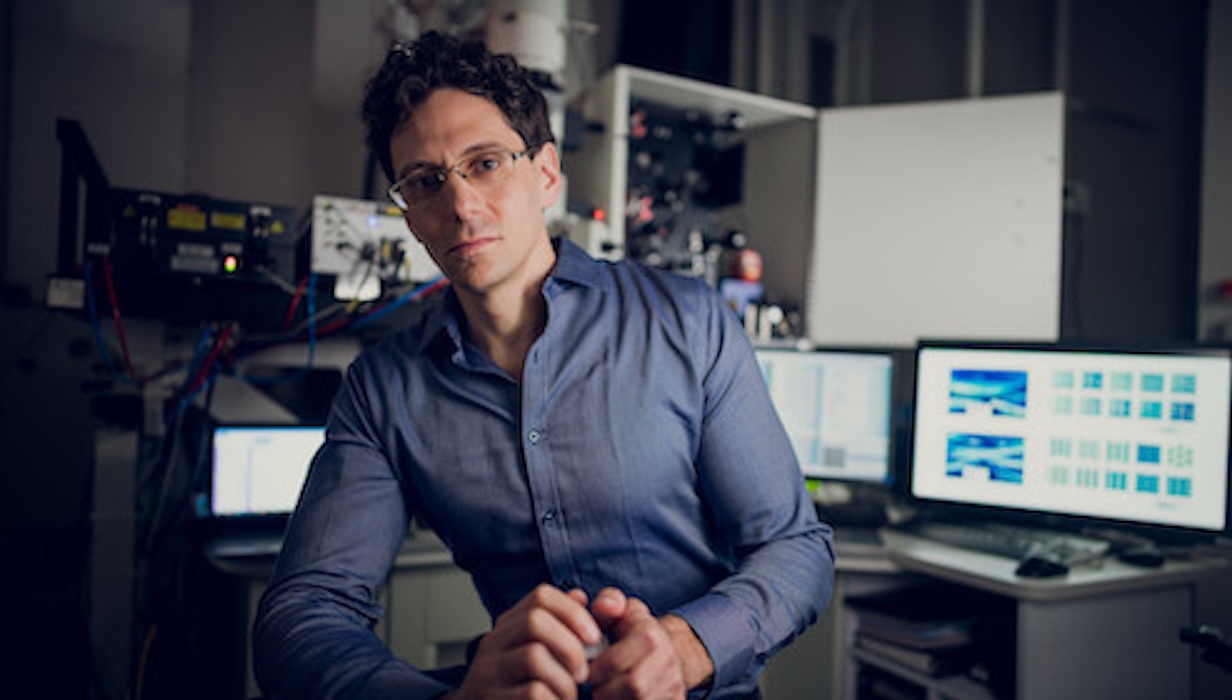
Frankly, I think 100 years is too far to look into the future because we will see dramatic new scientific areas emerge 20 years from now. My grandfather immigrated to Israel in 1946 from Holland to be a Technion student in civil engineering.
At that time, civil engineering and mechanical engineering were the most prestigious fields you could study. Back then, the disciplines of science that I work in, like computer science and electrical engineering, did not even exist as separate fields.
New discoveries in fundamental science and new tech innovations are just beautiful — it’s hard to imagine where it stops.”
Associate Professor Ido Kaminer
In comparison, today progress happens even more quickly. This rapid progress is especially apparent in disciplines like quantum technologies and AI.
There is a lot of public interest in quantum computing, and I don’t think there is any doubt that we will have quantum computers in 100 years, and that their discovery will be remembered as fundamental as the invention of computing itself.
But much earlier, we are already benefiting today from certain quantum technologies, like atomic clocks for navigation and MRI machines for medical imaging.
Another direction where the field of quantum is very promising right now, but is not yet appreciated, is in its potential to find new innovations for old problems and improve existing technologies, such as our lab’s work on scintillators and X-ray imaging.
This idea of applying a new scientific concept into old problems is not unique to quantum. In photonics and nanophotonics, scientists are developing large-scale filters based on nanoparticles that can alter sunlight that is absorbed by apple trees to control their taste, size, and what time of year they ripen.
New discoveries in fundamental science and new tech innovations are just beautiful — it’s hard to imagine where it stops. Much before quantum technologies ripen, we will see AI play a major role in science and even in making new scientific discoveries.
This will happen in less than 100 years. We can already see this with the Ramanujan Machine project, where my colleagues and I published some of the pioneering papers that use computer algorithms for enhancing human discovery.
This area of “AI for science” really alters the way we make progress in science and technology.
Is it possible that AI is making us irrelevant? Or worse, could it become dangerous to our societies, in science and beyond it? It is important to ask in what way will we be able to adapt and use AI to make ourselves more effective as scientists. I think it is in our hands to affect which path it will be.
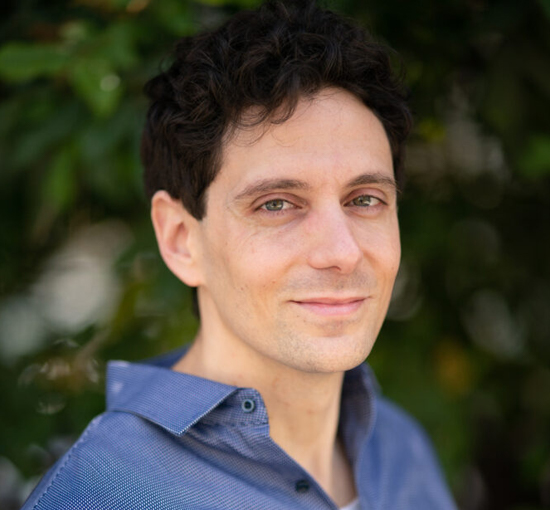
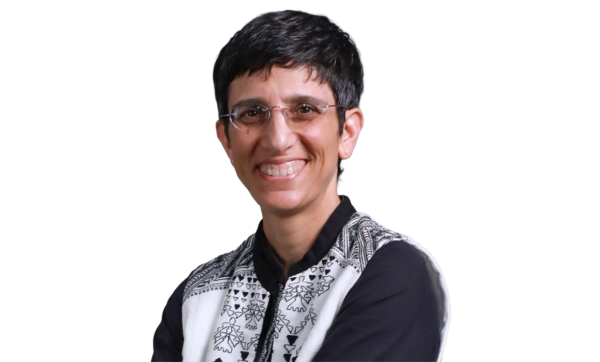
This article was written by Associate Professor Ido Kaminer of the Andrew and Erna Viterbi Faculty of Electrical and Computer Engineering.