The Technion’s story has been intertwined with Israel’s for more than a century, from laying the foundations for a new nation to shaping its future.

From medicine to security, explore how the Technion is advancing Israel and improving lives around the world.
View All Impact Areas
Explore stories, news, insights, and data across articles, videos, and podcasts.
view all content types
among universities worldwide for producing undergrad entrepreneurs
students
locations
The Technion’s story has been intertwined with Israel’s for more than a century, from laying the foundations for a new nation to shaping its future.
Explore ATS, the Technion, and the people behind the breakthroughs redefining what's possible for Israel and the world.
Learn More About ATSATS is a community of supporters, innovators, and champions of possibility united by one mission: transforming Israel and the world through science and discovery.
Learn MoreFor more than 100 years, the Technion has been Israel's technological engine and leading driver of innovation, technology, and entrepreneurship, transforming ideas into impact.
Learn More
Step inside Israeli innovation at the David and Janet Polak Visitors Center. Experience our 360° immersive movie and tech exhibition. Open to individuals and groups.
Learn MoreFrom medicine to security, explore how the Technion is advancing Israel and improving lives around the world.
View All Impact AreasExplore stories, news, insights, and data across articles, videos, and podcasts.
view all content typesExplore ATS, the Technion, and the people behind the breakthroughs redefining what's possible for Israel and the world.
Learn More About ATS
Valvular heart disease is the term used to describe when any valve in the heart is damaged or diseased. According to the U.S. Centers for Disease Control and Prevention, about 2.5% of the U.S. population has valvular heart disease – but it is more common in older adults. When any of the heart’s valves are diseased, they are unable to fully open or close to allow proper blood flow from one area of the heart to the next or in the correct direction it needs to move. In more severe cases, treatment can require open heart surgery. A new alternative developed by Israeli startup company Cuspa Medical (opens in a new tab) might one day offer a less invasive, less expensive, and safer option for valvular heart disease patients.
That option, an artificial cusp called the Cusper, attaches to the heart’s valve and helps to reduce the backflow of blood to the heart’s chamber. The device is placed during a minimally invasive catheter procedure, saving the patient from longer rehabilitation time and more pain. The doctor pushes the device out of a sheath and directs it to the desired location. It attaches to the valve using a metal grasper, holding the valve at its original size and ensuring that when the valve closes there is no leakage entering the opening.
The device is currently being tested on large animals to ensure safety and efficacy. It also has two international patents pending approval in North America, Europe, and Asia. Cuspa Medical CEO Ariel Weigler is a Technion alumnus, and Technion Professor (and alumnus) Yair Feld is the company’s founder and director.
December 19, 2022
Understand valvular heart disease, its impact on the heart, and potential less invasive treatment solutions for better health.
1 min
X (opens in a new tab) / Facebook (opens in a new tab) / LinkedIn (opens in a new tab) / Email / Copy Link
Heart Health / Alumni / Healthy Aging / Startups /
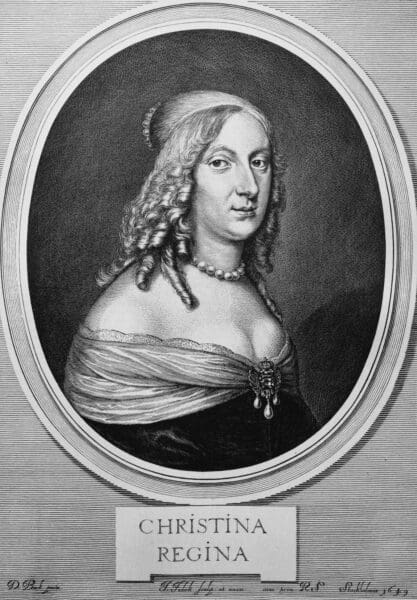
An Israeli medical researcher has helped shed new light on a mystery that has endured for nearly 340 years: what killed Queen Christina of Sweden, one of 17th-century Europe’s most unusual monarchs. Prof. Zaid Abassi of the Technion – Israel Institute of Technology’s, Ruth and Bruce Rappaport Faculty of Medicine and Rambam Health Care Campus, […]
Artificial intelligence is rapidly becoming an integral part of our lives, and a working tool for professionals in a variety of fields, including medicine, which integrates AI in order to reach faster, more accurate, and more efficient diagnoses. But to what extent can AI truly be relied upon when it comes to complex medical decisions? […]
Few medical decisions seem so simple, yet create so much uncertainty: Is the infection bacterial, and therefore potentially in need of antibiotics, or viral, meaning antibiotics will not help? For years, physicians have tried to answer that question using symptoms, blood tests and tests that directly search for the virus or bacteria. Israeli company MeMed […]
Stay on top of the latest breaking scientific discoveries from Israel and the Technion. Subscribe to the ATS newsletter.