Video

Why the Perfect Pitch is Your Biggest Mistake

September 23, 2026

Go
Video

When the Newsroom Meets the Algorithm

September 18, 2026
Go
disease detection
Article

A Breathalyzer Test for Cancer?

September 17, 2026
Go
Podcast

Everything In-House

August 11, 2026
Go
disease detection
Article

A Breathalyzer Test for Cancer?

September 17, 2026
Go
artificial intelligence health care
Article

Europe Is Betting on Technion Innovation

September 04, 2026
Go
Chatbot | American Technion Society | Donate to Israel
In The News

Can AI Chatbots Support Mental Health?

August 07, 2026
Go
Cancer Research | American Technion Society | Donate to Israel
In The News

Advancing Cancer Research Through Discovery

August 04, 2026
Go
AI in education
Article

Rethinking Education in the Age of AI 

September 25, 2026
Go
artificial intelligence health care
Article

Europe Is Betting on Technion Innovation

September 04, 2026
Go
Tree Canopy | American Technion Society | Donate to Israel
In The News

Cornell Tech’s Tree Canopy Project Builds a Cooler New York City

August 11, 2026
Go
Wildfire detection | American Technion Society | Donate to Israel
In The News

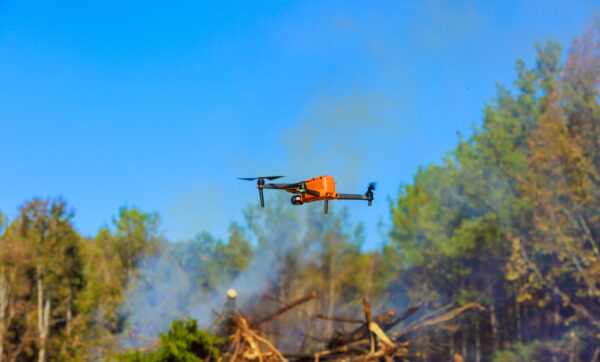
Wildfire Detection Takes Flight With AI-Powered Drones

August 04, 2026
Go
strength in every step | American Technion Society | Donate to Israel
Article

Strength in Every Step: Recovery, Resilience, and a Walk to Remember

August 21, 2026
Go
Student Resilience | American Technion Society | Donate to Israel
Article

Never Too Late for a New Challenge

August 17, 2026
Go
coexistence | American Technion Society | Donate to Israel
In The News

The Technion’s Model of Coexistence

August 07, 2026
Go
Sirens | American Technion Society | Donate to Israel
Article

When the Sirens Sound

August 07, 2026
Go
Reuven Aronashvili
Video

From a Poor Town to Leading Paradigms in Cyber

September 25, 2026
Go
earthquake rescue | American Technion Society | Donate to Israel
In The News

Israeli Drones Aid Earthquake Rescue Efforts in Venezuela

July 08, 2026
Go
No GPS or Communication Drones flying in the background as a soldier's shadowy silhouette fills the foreground
Video

When GPS Fails, This Drone Keeps Going

June 10, 2026
Go
Article

Technion Innovations: Safeguarding Israel and the World

May 28, 2026
Go
Article

Seeds of a New Community

September 08, 2026
Go
Tree Canopy | American Technion Society | Donate to Israel
In The News

Cornell Tech’s Tree Canopy Project Builds a Cooler New York City

August 11, 2026
Go
Wildfire detection | American Technion Society | Donate to Israel
In The News

Wildfire Detection Takes Flight With AI-Powered Drones

August 04, 2026
Go
Energy Tower | American Technion Society | Donate to Israel
In The News

The Energy Tower: A Vision Ahead of Its Time Finds New Life

July 08, 2026
Go
AI in education
Article

Rethinking Education in the Age of AI 

September 25, 2026
Go
Podcast

Predictions from The Himalayas

September 17, 2026
Go
Student Resilience | American Technion Society | Donate to Israel
Article

Never Too Late for a New Challenge

August 17, 2026
Go
Video

Technion: The Vision to Do Good

August 17, 2026
Go
Video

Technion: The Vision to Do Good

August 17, 2026
Go
From left: Dr. Martin Rosman; Grace Druan Rosman; Technion President Prof. Uri Sivan; and Dr. Rafi Aviram, executive vice president and director general of the Technion, at the cornerstone ceremony for the Martin and Grace Druan Rosman High-Performance Computer Data Center building. | American Technion Society | Donate to Israel
Article

A Vision Built Around Students

June 29, 2026
Go
1912 - Today | Technion flag with Israeli flag | Donate to Israel | Technion University
Video

1912 to Today: The Institution That Helped Build Israel

June 10, 2026
Go
Article

Doing Well by Doing Good

May 23, 2026
Go

Watch, Read & Listen

Explore stories, news, insights, and data across articles, videos, and podcasts.

view all content types
AI in education
Article

Rethinking Education in the Age of AI 

September 25, 2026
Go
disease detection
Article

A Breathalyzer Test for Cancer?

September 17, 2026
Go
Article

Seeds of a New Community

September 08, 2026
Go
artificial intelligence health care
Article

Europe Is Betting on Technion Innovation

September 04, 2026
Go
Reuven Aronashvili
Video

From a Poor Town to Leading Paradigms in Cyber

September 25, 2026
Go
Video

Why the Perfect Pitch is Your Biggest Mistake

September 23, 2026

Go
Video

When the Newsroom Meets the Algorithm

September 18, 2026
Go
Video

Technion: The Vision to Do Good

August 17, 2026
Go
Podcast

Predictions from The Himalayas

September 17, 2026
Go
Podcast

Everything In-House

August 11, 2026
Go
the heart | American Technion Society | Donate to Israel
Podcast

The Heart Will Go On

July 15, 2026
Go
Or Yochanan | American Technion Society | Donate to israel
Podcast

Reinventing the American Dream in Austin

June 10, 2026
Go
In The News

Can Decart Put Israel on the AI Map?

September 18, 2026
Go
Tree Canopy | American Technion Society | Donate to Israel
In The News

Cornell Tech’s Tree Canopy Project Builds a Cooler New York City

August 11, 2026
Go
coexistence | American Technion Society | Donate to Israel
In The News

The Technion’s Model of Coexistence

August 07, 2026
Go
Chatbot | American Technion Society | Donate to Israel
In The News

Can AI Chatbots Support Mental Health?

August 07, 2026
Go
43 %

of the student body are women

1K +

companies founded by graduates and faculty in the last 10 years

3

locations

The Technion’s story has been intertwined with Israel’s for more than a century, from laying the foundations for a new nation to shaping its future.

About ATS

ATS is a community of supporters, innovators, and champions of possibility united by one mission: transforming Israel and the world through science and discovery.

Learn More

About the Technion

For more than 100 years, the Technion has been Israel's technological engine and leading driver of innovation, technology, and entrepreneurship, transforming ideas into impact.

Learn More

Digestion Differences in Men and Women

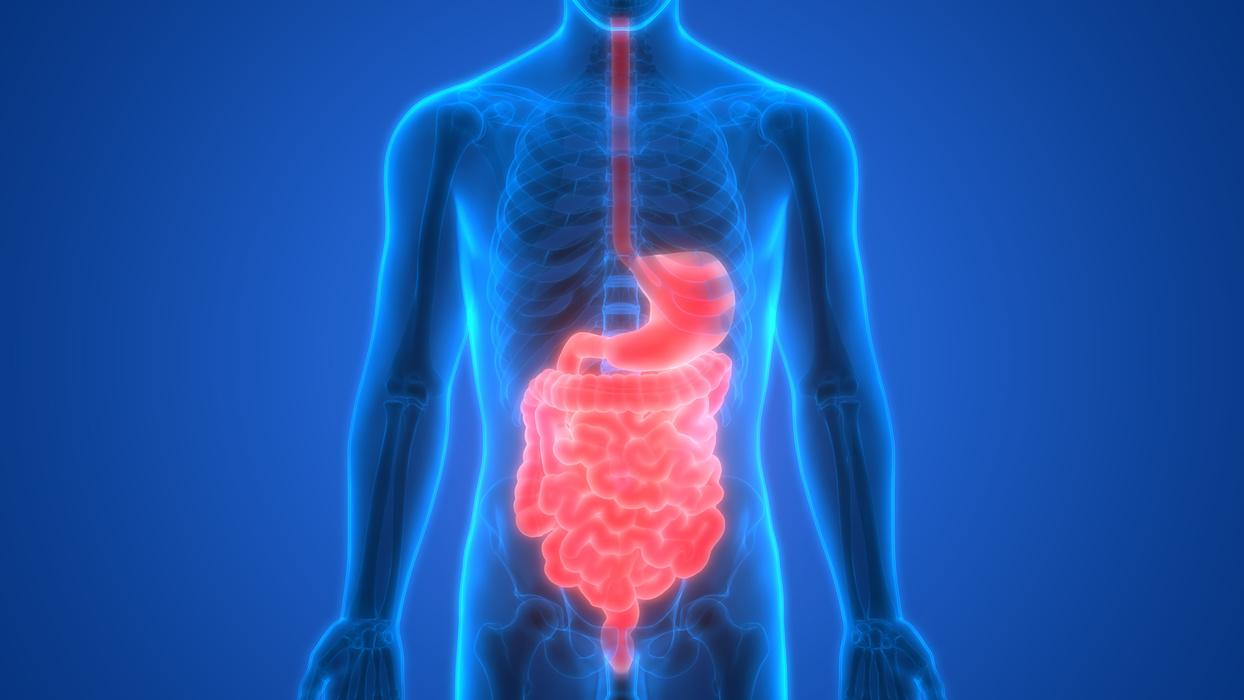
graphic of human digestion digestive system with blue background | Donate to Support Israel | Technion University

Imagine restaurant menus with selected dishes for men and others exclusively for women, or supermarket products categorized by gender. Looking even further into the future, what about designer 3D cultivated steaks that are male- or female-specific?   

 Using simulated digestive systems, Technion scientists have identified differences in the way men and women digest food that could help tailor healthier food solutions by gender. 

 The study, published recently in Food Hydrocolloids (opens in a new tab), was prompted by research recognizing that some medications are more effective in treating a specific gender, and that the same drug can have different side effects in men versus women. “We thought, if this works for drugs, why not for food?” said Associate Professor Uri Lesmes, head of the Lab of Food Chemistry and Bioactives and the Food and Health Innovation Center in the Technion Faculty of Biotechnology and Food Engineering.   

 “Often the biggest question is the simplest,” he said. “If Adam and Eve ate the same apple, would it break down in their bodies the same way and end up doing the same thing?” Scientists have not given the same food to a healthy man and a woman of the same age to see what happens when it enters their bodies. So, Prof. Lesmes and master’s student Carolina Lajterer explored the “digestive fate” of dairy proteins to determine whether they degrade at the same rate and into the same byproducts in men and women. They chose key whey proteins, found in nutritional bars and shakes, because of their nutritional importance and ability to affect energy intake and appetite.  

 “First we asked: is there a real difference in gut functions?” said Prof. Lesmes. Lajeterer sifted through more than 1,000 articles and clinical studies, searching for gender-based differences in gut physiology in parameters such as acidity levels in the stomach, enzymes in saliva, transit of food between the stomach and small intestine, and intestinal secretions. Finding the data was tricky because there are not many studies conducted on healthy individuals and fewer still comparing food digestion by gender. “You need to find different pieces of the puzzle and put it together.”  

 Next the findings needed to be quantified. So Lajeter captured the gender-based digestion parameters, which she programmed into a computer that used an algorithm to control two bioreactors in the research lab. These bioreactors, or simulated digestive systems, are glass containers connected to pumps and sensors. One contained physiological secretions mimicking the human stomach, the other recreated the small intestine. The researchers then poured the model milk samples into the bioreactors and set the program for one or the other sex.   

 “In the morning, the systems could operate as a female. After her lunch break, Lajterer took the same food sample and same vessels but programed the system to act as a male,” said Prof. Lesmes.   

 “Then we went to compare. That was the Eureka moment!” he said. Though most of the whey was broken down similarly, there were pronounced gender differences in specific regions of the proteins that were differentially degraded. “To our surprise, these regions contain peptides that have been reported to influence the sense of satiety and fullness. So the same glass of milk might make a male feel fullness or hunger differently than a female.” 

 What does this mean? “If we change the protein structures and/or compositions we can be more precise in what we eat, so maybe we can engineer foods in a more correct manner so people won’t continue searching for unnecessary calories,” Lesmes said. Nutritional advice for men and women typically centers on the quantity of food eaten or the selections of foods eaten, while the products stay the same. The new research could lead to the rational design of food that is optimally suited to males and females. “We can reverse engineer food and better tailor it to the consumer. In the 21st century, food shouldn’t be one size fits all.”  

 The research also suggests that certain foods might have a higher or lower caloric value depending on who is eating it, Prof. Lesmes explained. This could impact food labeling and could lead to supermarket shelves designated by sex.   

 He envisions a future in which manufacturing plants could use their current production floors but alternate production days, rolling out foods for women one day and products for men the next. And as concern about food scarcity has led foodtech scientists and companies to develop 3D printed steaks from cow cells, that emerging technology could also be pushed further. Prof. Lesmes foresees a time when companies will engineer gender-specific lab-cultivated steaks, and home kitchens will have a 3D food printer capable of cooking for women on Tuesdays and men on Wednesdays. 

 “Overall, the research in our lab seeks to make meaningful contributions to the human ability to master food production in the context of optimizing, not compromising, health or healthy aging,” he said. He and his team have experimented with insects, algae, and plants to create high protein, sustainable food alternatives, and are working within the EAT4AGE consortium of European academics to fabricate breakfast cereals, cheeses, spreads, and processed meats, all tailored to benefit the elderly. 

 Lajterer’s research, conducted for her master’s thesis, offered proof of concept that exploring gender-based food digestion is worth pursuing. Since their work with whey, the team has been experimenting with soy, eggs, and other proteins. “Our sex-based digestion models are excellent tools on the path to facilitating responsible engineering of future foods, ensuring optimal resource utilization with individual health in mind.”

Related Stories

disease detection
Article

A Breathalyzer Test for Cancer?

September 17, 2026

What if diagnosing cancer, Parkinson’s disease, or other serious illnesses could be as simple as breathing into a handheld device? That possibility is moving closer to reality thanks to the work of the Technion’s Prof. Hossam Haick, whose groundbreaking research is changing how diseases are detected around the world. In recognition of his extraordinary achievements, […]

Go
artificial intelligence health care
Article

Europe Is Betting on Technion Innovation

September 04, 2026

Every year, the European Research Council (ERC) identifies some of the world’s most promising early-career researchers and gives them the freedom to pursue bold ideas. This year, two of those ideas came from the Technion – Israel Institute of Technology. From cancer research to artificial intelligence (AI), breakthroughs that shape the future often begin with […]

Go
Chatbot | American Technion Society | Donate to Israel
In The News

Can AI Chatbots Support Mental Health?

August 07, 2026

As more people turn to AI chatbots for companionship, life advice, or even as a stand-in for therapy, experts say the technology offers both new opportunities and risks when it comes to mental health. Prof. Tanzeem Choudhury is the chief of health innovation in the Joan & Irwin Jacobs Technion-Cornell Institute and has been studying AI and mental health for 15 years. She said AI tools are available any time, often at low cost, making it easier for people to access some form of mental health support.

Go

Love Israel and Science? 

Stay on top of the latest breaking scientific discoveries from Israel and the Technion. Subscribe to the ATS newsletter.

Secret Link