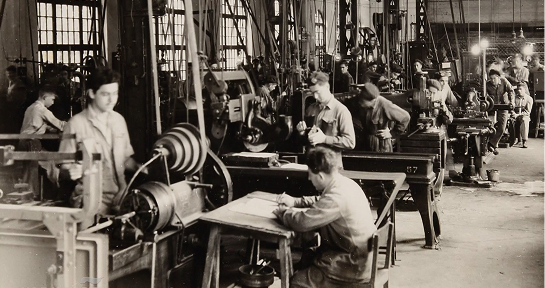
The Technion’s story has been intertwined with Israel’s for more than a century, from laying the foundations for a new nation to shaping its future.

From medicine to security, explore how the Technion is advancing Israel and improving lives around the world.
View All Impact Areas
Explore stories, news, insights, and data across articles, videos, and podcasts.
view all content types
of all universities in the world*
locations
students
The Technion’s story has been intertwined with Israel’s for more than a century, from laying the foundations for a new nation to shaping its future.
Explore ATS, the Technion, and the people behind the breakthroughs redefining what's possible for Israel and the world.
Learn More About ATSATS is a community of supporters, innovators, and champions of possibility united by one mission: transforming Israel and the world through science and discovery.
Learn MoreFor more than 100 years, the Technion has been Israel's technological engine and leading driver of innovation, technology, and entrepreneurship, transforming ideas into impact.
Learn More
Step inside Israeli innovation at the David and Janet Polak Visitors Center. Experience our 360° immersive movie and tech exhibition. Open to individuals and groups.
Learn MoreFrom medicine to security, explore how the Technion is advancing Israel and improving lives around the world.

View All Impact AreasExplore stories, news, insights, and data across articles, videos, and podcasts.
view all content typesDiscover ways to support, connect, and help drive innovation.
Get InvolvedExplore ATS, the Technion, and the people behind the breakthroughs redefining what's possible for Israel and the world.
Learn More About ATS
Hydrogen fuel is the key to a greener future. Produced from an inexpensive and readily available resource — water — it’s also the only byproduct of hydrogen-powered cars. Contrast that with the polluting fumes that gasoline-powered vehicles emit.
Water Electrolysis
Hydrogen is produced from water through a process known as water electrolysis. Water electrolysis splits individual molecules of water (H2O) into two hydrogen atoms and one oxygen atom using an electric current. This is done with a cathode and an anode. The cathode contributes electrons to the water and attracts oxygen, and the anode takes electrons from the water and attracts hydrogen.
This process requires a significant amount of energy — something that has, until now, made it an inefficient and impractical fuel source.
Taking a Cue from Nature
Assistant Professor Galia Maayan of the Schulich Faculty of Chemistry at the Technion – Israel Institute of Technology and her student, Naama Gluz, may have a solution. In an article published in Nature Catalysis, they presented a molecular complex (also called an artificial molecular cluster) that dramatically improves the efficiency of water oxidation.
The process mirrors photosynthesis, a natural process that developed in plants, bacteria, and algae through evolution. Energy from the sun is used to transform water and carbon dioxide into organic material and oxygen.
Manganese is an essential part of photosynthesis. And in the case of water electrolysis, it could be used as a catalyst to split water and produce needed hydrogen. But it still requires a large amount of energy to set into motion, and manganese-based catalysts are often unstable and decompose rapidly during the process.
Mn12DH: An Incredible Molecular Cluster
The molecular complex developed by Prof. Maayan and Gluz addresses those concerns. This cluster, which is actually a complex molecule called Mn12DH, is wrapped in an organic shell that allows the manganese complex to dissolve in water, stabilizing it. This mimics the protein shell found in naturally occurring manganese.
Experiments conducted with this complex demonstrate that it produces a large quantity of electrons (electric current) and a significant amount of oxygen and hydrogen without requiring a large amount of energy. And thanks to the shell, it’s also more stable than other manganese-based catalysts.
Gluz is continuing to study how we could use this manganese complex to meet the energy demands of the future.

January 09, 2018
Discover electrolysis and its significance in hydrogen production. Understand its potential for a sustainable energy future.
1 min
X (opens in a new tab) / Facebook (opens in a new tab) / LinkedIn (opens in a new tab) / Email / Copy Link
This time of year, pomegranates are piled high in produce aisles, stacked in bins at the farmers market, and decorating Rosh HaShanah tables. When it comes to extracting the juicy seeds, everyone has their own unique technique. Some score the crown and pull the fruit apart in a bowl of water so the seeds sink […]
Despite New York City Mayor Zohran Mamdani’s past calls to boycott Cornell Tech because of its partnership with Israel’s Technion-Israel Institute of Technology, city officials and Jewish community leaders on Wednesday announced a $250,000 investment in a Cornell Tech research initiative aimed at expanding New York City’s tree canopy to combat rising temperatures. New York City Council Speaker Julie Menin, the first Jewish woman to hold the post, and other officials unveiled the funding for Cornell Tech’s Urban Tech Hub at the Jacobs Technion-Cornell Institute on Roosevelt Island. The grant will launch the Generative Tree Canopy Project, which will use…
As climate change increases the frequency and intensity of wildfires, Israel is testing a new autonomous drone system designed to spot fires before they grow into large-scale disasters, combining long-endurance aviation, artificial intelligence and advanced imaging technologies. The system completed its first flight test this week as part of a joint project involving the Israeli […]
Stay on top of the latest breaking scientific discoveries from Israel and the Technion. Subscribe to the ATS newsletter.