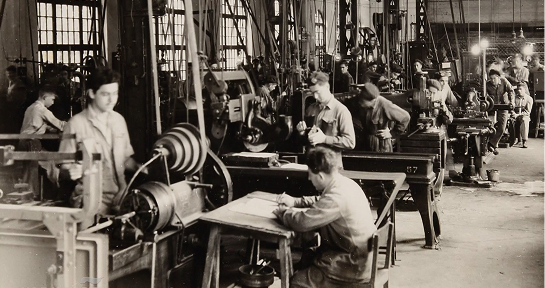
The Technion’s story has been intertwined with Israel’s for more than a century, from laying the foundations for a new nation to shaping its future.

Finding your dream home can be a daunting, exhausting process. With so many listings to sift through, it can feel impossible to find the perfect home. It’s why Asaf Rubin, a Techion alumnus, founded Localize, a tech startup that helps homebuyers harness the power of AI and big data to find their home. The business began in Israel in 2012 under the brand name Madlan. In 2019, it rebranded as Localize and expanded to the New York City market. So far, over 40,000 aspiring homebuyers have signed up. Potential homebuyers fill in a free, simple questionnaire about preferences for neighborhoods…
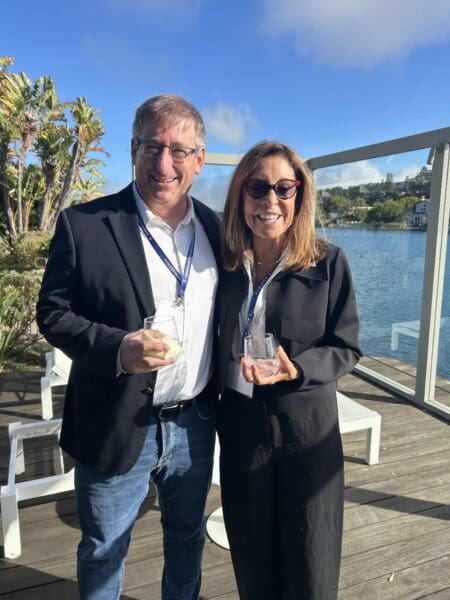
Pictured above: Dori Brown and her sister Judi Gottesman Doris “Dori” Brown San Diego, California The Technion became Dori Brown’s cause of choice after taking a friend to an American Technion Society (ATS) event. She and her late sister Judi Gottesman invited their friend, suffering from early onset of Parkinson’s, to hear Technion Professor Emeritus Moussa Youdim speak about his then-breakthrough drug for the condition. Prof. Youdim later arranged for her to get the medication (Azilect ®), “and she is still playing golf now, at least 20 years later,” said Ms. Brown. “That was such a miracle to us, that…
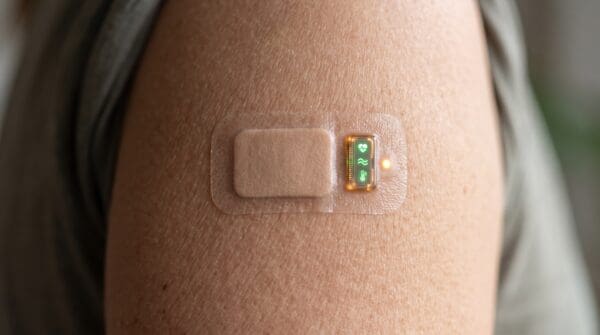
Technion scientists have produced a highly stretchable electronic material and a wearable sensor capable of precisely identifying bending and twisting motion. Together, they form an electronic “skin” capable of recognizing the range of movement human joints normally make, with up to half a degree precision. This breakthrough is the result of collaborative work between researchers from the Laboratory for Nanomaterial-Based Devices, headed by Professor Hossam Haick from the Wolfson Faculty of Chemical Engineering. The results were recently published in Advanced Materials and featured on the journal’s cover.
Technion students don’t wait until graduation to make an impact on the world. Students from the Faculty of Biomedical Engineering recently showed off an array of initiatives from a tool that can detect cardiovascular disease to ingenious ways to fight COVID-19 — intriguing and lifesaving projects that could change the world.
Pictured above: Icy Tower team. (L-R) Suad Mansour, Aseel Khateeb, and Sereen Diab At the end of every term, the Henry and Marilyn Taub Faculty of Computer Science at the Technion holds its annual projects fair, showcasing projects by undergraduate students in their final year. This year, the students presented projects that reflected the fields of computer science they belong to and the subjects they chose to tackle. Some created mobile apps for different uses; some wrote programs to solve diverse problems; some delved into virtual reality; and some built devices, delving into the evolving field of the Internet of…
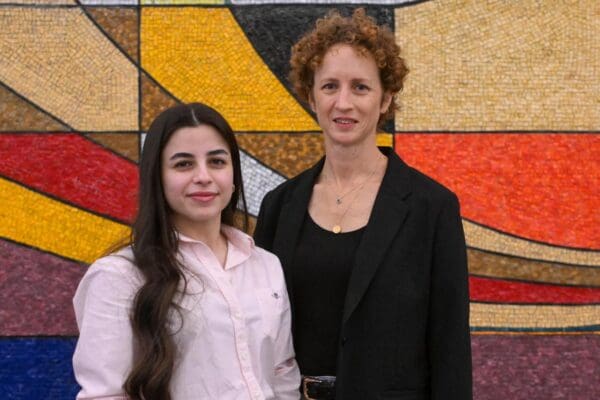
Pictured above: Professor Reem Dowery (left) and Professor Doron Melamed Since the start of the COVID-19 pandemic, the scientific community has been bewildered by a mystery: why does the elderly population appear to be more vulnerable to COVID-19, and why are vaccines less effective in protecting them? Technion doctoral student Reem Dowery may have discovered the reason why. Memory B lymphocytes are cells within the human body that are responsible for long-term production of effective antibodies. They are formed when the body is exposed to a new pathogen, such as a virus. Upon consequent exposures to the same pathogen, they…
In 2019, the Technion – Israel Institute of Technology bought more than 2.3 million disposable cups, almost one million disposable teaspoons, and hundreds of thousands of other single-use items. Disposable utensils currently account for approximately 9% of waste on campus. On October 1, 2021, the Technion will stop buying disposable utensils, eliminating that source of waste altogether. The move is being led by the Technion’s Sustainability Hub under the academic guidance of Professor Daniel Orenstein, who has authored important research on the issue of sustainability at universities, and the Hub’s coordinator, Dr. Ronit Cohen Seffer. Before making this decision, the…
Pictured above: Technion alumnus Dr. Andrei Broder Technion alumnus Andrei Broder was recently awarded the Paris Kanellakis Theory and Practice Award by the Association for Computing Machinery (ACM). The peer-selected award honors specific theoretical accomplishments that have had a significant and demonstrable effect on the practice of computing. Dr. Broder, along with his colleagues Yossi Azar, Anna Karlin, Michael Mitzenmacher, and Eli Upfal, were recognized for their Balanced Allocations framework, also known as the power of two choices, and their extensive applications to practice. By way of illustrating the Balanced Allocations framework, imagine you and a few friends are tossing…
Pictured above: Dr. Amiel receiving her MD diploma Among the 241 new M.D.s who received their Technion diplomas in June, visually impaired Dr. Keren Amiel stands out for overcoming unusual challenges. “I’ve always wanted to be a doctor, ever since I was a child,” Dr. Amiel said. “I knew it was going to be a challenge, so initially I was apprehensive, but I decided to try.” Amiel suffers from congenital nystagmus, a condition she inherited from her father that causes her eyes to “dance” uncontrollably, resulting in significant visual impairment. In June, 241 Technion graduates of the Ruth and Bruce…
H2OLL, an innovative Atmospheric Water Generator (AWG) technology developed at the Technion – Israel Institute of Technology, has won the prestigious Water Europe Innovation Award for small and medium sized enterprises (SMEs). More than 10% of the world’s population — over 670 million people — presently have no access to clean drinking water, impacting public health, education, and gender equality. It’s why access to water is a critical part of the UN’s Sustainable Development Goals: clean water means better health and well-being, a healthier climate, a stronger education system. It even has implications for gender equality, as in many places…
The Technion Senate released a historic declaration outlining their vision for adequate gender representation among the Technion faculty. “Technion’s gates are open to faculty and staff members, as well as to students, of all genders, ethnicities, religions, and nationalities. Technion recognizes the value of human diversity for ensuring a social environment that fosters curiosity, imagination, creativity, achievement, and critical thinking while seeking the truth,” the declaration said. “The members of Technion’s academic faculty, Senate, and management are aware of the absence of adequate gender representation at this time (2021) — a reflection of historical, cultural, and social circumstances. They are…
Meteoric progress has been made in the world of deep learning and artificial intelligence. Yet there are virtually no medical products on the market that tap into AI’s life-changing potential. Until now. Professor Yael Yaniv of the Faculty of Biomedical Engineering joined forces with the research groups of Professors Alex Bronstein and Assaf Schuster of the Henry and Marilyn Taub Faculty of Computer Science to develop an AI-based system that analyzes electrocardiograms (ECGs) and automatically detects heart disease. The electrocardiogram, developed more than a century ago, provides important information on conditions affecting the heart. It is a quick and non-invasive…