The Technion’s story has been intertwined with Israel’s for more than a century, from laying the foundations for a new nation to shaping its future.

In the current era of social entrepreneurship, leading philanthropists and foundations seek to maximize their return on investment for every single gift and grant. In that sense, the contemporary philanthropic sector is not all that different from the private/corporate space. Charitable causes must present a value proposition, not just a feel-good anecdote. To prove they deserve major philanthropic support, research universities are tasked with showing that they do more for society than simply grant degrees and transmit knowledge (which is critical work in and of itself!). They need to articulate their sense of mission, vision, identity, and purpose — and…
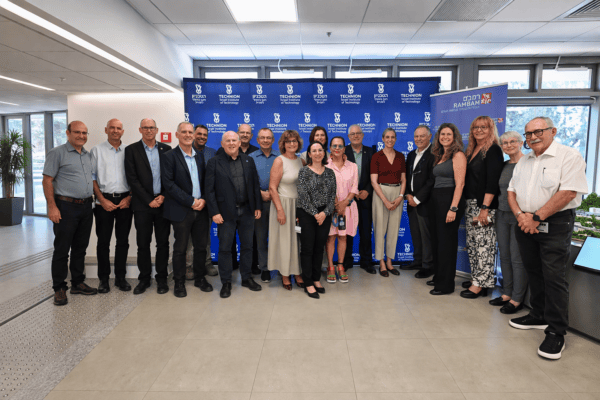
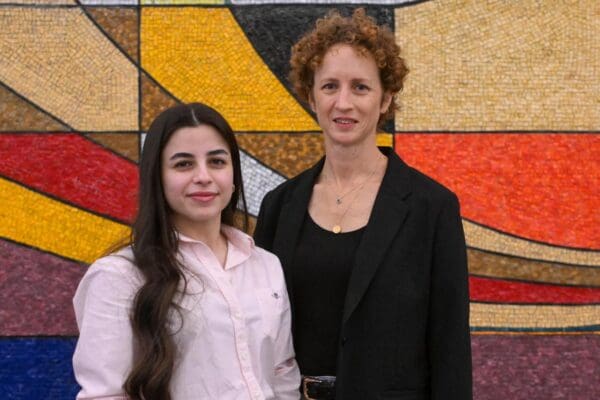
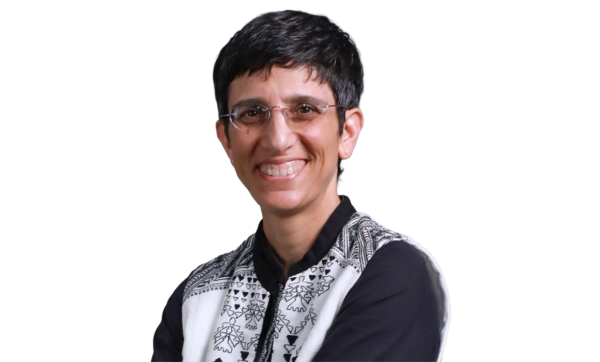
Pictured above: Prof. Shulamit Levenberg, dean of the Technion Faculty of Biomedical Engineering; Prof. Yehudit Dori, dean of the Faculty of Education in Science and Technology; Prof. Iris Aravat, dean of the Faculty of Architecture and Town Planning; Prof. Marcelle Machluf, dean of the Faculty of Food Engineering and Biotechnology; and Prof. Orit Hazzan, dean of Graduate Studies How can medical patients possibly be cured by a sugar pill? It is famously known as the placebo effect — medical benefits that cannot be attributed to the properties of a treatment itself, and are therefore the result of the patient’s belief…
Put yourself in the shoes of a busy college student — preoccupied with academics, extracurriculars, a social life, and coming into your own as a young adult. Then, imagine bringing an untrained puppy literally everywhere you go. Whether you are walking around campus, riding the bus, attending class, studying at the library, working at a student job to help pay off your loans, or trying to relax in your dorm, the responsibility is inescapable. The puppy comes with you everywhere. Nevertheless, you persist with training the puppy for more than a year. This is the responsibility that 20 students at…
Recognizing the important roles that Israel and the Technion play in scientific and engineering breakthroughs, the Helen Diller Family Foundation announced today that it is giving $50 million to the Technion – Israel Institute of Technology. The donation will support the university’s new quantum center, now named the Helen Diller Center for Quantum Science, Matter, and Engineering. The Technion relies on the generosity of individuals to continue and expand its work. This gift will strengthen the Technion’s position as a world leader in quantum science and engineering by providing the means for new faculty recruitment, establishing new infrastructure, seed funding…
By 2025, half the world’s population will live in areas where there is a shortage of clean drinking water. But is the solution to the global water crisis literally under our noses? Associate Professor David Broday of the Technion’s Faculty of Civil and Environmental Engineering and Associate Professor Eran Friedler have developed a model for a system that separates the moisture naturally present in the air around us and converts it into drinking water. “Water Is Available and Free to Everyone” The system takes advantage of a resource that is constantly and abundantly present around us: the atmosphere. Humidity is…
Technion researchers have successfully treated a cancerous tumor from within, using a “nano-factory” — a synthetic cell that produces anti-cancer proteins within the tumor tissue. Just as human cells can generate a variety of biological molecules, the synthetic cell can produce a wide range of proteins. Synthetic cells’ similarities to natural cells hold vast potential in the production of artificial organs and understanding the origins of life. And as this research shows, they could also be the key to fighting cancer. Doctoral student Nitzan Krinsky and Assistant Professor Avi Schroeder at the Wolfson Faculty of Chemical Engineering at the Technion…
During the final quarter of 2017 alone, Technion achieved what feels like many years’ worth of breakthroughs, awards, and milestones in its global partnerships, which are saving lives, creating jobs, and advancing the bounds of human knowledge in so many fields. Here’s a quick review of some of the most exciting highlights from 2017, which offer a glimpse into the kind of transformative innovation we can expect in the year ahead. An Israeli university in China Israel’s population is less than 9 million, and China’s is more than 1.4 billion. Yet the two nations are true partners in the Guangdong…
Hydrogen fuel is the key to a greener future. Produced from an inexpensive and readily available resource — water — it’s also the only byproduct of hydrogen-powered cars. Contrast that with the polluting fumes that gasoline-powered vehicles emit. Water Electrolysis Hydrogen is produced from water through a process known as water electrolysis. Water electrolysis splits individual molecules of water (H2O) into two hydrogen atoms and one oxygen atom using an electric current. This is done with a cathode and an anode. The cathode contributes electrons to the water and attracts oxygen, and the anode takes electrons from the water and…
The Technion is pleased to welcome Wendy Ju, a leading researcher and innovator in human-machine interaction, as its newest assistant professor at the Joan and Irwin Jacobs Technion-Cornell Institute. Meet Assistant Professor Ju We are thrilled to have Assistant Professor Ju join us at the Jacobs Technion-Cornell Institute. She has a reputation for exceptionally innovative work in interaction design across cultures, a field that is rapidly growing as smart devices, robots, and autonomous vehicles become integrated into our everyday lives. Her work highlights the ways that interactive devices can communicate and engage with people without interrupting or intruding on their…
Compelling philanthropic initiatives often sound simple. End child hunger. Educate all people. Spread clean water access. Help earthquake victims. Improve health care. Cure cancer. But these bold objectives are not simple. These are big, complex ideas requiring tremendous resources that research universities are often best equipped to harness. Philanthropy is one of the key resources needed. We at ATS don’t actually execute these initiatives — but we play the critical role of translating the big ideas into action by connecting the diverse and sometimes disparate groups of people who can accomplish these far-reaching goals together. In other words, we don’t…
Fulbright. Rhodes. Marshall. These programs represent the pinnacle of achievement for young scholars, and have long served as a launching pad for many of the world’s greatest leaders and brightest thinkers. Late last month, I was proud to be present at a major ceremony in New York City as a new name was added to this prestigious international group — the Zuckerman Scholars Program — which will put Israel on the map in unprecedented ways for the most talented, up-and-coming American researchers. The program is the brainchild of Mortimer Zuckerman — a renowned business leader and visionary philanthropist — who…
To reduce our reliance on fossil fuels and protect our planet, solar power must become more efficient and less expensive. Right now, the dominant technology in the field, silicon-based solar cells, is too expensive to be widely adopted. Solar cells that use inorganic nanocrystals or “quantum dots” could be a cheaper alternative, but they are generally less efficient at turning solar energy into electricity. Technion researchers have found a new way to generate an electrical field inside quantum dots, paving the way for more energy-efficient nanocrystal solar cells. Their findings were published in the October 9, 2011, issue of Nature…