Why the Perfect Pitch is Your Biggest Mistake
September 23, 2026






















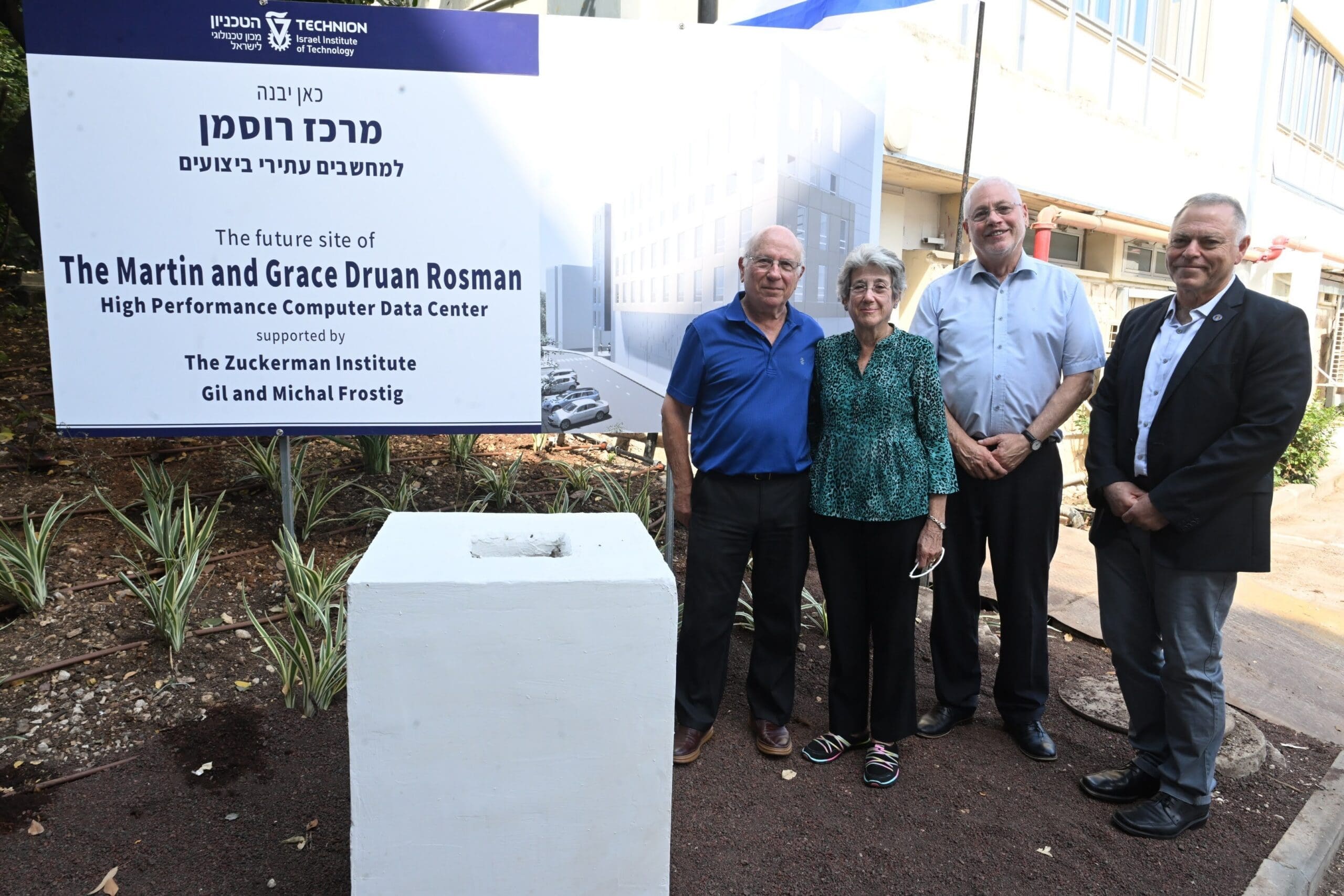






The Technion’s story has been intertwined with Israel’s for more than a century, from laying the foundations for a new nation to shaping its future.

Step inside Israeli innovation at the David and Janet Polak Visitors Center. Experience our 360° immersive movie and tech exhibition. Open to individuals and groups.
Learn More

“Fat is flavor” is a well-known culinary principle. But nutritional research suggests consuming too much animal fat may be a factor in the development of many health conditions from dementia to male infertility to Crohn’s disease. A cutting-edge plant protein-based fat solution, Fatrix, will soon go into commercial production to help food manufacturers reduce total fat and especially saturated fat content. The product’s developer, Israeli food-tech startup Gavan Technologies, has raised $8 million in a Series A round led by MoreVC of Israel with participation from Lever VC; EIT Food, a European Union-supported platform for sustainable food innovations; and DarkBoot…

LifeCord has a strong intellectual property (IP) portfolio, including 52 patent families pending worldwide and 21 issued or allowed patents. This IP position ensures market exclusivity and gives LifeCord a significant competitive edge. You can learn more about the company below. LifeCord is pioneering innovative solutions for mitral chordal repair, addressing mitral regurgitation, which affects approximately 2% of the global population. Our flagship product is a breakthrough leaflet-preserving device that avoids puncturing the leaflet and enables future interventions, aiming to disrupt the market with a safer, superior, and primary solution for degenerative mitral regurgitation (DMR) patients. The device offers a…

A new Israeli study has determined that processed food is not bad for us – despite its long-standing poor reputation – and with the right addition of proteins can actually give our bodies a boost. Processed food is actually a blanket description for any foods that have been changed in some way during their preparation. This could be drying, preserving (which is what we usually think of when we hear the term) or even cooking itself. And while we imagine processed foods to be ones that have undergone a more drastic treatment like breakfast cereal, ready meals, canned meat or…

In the time it takes to read this article, several people in the United States will likely experience a heart attack — according to the CDC, someone in the US suffers from one every 40 seconds. That morbid statistic highlights the importance of coronary artery disease detection methods, and companies developing them. One such company is Israeli startup AccuLine, which recently secured $4.2 million in seed funding for the development and commercialization of its CORA (Coronary Artery Risk Assessment) system, designed to improve the early detection of coronary artery disease (CAD), a leading cause of heart attacks. CORA detects two…

An estimated 225 million people around the world today wear a smartwatch, using it to keep track of text messages, emails and even how many steps they have taken. And now, thanks to software created by an Israeli startup and the little sensor on the device itself, smartwatch owners can also keep track of their emotional wellbeing, including stress levels, anxiety and amount of sleep they are getting. NeuroBrave co-founder and CEO Dror Talisman tells NoCamels that the startup’s NeuroSpeed AI analysis software takes data about the user’s blood flow gathered by the photoplethysmogram (PPG) sensor on the back of…

“Stay positive,” we’re told when suffering from an illness. It’s easy to dismiss such comments as platitudes from well-meaning friends. But Technion scientists have demonstrated that activation of the brain’s reward system can boost recovery from a heart attack. Establishing the connection between the two can potentially lead to therapeutic avenues for intervention. “It’s time that both researchers and clinicians take the link between psychology and physiology seriously,” said Technion Associate Professor Asya Rolls, a psychoneuroimmunologist and pioneer in mind-body interactions. Scientists have previously shown that the emotional state can influence the course of disease following a heart attack. But…

Beyond Oil, an Israeli company based in Kibbutz Yifat, has developed an innovative technological formula that promises healthier consumption of fried food. This breakthrough addresses a global problem: the repeated use of frying oil, which leads to the development of harmful substances like burnt food particles, free fatty acids (FFA), polycyclic aromatic hydrocarbons (PAH), and acrylamide (AA), increasing the risk of cardiovascular diseases and cancer. The widespread practice of repeatedly using frying oil for days is a major health issue worldwide. This deep-rooted habit in the global food industry occurs in restaurant kitchens, hotels, catering services, and fried food factories….

A groundbreaking way of measuring fluid buildup in the body allows chronic heart failure patients to monitor their condition and treat it independently with a physician-approved response. Tel Aviv-based startup Vectorious has created a tiny pressure sensor that is implanted directly into the heart. It is the only sensor in the world that measures the pressure in the left atrium (one of the heart’s two upper chambers) and is able to identify increases in that pressure caused by a buildup of fluid in the body. This data on the left atrial pressure (LAP) is then transmitted to an app for…

A frustrating experience as a caregiver for her then-boyfriend with cancer made Maayan Cohen realize that non-medical personnel in a medical setting needed help understanding the information in front of them. Despite dutifully tracking his treatment herself, Cohen realized that noting down his vitals in a binder full of papers was not helping her understand his condition or manage his medical records. Many others in a similar situation, she realized, were also tracking the vital signs of sick loved ones. But without a doctor at hand, it was hard to know what could help or hinder the condition.

People suffering from narrowed or semi-blocked arteries in their legs can find themselves in a vicious cycle – not doing any exercise because of the pain it entails, but finding that the lack of activity only exacerbates the condition. A newly developed implant that sits just under the skin on the leg is intended to dilate and enhance blood flow through those narrowed arteries with ultrasonic waves, allowing crucial oxygen-rich blood to reach the lower limbs and ease the pain. Peripheral Artery Disease (PAD) is a condition that restricts the flow of oxygenated blood from the heart to the legs,…
Several years ago, amateur athlete Hemi Re’em was shocked to discover that his coronary arteries were 90 percent blocked despite his seemingly good health. This set him on a path to cofounding Yopi Technologies. Yopi (Your Online Personal Instructor) is a first-of-its-kind, AI-based wearable device that monitors oxygen consumption through electrolytes in the sweat. The goal is to detect heart deterioration and measure overall wellness.

Israeli researchers have unveiled a new miniature model of the human heart that they say could be a “game changer” in transforming drug testing and cardiovascular research. The model is a self-paced, multi-chambered replica of the human heart that is no larger than a grain of rice. According to the researchers, it will revolutionize the study of the heart and its functions. The team comprised researchers from The Hebrew University of Jerusalem; the Technion – Israel Institute of Technology in Haifa; and Rehovot-based biotech company Tissue Dynamics Ltd. They were led by Prof. Yaakov Nahmias, an award-winning biomedical engineer at The Hebrew University.