Something Fresh in the State of Denmark
October 06, 2026























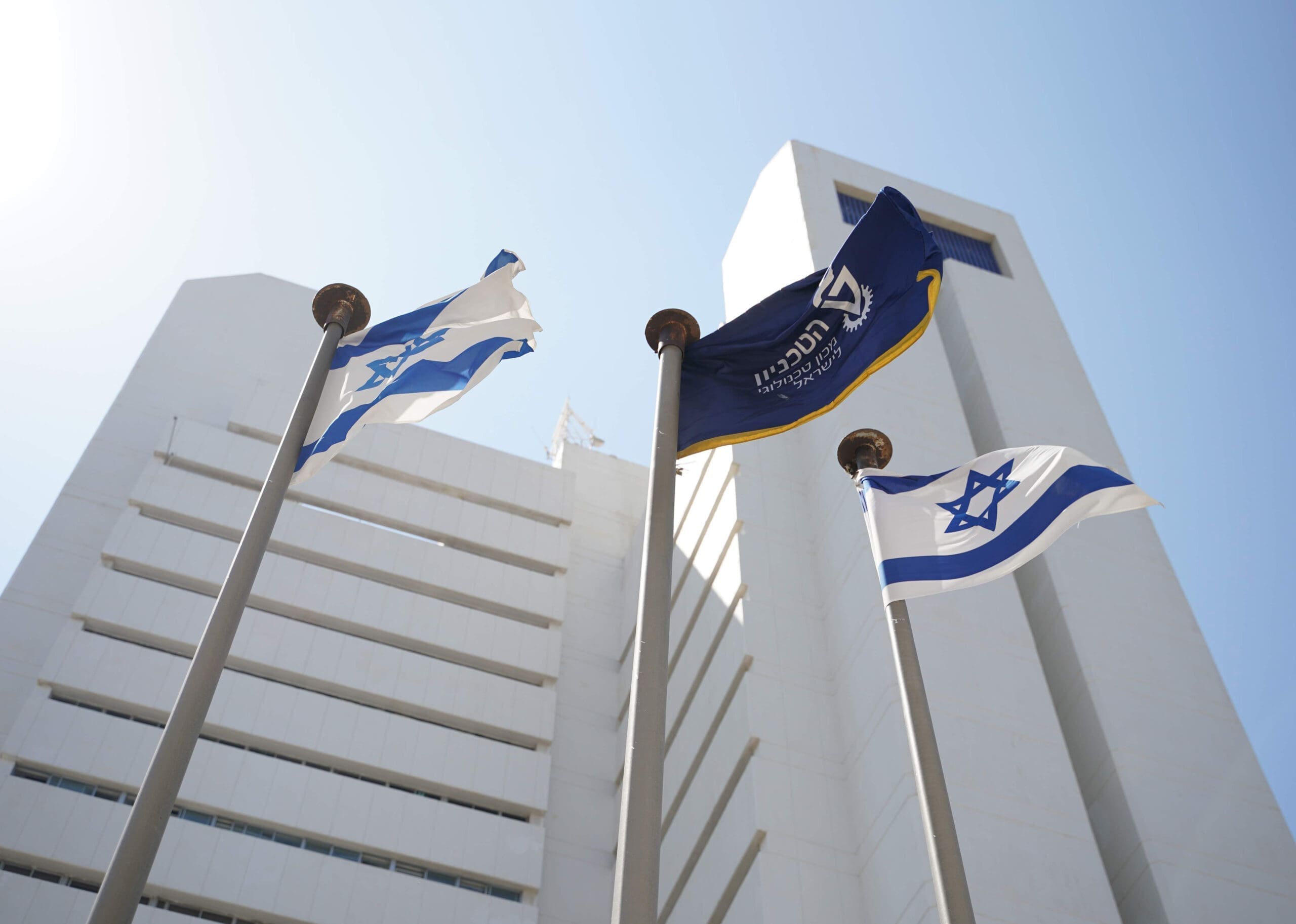






The Technion’s story has been intertwined with Israel’s for more than a century, from laying the foundations for a new nation to shaping its future.

Step inside Israeli innovation at the David and Janet Polak Visitors Center. Experience our 360° immersive movie and tech exhibition. Open to individuals and groups.
Learn More

Until last summer, Shlomit Weiss managed 20,000 people at Intel centers around the world, overseeing development of the company’s most widely-used computer chips. Her resume includes three decades in the bosom of the US-based chip manufacturer, which is also the largest private employer in Israel, and another three years as Mellanox’s hardware development manager. And if that’s wasn’t enough, she was also one of those who persuaded Nvidia CEO Jensen Huang to acquire Mellanox. But now, at age 62, Weiss is reinventing herself, and busy with the small details of starting an independent business: building her own website, handing out…

White dwarfs — the superdense, slowly cooling embers left behind when stars like our sun die — are usually quiet cosmic relics. A rare few, however, are anything but. In recent years, astronomers analyzing data from the European Space Agency’s Gaia spacecraft identified a handful of white dwarfs hurtling through the Milky Way at breakneck speeds of up to 1,240 miles per second (2,000 kilometers per second). That’s fast enough to zip from New York to Los Angeles in under two seconds — and to escape the galaxy entirely. These so-called hypervelocity white dwarfs have puzzled astronomers since their discovery…

Giving to your alma mater is one of the most popular philanthropic pathways for the average donor; far rarer in the charitable giving space is donating to another university with which you have no previous affiliation. Yet this is exactly what happened at the Technion – Israel Institute of Technology over the last several months, during which we at the American Technion Society (the Technion’s U.S. fundraising arm) have seen a surge in planned giving commitments from brand new donors, many of whom have never engaged with the university previously. This uptick was not merely coincidence but a result of…

Universities bear the great responsibility of training and honing the skills of the world’s future leaders. Amid a pivotal moment for Israel and its path forward, the Ilene & Steve Berger Technion Visting Fellows are an uplifting reminder that our future is in great hands. A cohort of students across several departments at the Technion, the Berger Visiting Fellows represent some of the brightest minds at the Technion and in Israel. During an annual trip to the United States, the Fellows connect with American Technion Society (ATS) donors and bring a bit of Israel and the Technion with them to…

Michael Belkin is a serial entrepreneur of a particularly rare breed. Like other serial entrepreneurs, he never stopped developing, researching, and inventing throughout his life, but he did so not out of a pursuit of money, but primarily out of the joy of creation, curiosity, and a desire to bring medicine to the world. It so happened that he made his first exit when he was already 68 years old. At an age when most of his peers were retiring, Belkin sold a company he founded for $180 million. Even then, he had no intention of retiring, but continued to…

Three Israeli universities secured prestigious positions in the 2025 Shanghai Ranking published Friday, demonstrating academic excellence despite unprecedented challenges from international boycott movements and wartime conditions. The Weizmann Institute achieved 71st place worldwide, leading Israeli institutions in the global academic ranking. The Hebrew University claimed 88th position, while Technion earned 97th place among the world’s top universities.
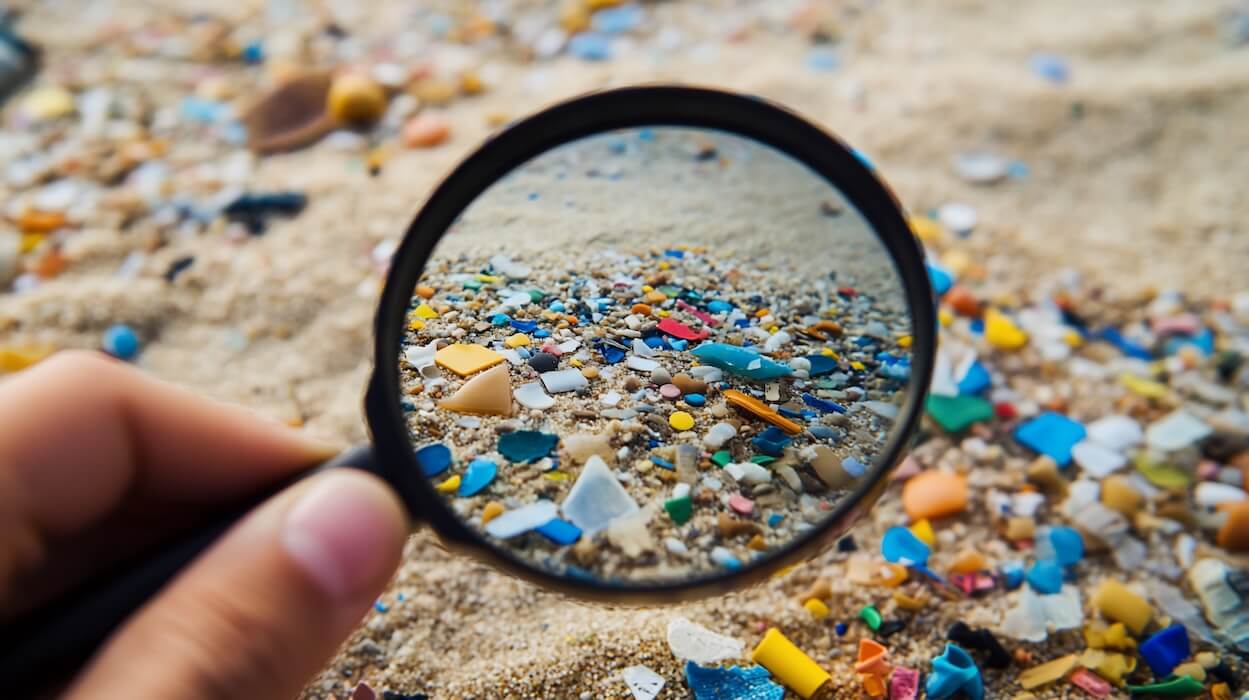
Wash — and learn. “The next time you’re using a tumble dryer, take a look at the lint catcher,” materials scientist Joshua Grolman told The Post. “All of this debris is what we breathe in on a daily basis.” Microplastics are ubiquitous, found in everything from toys and cosmetics to cleaning products and clothing. They’re in the air we breathe, the food we eat and the water we drink and swim in. These particles, which slough off larger plastic, are suspected to harm reproductive, digestive and respiratory health, potentially leading to infertility, colon cancer and lung problems. Joshua Grolman is…

By all appearances, Decart is moving fast. The Tel Aviv-based AI startup has secured $100 million in new funding at a $3.1 billion valuation, just two years after it was founded. It now counts 60 employees and a growing global presence. At the center of its pitch: the belief that AI’s next frontier won’t be text or images, but real-time video. While others rushed to build language models, Decart started with the hardware layer, developing a GPU optimization stack that it quietly licensed to major cloud providers in multi-million dollar deals. That foundation gave the company early revenue, and the…

Researchers from the Faculty of Data and Decision Sciences at the Technion have developed a technology capable of identifying various aspects of a reader’s interaction with a text that is based solely on their eye movements. The team’s findings were presented at Association for Computational Linguistics, a conference in the field of Natural Language Processing (NLP) in Vienna. The research was led by doctoral student Omer Shubi, together with master’s student Cfir Hadar, under the supervision of Dr. Yevgeni Berzak. People read texts with different goals. Whether it’s a novel, a cooking recipe, a newspaper article, or a scientific paper,…

The crew of the cargo ship Eternity C could hardly believe their eyes – within minutes, their vessel was sunk in broad daylight in the Red Sea by an unmanned boat and RPG missiles, and they were taken captive by Houthi rebels. The next day, another container ship was attacked in the Red Sea – and it too was sunk. Just a few years ago, such a scenario would have sounded completely far-fetched. Yet these two alarming incidents occurred just this past month – and they are not the only ones. Worse still – they are only part of a…

A potentially game-changing construction material under development at the Technion – Israel Institute of Technology utilizes microorganisms, rather than cement, to bind sand particles together, while also absorbing atmospheric carbon dioxide that contributes to global warming. According to the UN Environment Program, the construction industry accounts for a whopping 37 percent of global warming emissions. The Technion’s interdisciplinary project CyanoGems utilizes microorganisms that photosynthesize, meaning they use sunlight to create food from carbon dioxide and water. During photosynthesis, carbon dioxide is removed from the atmosphere and oxygen is emitted.

In the sweltering summer heat, search teams are still scouring the Guadalupe River in central Texas for the bodies of dozens of people who have missing since flash floods devastated the Hill Country earlier this month. A search and rescue team of ZAKA volunteers from Israel is using a unique set of skills to help find them faster. “We arrived about two weeks ago after authorities made a request for us to provide assistance,” ZAKA International commander Nachman Dyksztejn told Times of Israel. “People here know and appreciate that Israel is here helping, and the entire community has been very…