Something Fresh in the State of Denmark
October 06, 2026



















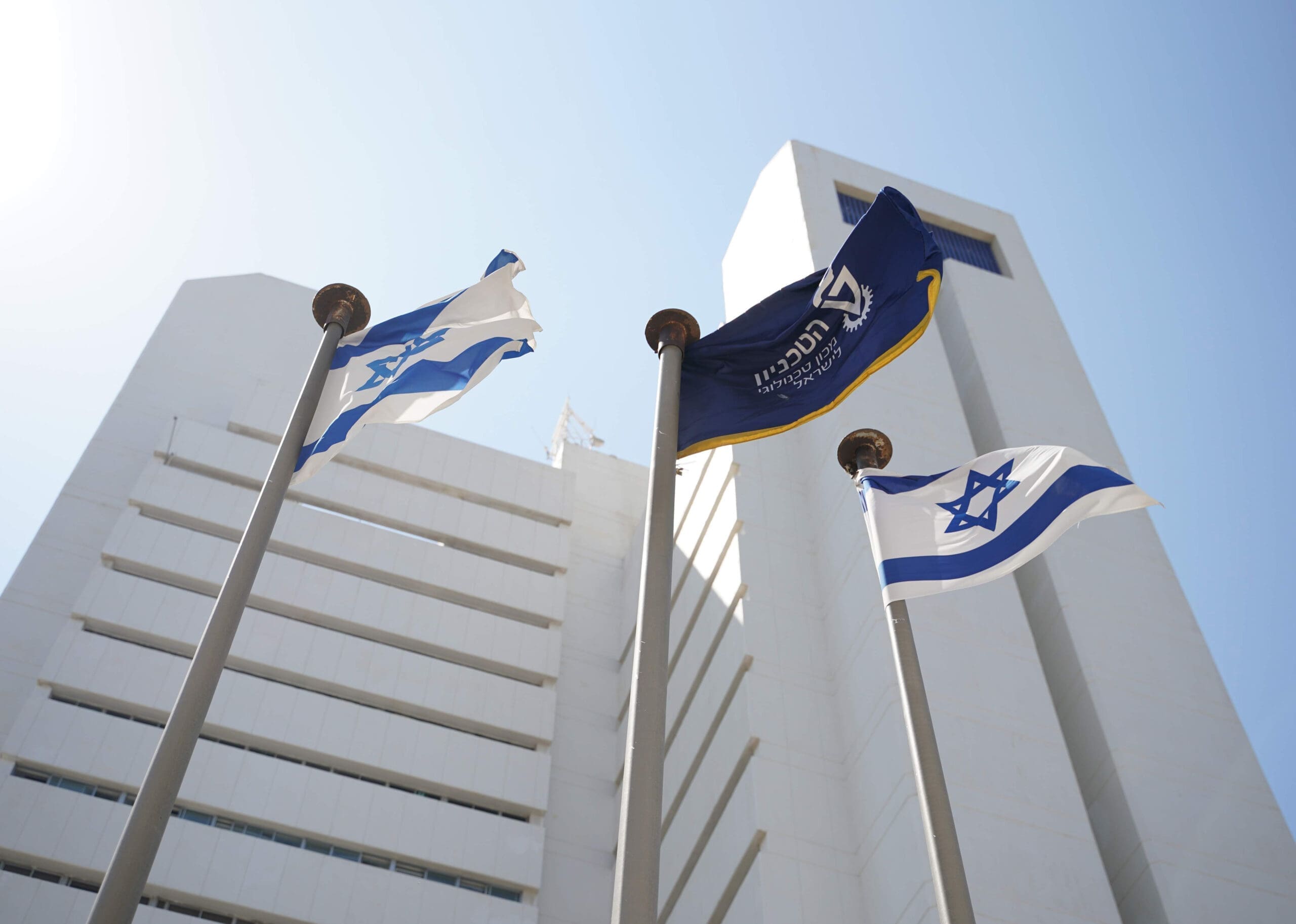








The Technion’s story has been intertwined with Israel’s for more than a century, from laying the foundations for a new nation to shaping its future.

Step inside Israeli innovation at the David and Janet Polak Visitors Center. Experience our 360° immersive movie and tech exhibition. Open to individuals and groups.
Learn More

IceCure Medical’s tumor-freezing treatment ProSense has nabbed FDA approval, making it the first medical device of its kind to be endorsed for the local treatment of breast cancer. The Israeli medical technology company saw its shares jump more than 17% afterhours Friday, Oct. 3, after the company announced the approval. Shares lost some of their gains by Monday morning and were trading up about 8% from Friday’s close. Treatment with ProSense involves a minimally invasive outpatient procedure that aims to destroy tumors by freezing them, all without the need for surgical removal of breast tissue. This approach also allows for…

Pigs have long carried a bad reputation. They are often described as dirty, greedy animals that eat everything in sight and spend their days lying around. In reality, none of these stereotypes are true. Pigs are intelligent, have a highly developed sense of smell, and like to stay clean. They often roll in mud, not because of laziness but to cool down and protect themselves from parasites. But there is another, far more important fact about pigs: they are now at the center of a medical revolution that could transform the future of organ transplantation. With demand for donor organs…

Their music is one of the most influential examples of mind-altering psychedelic rock. But scientists say listening to Pink Floyd really does have an effect on your brain cells – and could make them more susceptible to future treatments for Alzheimer’s and Parkinson’s. The surprising finding comes from a study in which researchers played the band’s 1979 hit, Another Brick In The Wall, and monitored the impact it had on brain cells in humans and mice. They found the low-frequency sounds in the song made cells ‘vibrate’ and caused certain parts of the brain to ‘light up’, indicating greater activity,…

Scientists at the Technion – Israel Institute of Technology have developed a smart biological adhesive that could change the way wounds are treated and surgeries are performed. The new material, which mimics the natural sticking ability of mollusks on wet surfaces, can bond to tissues within seconds and safely biodegrade inside the body. For decades, surgeons have relied on stitches and metal staples to close incisions and stop bleeding. While effective, these methods are invasive, painful and can lead to infections. The Technion’s breakthrough offers a less invasive, more tissue-friendly alternative. The development, patented and recently published in the scientific…

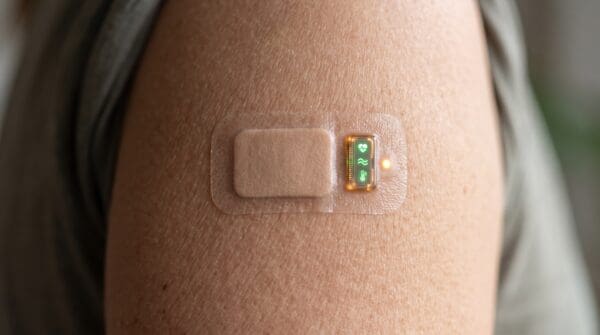
A groundbreaking wearable device is set to change how diabetes is managed through personalized, real-time care. Developed by researchers in Israel and China, the microneedle-based system offers a new level of patient support. It lets doctors and patients track disease markers and medication levels at the same time, without drawing blood. The device works in real time and is painless, providing critical health data through the skin’s interstitial fluid. Professor Hossam Haick of the Technion-Israel Institute of Technology led the research with Sun Yat-sen University colleagues. Their findings were recently published in the scientific journal Nature Communications, highlighting the system’s…

This week, two Israeli neuroscientists have rolled out a blood test in the US and Israel that they say can measure the responsiveness of a patient with major depressive disorder to common antidepressants. Depression is one of the most common forms of mental disorder, affecting more than 330 million people worldwide. Treatment methods rely primarily on a taxing trial-and-error process to find the right prescription drug, which can take years. In Israel, the psychological toll of 23 months of war and counting has made the need for effective mental health treatment felt more than ever. The blood test, created by…

Cornell Tech has announced that industry leader Joshua Ruch is now co-chair of the Jacobs Steering Committee, alongside Abby Joseph Cohen, current chair of the committee. Joshua has been a dedicated member of the Steering Committee for eight years and chaired the Runway Advisory Committee. In addition, the Steering Committee welcomes three new members: Nafea Bshara, Wendy Jones, and EB Kelly. The Jacobs Institute Steering Committee guides the strategic direction of the Jacobs Technion-Cornell Institute, a cornerstone of Cornell Tech’s mission to fuse academic excellence with real-world impact through programs in health tech, urban tech, and connective media, as well…

Dr. Eyal Orion did not dream of being an entrepreneur, certainly not a serial entrepreneur. He knew little about economics or entrepreneurship. By the age of 30, he had not yet decided what he truly wanted to do in life. Even while on a seemingly safe path at the Technion’s medical school, doubts about whether medicine was the right choice never gave him any rest. Today, nearly two decades later, he is one of the most prominent figures in Israel’s medical device industry. He spent his childhood in Ramat Efal as one of four siblings. His parents still live in…

Astronomers call a special kind of supernova a “cosmic yardstick” for good reason: The so-called Type Ia supernova gives off a predictable amount of light, making it a handy tool for measuring distances in space. These particular supernovas are useful but still puzzling, with scientists still unsure of what triggers their blasts. NASA estimates they happen only twice per millennium in the Milky Way. A leading idea has been that in an orbiting pair of white dwarfs — the remains of dead sun-size stars — one bursts apart almost immediately, while the other survives, perhaps hurtling away at breakneck speed…

Until last summer, Shlomit Weiss managed 20,000 people at Intel centers around the world, overseeing development of the company’s most widely-used computer chips. Her resume includes three decades in the bosom of the US-based chip manufacturer, which is also the largest private employer in Israel, and another three years as Mellanox’s hardware development manager. And if that’s wasn’t enough, she was also one of those who persuaded Nvidia CEO Jensen Huang to acquire Mellanox. But now, at age 62, Weiss is reinventing herself, and busy with the small details of starting an independent business: building her own website, handing out…

White dwarfs — the superdense, slowly cooling embers left behind when stars like our sun die — are usually quiet cosmic relics. A rare few, however, are anything but. In recent years, astronomers analyzing data from the European Space Agency’s Gaia spacecraft identified a handful of white dwarfs hurtling through the Milky Way at breakneck speeds of up to 1,240 miles per second (2,000 kilometers per second). That’s fast enough to zip from New York to Los Angeles in under two seconds — and to escape the galaxy entirely. These so-called hypervelocity white dwarfs have puzzled astronomers since their discovery…

Giving to your alma mater is one of the most popular philanthropic pathways for the average donor; far rarer in the charitable giving space is donating to another university with which you have no previous affiliation. Yet this is exactly what happened at the Technion – Israel Institute of Technology over the last several months, during which we at the American Technion Society (the Technion’s U.S. fundraising arm) have seen a surge in planned giving commitments from brand new donors, many of whom have never engaged with the university previously. This uptick was not merely coincidence but a result of…