Something Fresh in the State of Denmark
October 06, 2026























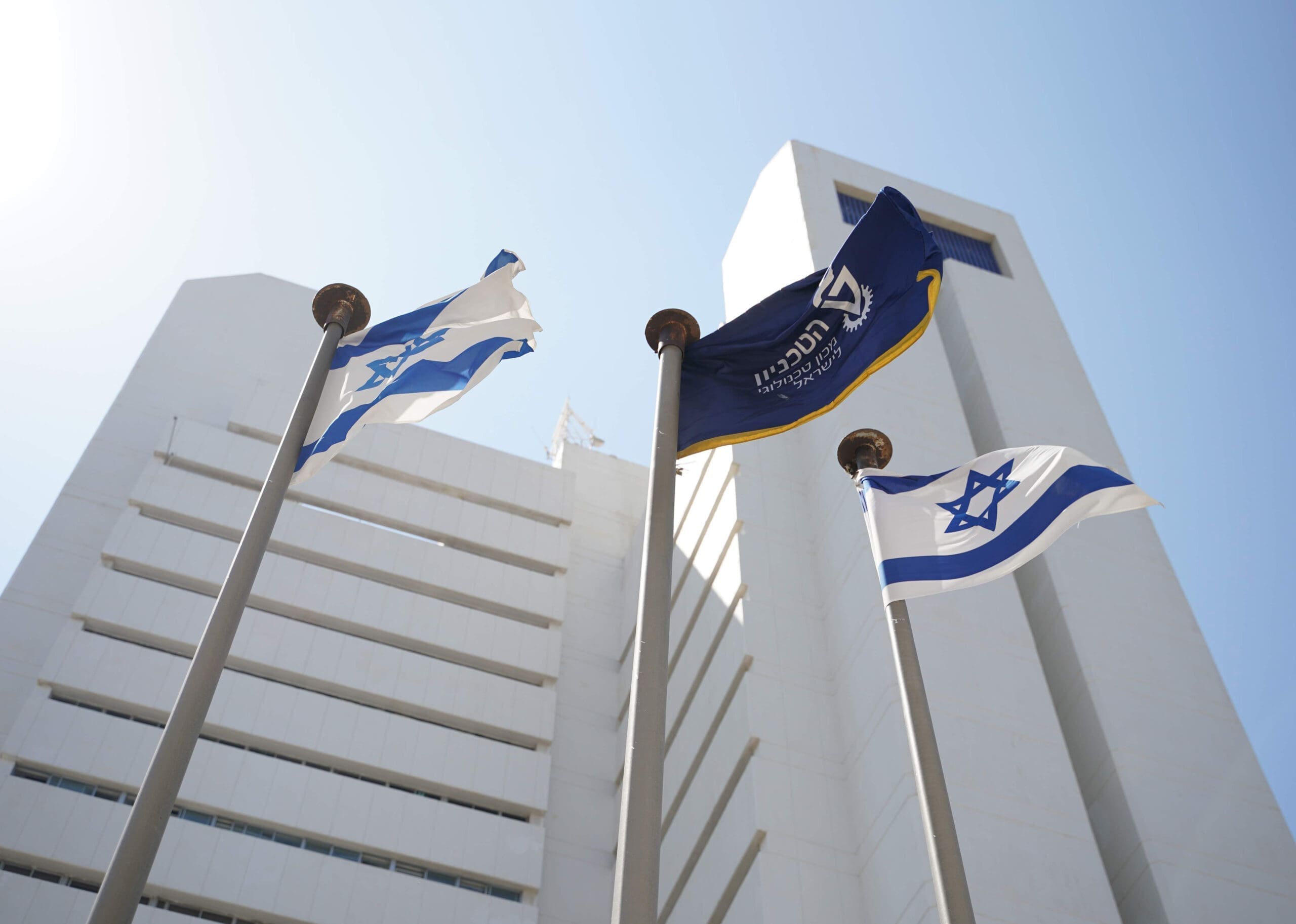






The Technion’s story has been intertwined with Israel’s for more than a century, from laying the foundations for a new nation to shaping its future.

Step inside Israeli innovation at the David and Janet Polak Visitors Center. Experience our 360° immersive movie and tech exhibition. Open to individuals and groups.
Learn More

Israel’s quantum computing sector is experiencing a breakout year. In 2025 alone, five Israeli quantum companies have raised almost $500 million, an influx of capital that places the country among the most active and diversified quantum hubs in the world. The companies – Quantum Art, Classiq, QuamCore, Qedma, and Quantum Machines – span nearly every layer of the quantum stack, from hardware and scaling architectures to control systems and error-correction software. Quantum Art announced a $100 million Series A, bringing its total funding to $124 million. The round was led by Bedford Ridge Capital with participation from Battery Ventures, Destra…

Under the shadow of geopolitical tension and global uncertainty around the future of Israel, doubling down on international academic collaboration can serve as an antidote that allows us to envision a brighter version of this future. Calls for boycotts of Israeli institutions ignore the fundamental function of academia as an open forum of ideas and eliminates the infinite potential for innovation when cross-cultural work prevails. Reflecting on Israel’s global collaborations reminds us of what is possible when we meet face-to-face with our peers from halfway across the world and harness the full power of our compassion for each other. The Michigan-Israel…

Apple is confronting the prospect of losing one of the most consequential executives behind its modern hardware renaissance. Israeli Johny Srouji, the senior vice president who built the company’s silicon program and oversees its hardware technologies group, has informed CEO Tim Cook that he is considering leaving in the near future, according to Bloomberg. Srouji is the most senior Israeli at the company and a central figure in the multi-year effort that moved Apple from Intel chips to its own highly regarded M-series processors. According to Bloomberg, Srouji has also told colleagues that he intends to join another company if…

A discovery by Prof. Ami Aronheim and his team at the Technion–Israel Institute of Technology shows that the growth of cancerous tumors may actually combat cardiac dysfunction and reduce fibrosis, the scarring process that stiffens the heart muscle. “The failing heart can beat much better in the presence of cancer cells or a tumor,” said lead investigator Aronheim, dean of the Technion’s Ruth and Bruce Rappaport Faculty of Medicine, speaking to The Times of Israel. “This is very surprising,” Aronheim said. Currently, no drugs exist that can reverse fibrosis or improve the heart muscle once it has been damaged, he…

LeanCon, an AI startup seeking to overhaul one of the construction industry’s most entrenched bottlenecks, has raised a total of $6 million, doubling its original Seed target. The round was led by Ibex Investors, with participation from Fusion VC, Newman Architects, TCA LA, Connecticut Innovations, Siegel Capital, and a group of sector-focused angel investors, including Phil Bernstein, former Autodesk executive and Deputy Dean at the Yale School of Architecture. Founded by engineers Ziv Levi and Sapir Tubul, LeanCon is positioning itself as the world’s first AI-powered pre-construction engineering team, offering a platform that aims to convert one of the industry’s…

We’re in the thick of the holiday shopping season, and U.S. residents are expected to shatter the spending record again this year. The National Retail Federation forecasts that 2025 will be the first time we collectively spend more than $1 trillion on year-end gifts. A lot of materials, energy, packaging and gasoline have gone into making and moving those gifts. All of those processes release planet-warming gases into the atmosphere. But a lot of that environmental impact is avoidable. Making, baking, thrifting and avoiding traditional wrapping paper are all more planet-friendly ways to give. We’ve got tips on how to…

After operating in near-total secrecy for more than eighteen months, Israeli startup Moonshot Space is emerging with an ambition rarely seen outside government laboratories. The company is developing a high-power electromagnetic launcher designed to propel objects to hypersonic speeds using electricity rather than chemical propellants, a technology it believes could reshape both orbital logistics and the global race for hypersonic capabilities. Moonshot has raised $12 million to date, led by Angular Ventures, including a $1 million grant from the Israel Innovation Authority. Founded in 2024, the company brings together a senior group of industry, defense, and government veterans: Hilla Haddad…

Marine viruses deploy a sophisticated Trojan horse maneuver that enables them to dismantle the energy systems of ocean bacteria and use the breakdown products for self-replication. This finding comes from a study conducted at the Technion Faculty of Biology published in Nature. The article is the result of a unique collaboration among three faculty members, Prof. Debbie Lindell, Prof. Oded Béjà, and Prof. Oded Kleifeld; and three young researchers — Dr. Omer Nadel, Dr. Rawad Hanna, and Dr. Andrey Rozenberg. Tiny cyanobacterial cells that live in the oceans play a crucial role in the global ecosystem, as they carry out photosynthesis to produce…

NeuroKaire’s offices on Yigal Alon Street in Tel Aviv are about as far as one can get from the gleaming workspaces of a typical Israeli high-tech company. The parking lot is dark and dirty, the elevator creaks, and there is no doorman, nor a sea view, unlike the surrounding luxury towers. The surprise begins only after stepping through the wide office doors: giant microscopes, highly sophisticated robots, and some of the world’s most advanced medical equipment, all enabling one of the most complex biological feats in existence, turning ordinary blood cells into human brain cells. “We could have been, like…

A technology developed in the laboratory of Prof. Amit Meller from the Technion—Israel Institute of Technology Faculty of Biomedical Engineering marks a significant advancement toward rapid proteome analysis, with far-reaching implications for both fundamental research and disease diagnosis. A 2023 Nature opinion article identified the seven most important emerging technologies to watch—with single-molecule protein sequencing taking the top spot. The article highlighted the pivotal contributions of Prof. Meller’s research group in advancing key technologies toward the commercialization of protein sequencing systems, paving the way for a true revolution in biological and medical research. Since proteins are the body’s fundamental building blocks, their rapid and…

In a 1966 Hollywood film “Fantastic Voyage”, screenplay by Isaac Asimov, scientists are shrunk to a few millimeters and injected into the bloodstream of a dying scientist who has vital information. Their mission: Navigate to his brain and destroy a blood clot before returning to normal size. Fast forward: On sabbatical in Boston in the early 1980s, Rafael rocket engineer Gabriel Iddan encounters Israeli gastroenterologist, Eitan Scapa. “I can’t reach the small intestine with my endoscope,” he says. Jokingly, to Iddan: “Can you shrink a camera and transmitter small enough to swallow and travel through the intestines?” Iddan’s Israeli startup…

Israeli researchers have discovered a plant-based molecule that can effectively combat pathogenic fungi and serve as a foundation for developing environmentally friendly treatments. The study was led by Dr. Ofri Levi of the MIGAL Galilee Research Institute and Tel-Hai College’s Faculty of Sciences, together with Prof. Benny Horwitz of the Technion’s Faculty of Biology. Their findings were published in mBio, a journal of the American Society for Microbiology, and offer a new approach to addressing one of the fastest-growing threats to public health and agriculture: fungi that have developed resistance to medications and pesticides. Fungal pathogens pose a serious danger…