Why the Perfect Pitch is Your Biggest Mistake
September 23, 2026



























The Technion’s story has been intertwined with Israel’s for more than a century, from laying the foundations for a new nation to shaping its future.

Step inside Israeli innovation at the David and Janet Polak Visitors Center. Experience our 360° immersive movie and tech exhibition. Open to individuals and groups.
Learn MoreAs Seen in Calcalistech.com

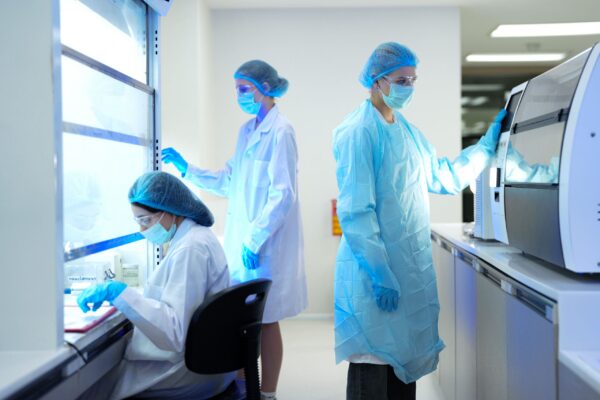
NeuroKaire’s offices on Yigal Alon Street in Tel Aviv are about as far as one can get from the gleaming workspaces of a typical Israeli high-tech company. The parking lot is dark and dirty, the elevator creaks, and there is no doorman, nor a sea view, unlike the surrounding luxury towers. The surprise begins only after stepping through the wide office doors: giant microscopes, highly sophisticated robots, and some of the world’s most advanced medical equipment, all enabling one of the most complex biological feats in existence, turning ordinary blood cells into human brain cells.
“We could have been, like all the other startups, in one of the high-tech towers in the area, but they simply wouldn’t let us bring in all our equipment,” say Dr. Talia Cohen Solal and Dr. Daphna Laifenfeld, explaining the practical reason for choosing the second floor of a drab building. There is another, equally pragmatic reason that suits the company’s largely “feminine” profile: NeuroKaire’s 30-person team consists mostly of women with advanced degrees in biology and chemistry, many of them new immigrants. “Obviously, the towers around us are shiny,” Cohen Solal says. “But it was also important to us not to spend money on things we didn’t need. The location mattered too, early on, one of us lived in Jerusalem and the other in Haifa. Tel Aviv, near the train station, was simply the midpoint.”
The concept may sound straightforward, but anyone who has taken antidepressants, or knows someone who has, understands how revolutionary this is. One of the central challenges in treating depression, a disease that affects at least half a billion people worldwide and is a leading cause of death among teenagers, is the time it takes to identify the right medication. Roughly 70 antidepressants exist in the Western world, but physicians have no reliable way to predict which one will work for a particular patient. Because these medications do not provide immediate relief, they must be taken for at least four weeks before doctors can assess their effectiveness. It is a long and often discouraging process: not only may a drug fail entirely, but patients can also experience significant side effects, dizziness, weight gain, or deepening despair, during the trial period. Many ultimately abandon treatment. Studies show it takes, on average, 12 to 18 months for a psychiatrist to find an effective medication for a given patient. That prolonged journey raises healthcare costs, strains psychiatric services, and increases the risk of patients deteriorating.
Co-founder Dr. Daphna Laifenfeld completed her doctorate at the Technion – Israel Institute of Technology, where she focused on depression research, providing the scientific foundation for NeuroKaire’s breakthrough technology.