Something Fresh in the State of Denmark
October 06, 2026

















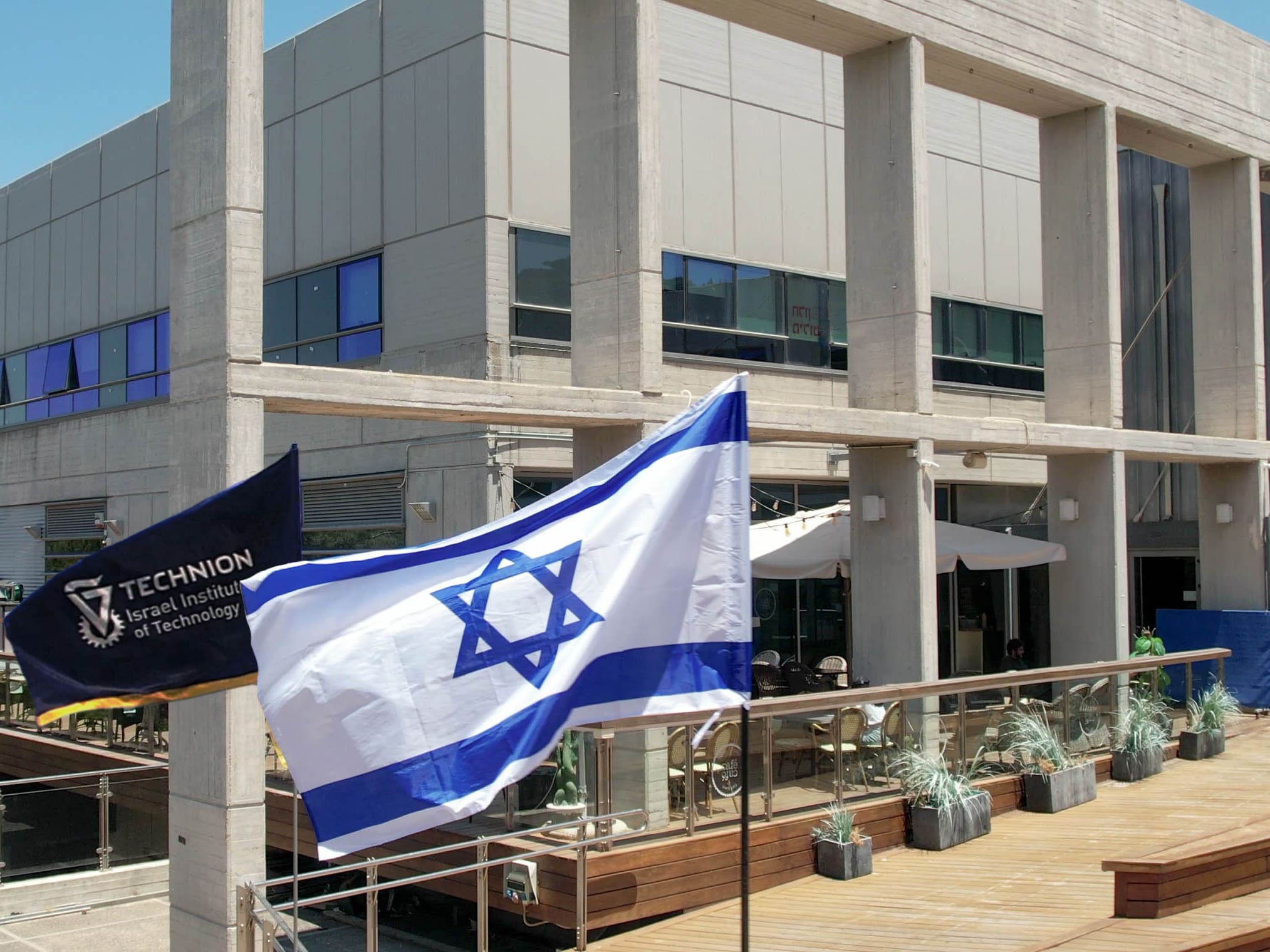
The Technion’s story has been intertwined with Israel’s for more than a century, from laying the foundations for a new nation to shaping its future.

Step inside Israeli innovation at the David and Janet Polak Visitors Center. Experience our 360° immersive movie and tech exhibition. Open to individuals and groups.
Learn More
From regenerative implants to smarter therapies, Israel’s innovation ecosystem keeps delivering life-saving advances. Researchers from Haifa’s Technion – Israel Institue of Technology unveiled a breakthrough biological implant that could end daily insulin injections for millions with Type 1 diabetes by producing insulin inside the body without rejection. Hebrew University discovered a tiny RNA molecule that bacteriophages use to combat bacteria, offering fresh hope in the fight against antibiotic-resistant “superbugs.”

Put bluntly, we simply do not do the best job of feeding all 8.3 billion people on Earth. As the World Food Program explains, 318 million people worldwide are facing “acute hunger” due to conflicts, economic conditions, and, particularly, the climate crisis. According to the United Nations, plant health could be part of the solution to this issue. However, the UN also noted that plant disease is making it harder for us to maintain crops, with about 40% of the planet’s agricultural yield dying off before it ever reaches our plates. While pesticides have helped reduce pest populations, they have…

Long before a star ignites, its birth is shaped by invisible particles racing through space at near-light speed. These cosmic rays quietly alter the chemistry and temperature inside dark clouds, helping determine when the clouds can collapse and begin forming stars. For the first time, astronomers have directly measured the influence of these particles inside a dense, starless cloud, providing a long-sought reading from the heart of a stellar nursery. The discovery offers a more precise way to understand how stars – and eventually planets – begin. A measurable stellar cloud Barnard 68 is a small, cold cloud of gas…

In recent decades, growing resources have been invested in the field of hydrogen as a raw material that aligns with the vision of a green economy and the use of sustainable energy. Hydrogen production is not a new process, but the aspiration to protect the environment and improve efficiency presents numerous technological challenges. A group of researchers at the Technion – Israel Institue of Technology and Sweden’s Chalmers University of Technology is presenting a breakthrough in the field – a development expected to significantly improve hydrogen storage capacity for future use. Growing awareness of the environmental damage caused by human…
Patent registration involves prestige as well as significant money. Commercial companies file patents and reap major profits, but academic institutions also benefit from the innovations developed by their researchers. Israel holds a respected position in this arena, and for the fifth consecutive year, the Technion – Israel Institute of Technology ranked among the Top 100 institutions for U.S. patent approvals. The latest ranking places the Technion first in Israel, second in Europe, and within the list of the world’s 100 leading institutions for U.S. patent approvals in 2025. The Technion ranked 81st globally, with 46 patents approved during the year,…

Built to protect pedestrians from falling debris, the ubiquitous sidewalk shed has become an unfortunate defining feature of New York City life. And while we can applaud the new, improved designs for these eyesores, we need to get smarter about how to keep fewer of them up and for shorter periods of time. Simply making sidewalk sheds prettier is merely putting “lipstick on a pig” — no offense to pigs. We can do better. As of last year, the city had more than 8,000 active sidewalk shed permits on file. More than 400 have been up for more than half…
Artificial intelligence is so much more than the latest buzzword. By blurring the line between human and technology, AI has proven its staying power and will undoubtedly shape the future of life on Earth. It is also no secret that when it comes to AI innovation, Israel punches above its weight class. I recently called upon the brightest minds in Israel to take an active role in shaping AI applications on a global scale, setting ethical standards and ensuring that this technology is used for good. When I think of Israel’s AI prowess, I can’t help but place the Technion…

The magnitude of artificial intelligence’s potential can cloud our imagination when trying to understand its specific real-world impact. Fortunately, the Technion – Israel Institute of Technology and its expansive network of alumni around the world are working each day to ensure that its potential is honed for good and advance true transformation that we can see with our own eyes. One such alum is Jonathan Spitz, founder of AI start-up GaussML. He leverages physical AI—the new frontier of AI innovation that will bring about a future where robots are our helpful friends, rather than the villains of science fiction. I…

California’s most devastating wildfire – the 2018 Camp Fire, which killed 85 and destroyed nearly 19,000 structures – forced nearly half of all residents living within designated fire perimeters to relocate within a year. That local exodus is documented by Cornell-led research that mapped annual moves between U.S. neighborhoods from 2010 to 2019 in detail 4,600 times greater than standard public data. Called MIGRATE, the new, publicly available dataset revealed that most of those displaced remained within the affected county – moves not captured in county-level public migration data aggregated every five years. The case study illustrates how a finer-grained…

A new implant developed at the Technion – Israel Institute of Technology may offer a self-regulating treatment for diabetes, according to a new study in collaboration with MIT, Harvard, Johns Hopkins University, and the University of Massachusetts. The study, led by Assistant Professor Shady Farah of the Faculty of Chemical Engineering at the Technion, was peer-reviewed and was published in Science. It introduced a “living, cell-based implant” that works as a pancreas and is protected against immune rejection by a novel system. According to the statement, the implant “continuously senses blood-glucose levels, produces insulin within the implant itself, and releases…
While our understanding of artificial intelligence’s exact impact on society remains incomplete, its potential to touch every sector of our lives is well known and highly promising for science and scientific discoveries. However, we are at a critical juncture where we must answer lingering concerns and questions surrounding AI’s influence on society before continuing to scale its power. What kinds of data should AI models be able to access? Is AI safe to use in healthcare? Will AI eliminate much-needed jobs? Ultimately, what does it look like to develop and use AI technology responsibly and ethically? We acknowledge that we…
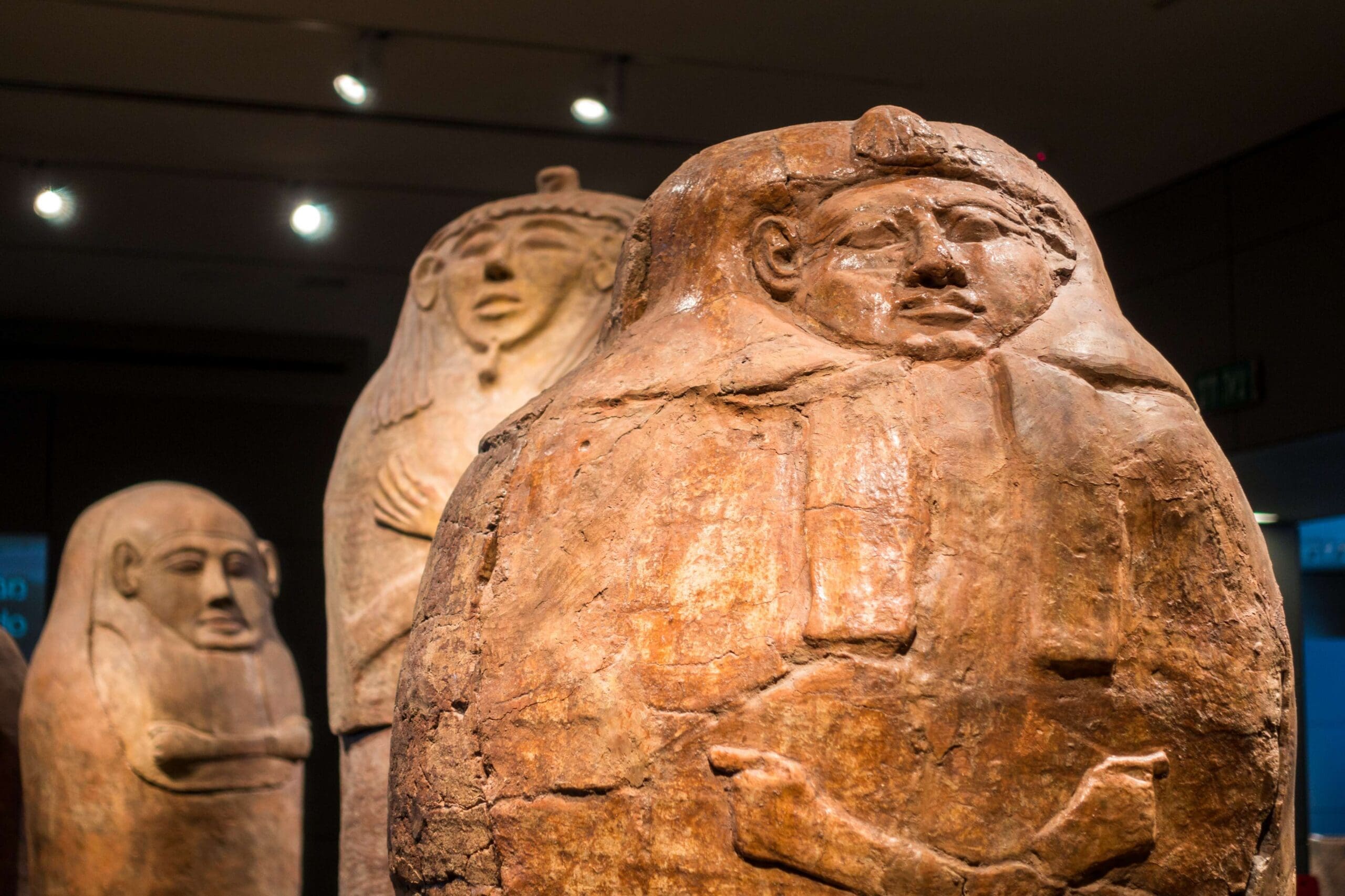
Prof. Jacob “Yasha” Grobman has been appointed the new director of the Israel Museum and will take up the post in March, the museum announced Tuesday. Grobman is a full professor at the Faculty of Architecture and Town Planning at the Technion – Israel Institute of Technology in Haifa, where he served as dean from 2019 to 2022. He is also the founder and principal of Grobman Architects, an award‑winning firm specializing in public construction. In addition to his academic and professional work, Grobman has curated and initiated exhibitions in museums and galleries and has written architectural programs for cultural…