Something Fresh in the State of Denmark
October 06, 2026


































The Technion’s story has been intertwined with Israel’s for more than a century, from laying the foundations for a new nation to shaping its future.

Step inside Israeli innovation at the David and Janet Polak Visitors Center. Experience our 360° immersive movie and tech exhibition. Open to individuals and groups.
Learn More

As bee populations continue to decline worldwide, an Israeli technology company is turning to artificial intelligence and robotics in an effort to reverse the trend and protect a critical component of the global food supply. BeeWise, an Israel-based agri-tech company, has developed BeeHome, an autonomous beehive designed to continuously monitor bee colonies and automatically intervene when threats to their survival are detected. The challenge is significant. Bees are responsible for pollinating nearly 75% of the world’s food crops, playing a vital role in the production of fruits, vegetables, nuts, coffee, and cotton. Yet colonies around the world are increasingly threatened…

Researchers at the Technion – Israel Institute of Technology have developed a technology that allows users to control movement in AI-generated videos using simple mouse gestures, without requiring large computing resources or retraining on massive video datasets. The system, called Time to Move, or TTM, was developed by Dr. Or Litany of the Henry and Marilyn Taub Faculty of Computer Science, together with Prof. Ron Kimmel and students Asaf Singer, Noam Rotstein and Amir Mann. Litany presented the research last month at the International Conference on Learning Representations, or ICLR 2026, in Brazil. The conference is considered one of the…

An innovative technology developed by researchers at the Technion – Israel Institute of Technology could lead to a fundamental shift in the cancer treatment paradigm. They created advanced nanoparticles that successfully halt aggressive triple-negative breast cancer tumors – without releasing a single drug molecule. The particles operate through a sophisticated interaction with the immune system, changing the rules of the game by delivering a biological message to the tumor microenvironment and to immune system cells. Published in ACS Nano, the study was led by Ph.D. candidate Ofri Vizenblit, with the assistance of Ph.D. candidate Rawan Mhajne, under the supervision of…

The first small satellite of the CloudCT network has been integrated, tested, and prepared for launch from California in June 2026. This precursor mission will be followed, if successful, by the launch of 10 additional CloudCT satellites in 2027, helping to fill gaps in our understanding of clouds and their role in climate. This marks the culmination of seven years of intensive research by Israeli and German scientists from the Weizmann Institute of Science (led by Prof. Ilan Koren), the Technion – Israel Institute of Technology (led by Prof. Yoav Schechner), and Zentrum für Telematik (led by Prof. Klaus Schilling)….

“You’re from the Jewish school?” the French Ministry of Education official quizzed the teenage girl who had come for her post-high school baccalaureate exam. The examiner began firing off the most difficult questions on the physics test, seemingly seeking to trip up the high school senior, but Noa Uziel, 18, who was at the top of her class at Paris’s Yabne school, stood her ground. “Are you going to cry?” the Education Ministry official pressed her. “I am the one who chooses the questions.” A life journey changed by Oct. 7 It was more than a year earlier, after the…

As robots enter hospitals and care facilities, questions remain about whether they actually make care easier for the people who give and receive it. A new Cornell Tech-led study approaches that challenge by inviting healthcare workers, long-term care residents, and community members to help design the robots themselves. Presented at the 2026 Association for Computing Machinery CHI Conference on Human Factors in Computing Systems, the research documents a 14‑week “co-design” project in which nurses, doctors, nursing center residents, artists, engineers, computer scientists, and craftsmen worked side by side to imagine and physically build robots that could ease daily burdens in…

According to a recent report, government officials in the United States and Israel are considering a joint effort to develop a large-scale research and development campus for artificial intelligence in Israel’s Western Negev desert. The plan, which is called Project Spire, would create an advanced fabrication and design center to produce, assemble, and test a new generation of computer chips to meet the demands of the rapidly developing artificial intelligence era. The report in the Wall Street Journal was written by two members of Hudson Institute’s Center for Peace and Security in the Middle East, a conservative think tank based…

Consider pancreatic cancer – the disease that killed Steve Jobs, e.g., despite the best medical technology money could buy. Approximately 467,000 to 500,000 people die from pancreatic cancer worldwide each year. It is the sixth most common cause of cancer death globally. Due to its high mortality rate and lack of early detection, the number of deaths is projected to rise significantly in the coming decades. And no new drug to treat it has gained FDA approval – for 30 years! Moreover, survival rates are bleak: Metastatic (Stage IV): 3–6 months, though recent advancements may improve this. Locally Advanced (Stage…

Israeli startups raised $1.3 billion in April 2026, according to reports and press releases seen by “Globes.” The figure may be more as some companies prefer to remain in stealth and sometimes do not publicize the investments they have received. In the first four months of 2026, Israeli startups have raised $4.4 billion. In the first three months of 2026, Israeli startups have raised $3.1 billion, according to IVC, after raising $10.7 billion in 2025, up from $9.58 billion in 2024 and $6.9 billion in 2023 but well below $15 billion raised in 2022, and the record $25.6 billion raised…
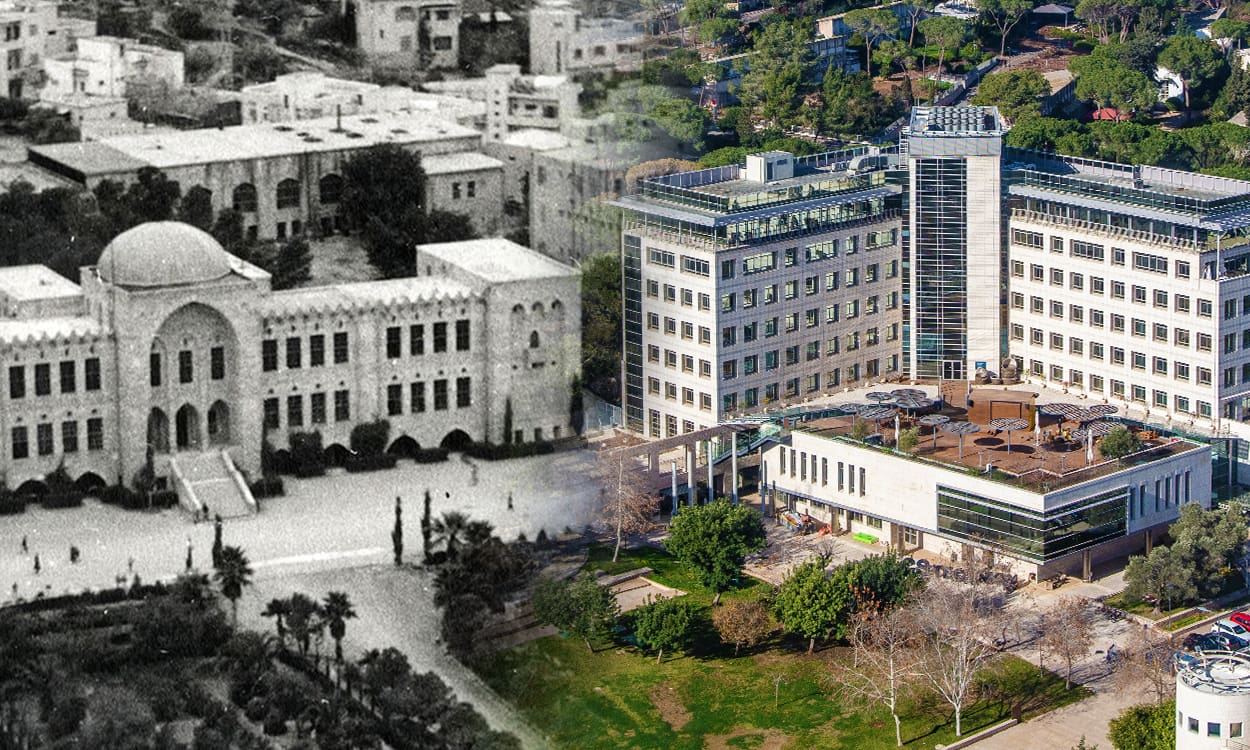
Two Israeli universities rank among the world’s top 10 for the number of undergraduate alumni who founded startups that raised venture capital, according to the latest ranking released by Andreessen Horowitz, also known as a16z, one of the world’s largest and most influential venture capital firms. The ranking, based on data from research firm PitchBook covering the end of 2025 and early 2026, places Tel Aviv University seventh, with about 865 alumni founders who have raised roughly $30 billion. The Technion — Israel Institute of Technology — ranks 10th, with about 783 alumni founders who have raised $23 billion. The…

On the eve of Israel’s 78th Independence Day, Prof. Uri Sivan says the Technion – Israel Institute of Technology sees ‘Israel’s security, Israel’s economy, and Israel’s society’ as central to its work, even as war, reserve duty and academic boycotts test the institution’s resilience. As Israel remains at war and many of its students continue to cycle between campus and reserve duty, those guiding them see their mission extending beyond academic excellence alone to include the needs of the state itself. Speaking ahead of Israel’s 78th Independence Day, Technion President Prof. Uri Sivan says the country’s flagship engineering school has…

On a recent morning at the Shulich Faculty of Chemistry at Haifa’s Technion – Israel Institute of Technology, three post-doctoral students from India were immersed in their research experiments. The lab was crowded with glass beakers, bottles, test tubes, and syringes. Suddenly, a siren blared, indicating a possible incoming Iranian ballistic missile. The students calmly filed out of the Ashraf Brik lab, as though this drill were part of normal procedure, and headed for the protected room down the hall. One didn’t bother to take off his white lab coat and gloves. After about 10 minutes, the students returned to…