Something Fresh in the State of Denmark
October 06, 2026























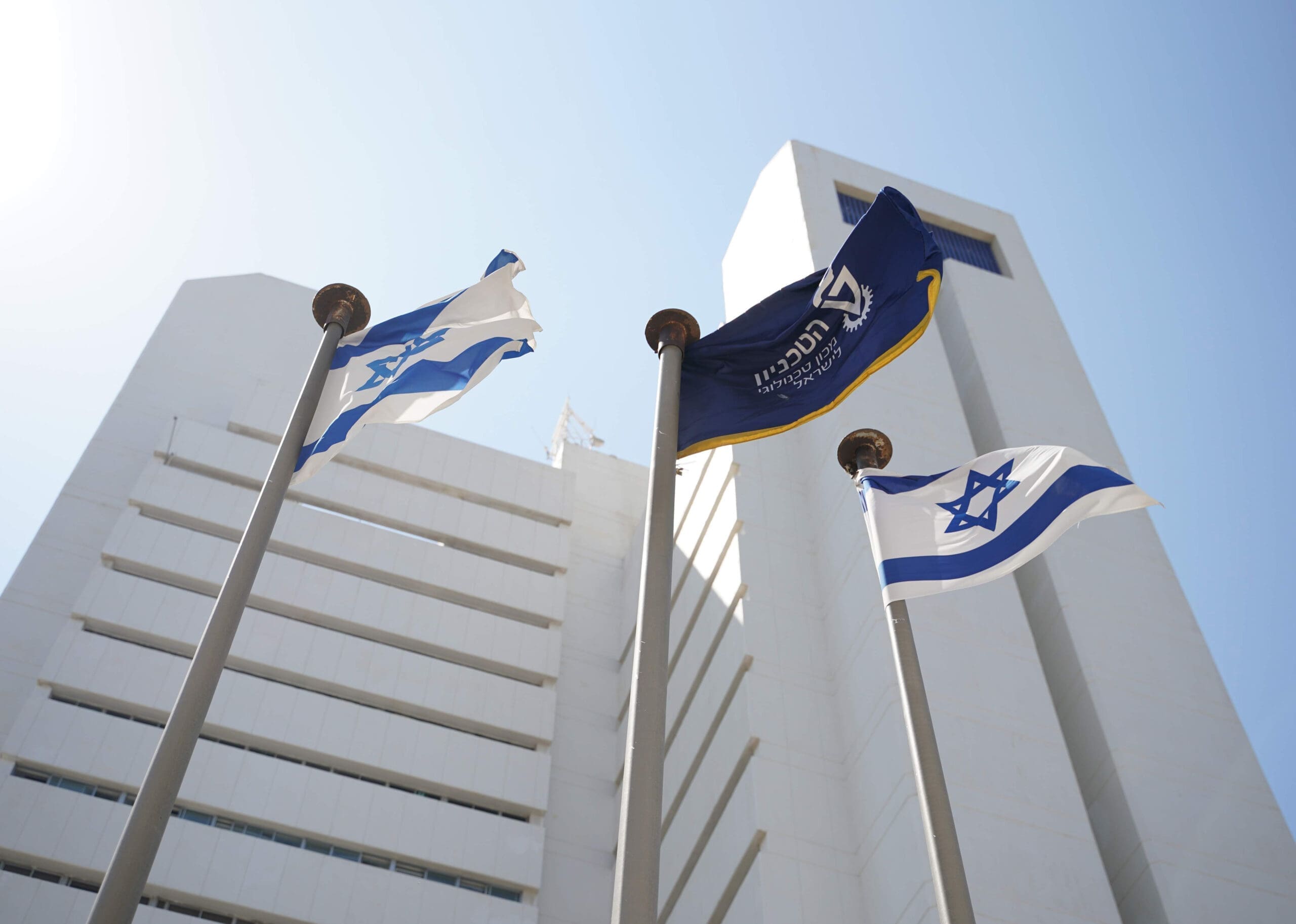








The Technion’s story has been intertwined with Israel’s for more than a century, from laying the foundations for a new nation to shaping its future.

Step inside Israeli innovation at the David and Janet Polak Visitors Center. Experience our 360° immersive movie and tech exhibition. Open to individuals and groups.
Learn More

It’s come to this. With Earth at its hottest point in recorded history, and humans doing far from enough to stop its overheating, a small but growing number of astronomers and physicists are proposing a potential fix that could have leaped from the pages of science fiction: The equivalent of a giant beach umbrella, floating in outer space. The idea is to create a huge sunshade and send it to a far away point between the Earth and the sun to block a small but crucial amount of solar radiation, enough to counter global warming. Scientists have calculated that if…

Leaning on our friends and family during these challenging times has been an immense relief for many of us, but one of the most important forums for solidarity in this era shaped by conflict and tragedy is not so visible. The power of online community has played an invaluable role in providing wartime support, and Nathanaelle Klein, Technion alumna and Chief Product Officer at Soli, is one of the talented individuals shaping an empowering online community in Israel right now. In speaking with Nathanaelle, I learned about how the academic foundation she acquired at the Technion inspired her global career, and…
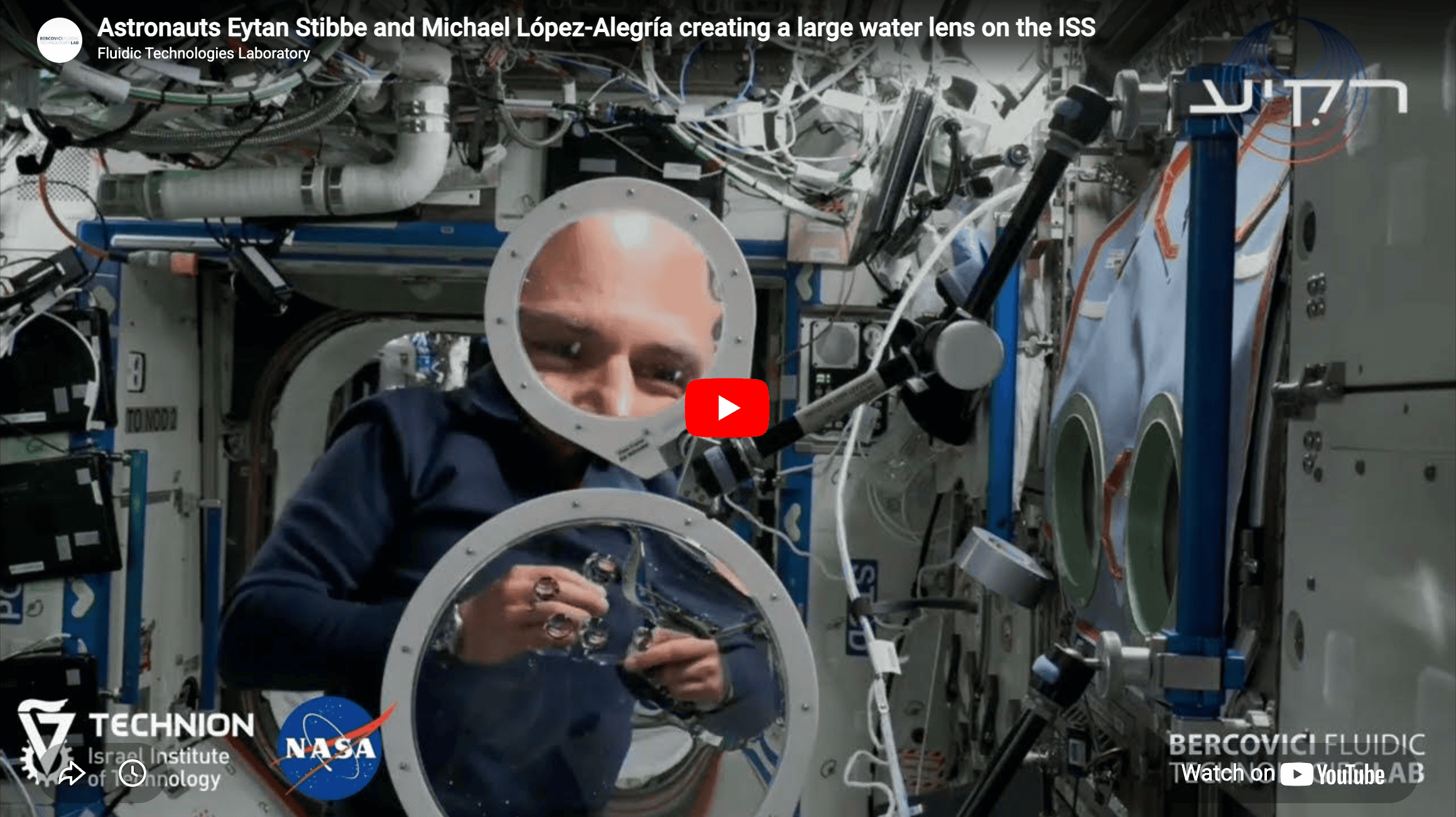
This video shows astronaut Eytan Stibbe on the ISS during Axiom Space’s AX1 mission (April 2022), performing a Fluidic Space Optics experiment as part of the #RAKIA mission. In this part of the experiment, Eytan injected water onto a large frame, and demonstrated that in space the surface tension of liquids can be used to create optical components at any scale. This experiment is part of the FLUTE project – a collaboration between The Fluidic Technologies Laboratory at the Faculty of Mechanical Engineering at the Technion and a team led by Dr. Edward Balaban at NASA Ames. Read more about…

Hopes were high for the much-hyped first private US Moon lander mission, launched from Cape Canaveral earlier this month. But following a problem with a propellant valve, the Peregrine lander from Astrobotic didn’t make it to the Moon and instead burned up in Earth’s atmosphere, having failed to deliver its 20 payloads, including a number of NASA experiments. This follows failed lunar landing attempts from companies based in Israel and Japan in 2019 and 2023, respectively. In fact, no private company has yet landed on the Moon. The failure of the most recent mission is a blow but not entirely surprising, according to experts. Nor…

To wean itself off fossil fuels, the world needs cheaper ways to produce green hydrogen—a clean-burning fuel made by using renewable electricity to split water into hydrogen and oxygen. Now, researchers report a way to avoid the need for a costly membrane at the heart of the water-splitting devices, and to instead produce hydrogen and oxygen in completely separate chambers. As a lab-based proof of concept, the new setup—reported this month in Nature Materials—is a long way from working at an industrial scale. But if successful, it could help heavy industries such as steelmaking and fertilizer production reduce their dependence on oil,…

An Israeli startup that uses innovative technology to reduce the sugar content in fruit juices has partnered with a leading American food and beverage supplier. Rehovot-based Better Juice uses natural enzymes to convert sugars in juice to non-digestible compounds, like dietary fibers. The sugar is replaced with other sweet molecules, without changing the taste or affecting the naturally occurring nutrients, including vitamins, minerals, and antioxidants. The collaboration will see global company Ingredion, which is headquartered in Illinois, lead Better Juice’s Series A funding round through its investment arm, Ingredion Ventures. The aim is to fast track Better Juice’s entry into the US juice…

Search and rescue at sea is a valiant endeavor to save people and vessels from dangerous situations, but the rapidly growing number of autonomous vessels at sea and the missions they handle require a safer solution for recovery. Identifying this peril, Haifa-based startup Sealartec came up with a safer way to rescue manned and unmanned vessels – and is in operation globally. The Sealartec solution is an autonomous system that acts as a cradle for unmanned vessels, bringing them back to the mother ship safely without risking crew lives.

The US federal health insurance program Medicare has for the first time made a payment for Israeli-made exoskeleton ReWalk, a wearable robotic device that allows paraplegics to walk again. The ReWalk Personal Exoskeleton provides powered hip and knee motion for people with a spinal cord injury (SCI), allowing them to stand upright, walk, turn, and climb up and down stairs. The payment of $94,617 to ReWalk was made via Medicare administrative contractor Noridian Healthcare Solutions and signals the federal agency’s division to recognize the ReWalk Personal Exoskeleton as a medically necessary device for people with an SCI.
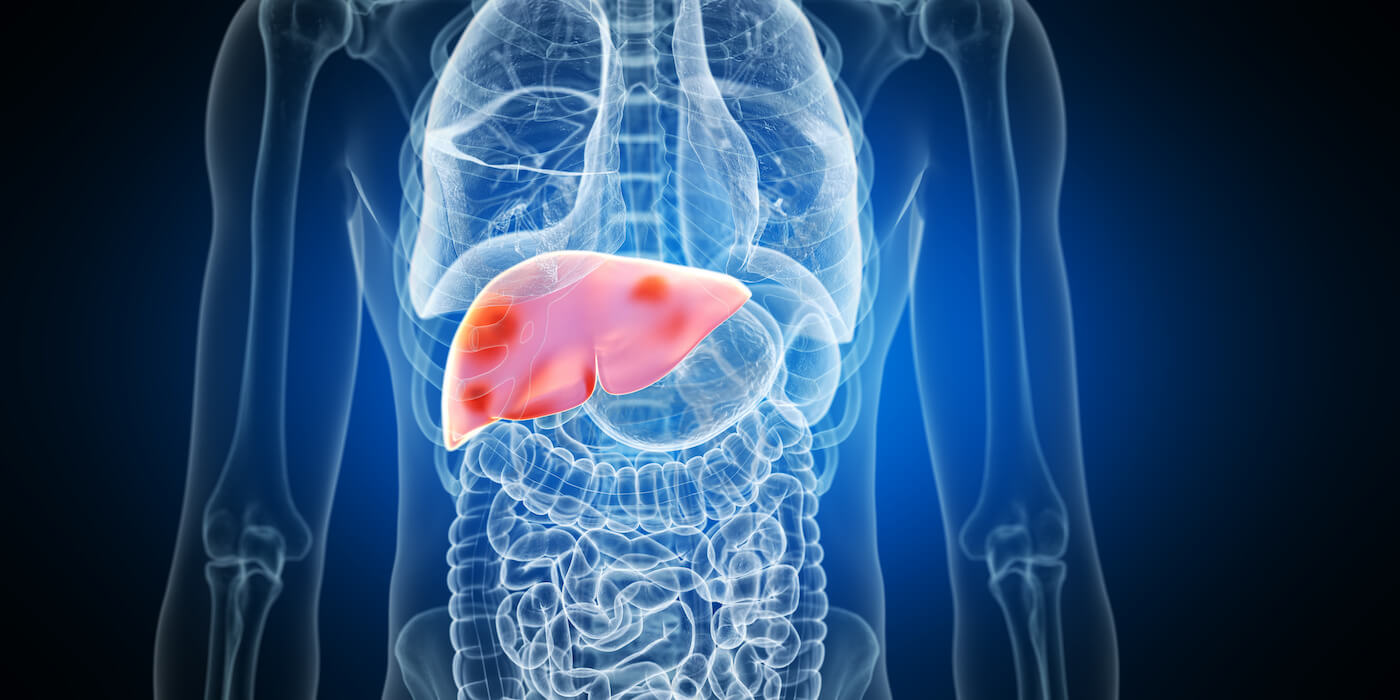
An Israeli company has been granted clearance from the US Food and Drug Administration (FDA) for its software used in the removal of liver tumors. The BioTracelO software created by Rehovot-based TechsoMed Medical Technologies received De Novo clearance from the FDA, which is approval granted to a novel system. The software is used during ablation therapy – a minimally invasive treatment that uses extreme temperatures to kill tumors – and is designed to predict the tissue response to the therapy. It is also designed to aid physicians who are performing liver tumor removal by providing real-time visuals with the ultrasound imaging.

Jackie Chaney, an elementary teacher for the past 16 years, currently presides over a classroom of 25 2nd graders. She professes to love this stage in a students’ academic career, one that historically has been marked by growth in literacy, whereby word recognition begins to become automatic, fluency accelerates, and classroom teachers double down on building students’ ability to focus and read independently for a sustained period of time. But in recent years, Chaney has noticed a significant shift in this early literacy journey. “With the ‘microwave world’ that we live in nowadays, students want that immediate engagement and quick…

Adi Kikozashvili says the only reason she can go on with her life is because it is what her older brother would want her to do. That brother, 40-year-old Shlomi Ziv, was kidnapped on October 7 (he turned 41 on Sunday, January 21, 2024), while working as part of the security detail at the Supernova desert rave festival when Hamas terrorists stormed into southern Israel, brutally murdering 1,200 people — including 360 at the festival — and taking 253 hostages into Gaza. Ziv’s wife’s cousin, Aviv Eliyahu, the security manager at the festival, was among those slaughtered there.

That the world’s bee population is in crisis is no secret. Scientists, conservationists and agriculturalists have been scrambling for a solution to a situation that could be catastrophic for humans who rely on these stripy natural pollinators and their winged cohorts to propagate much of the food that we eat. Israeli company Edete says it has a unique solution, giving the insects – and those who benefit from their hard work – a helping hand in the form of mechanical artificial pollination, which it says is vital if we wish to ensure food security for future generations.