Something Fresh in the State of Denmark
October 06, 2026























The Technion’s story has been intertwined with Israel’s for more than a century, from laying the foundations for a new nation to shaping its future.

Step inside Israeli innovation at the David and Janet Polak Visitors Center. Experience our 360° immersive movie and tech exhibition. Open to individuals and groups.
Learn More
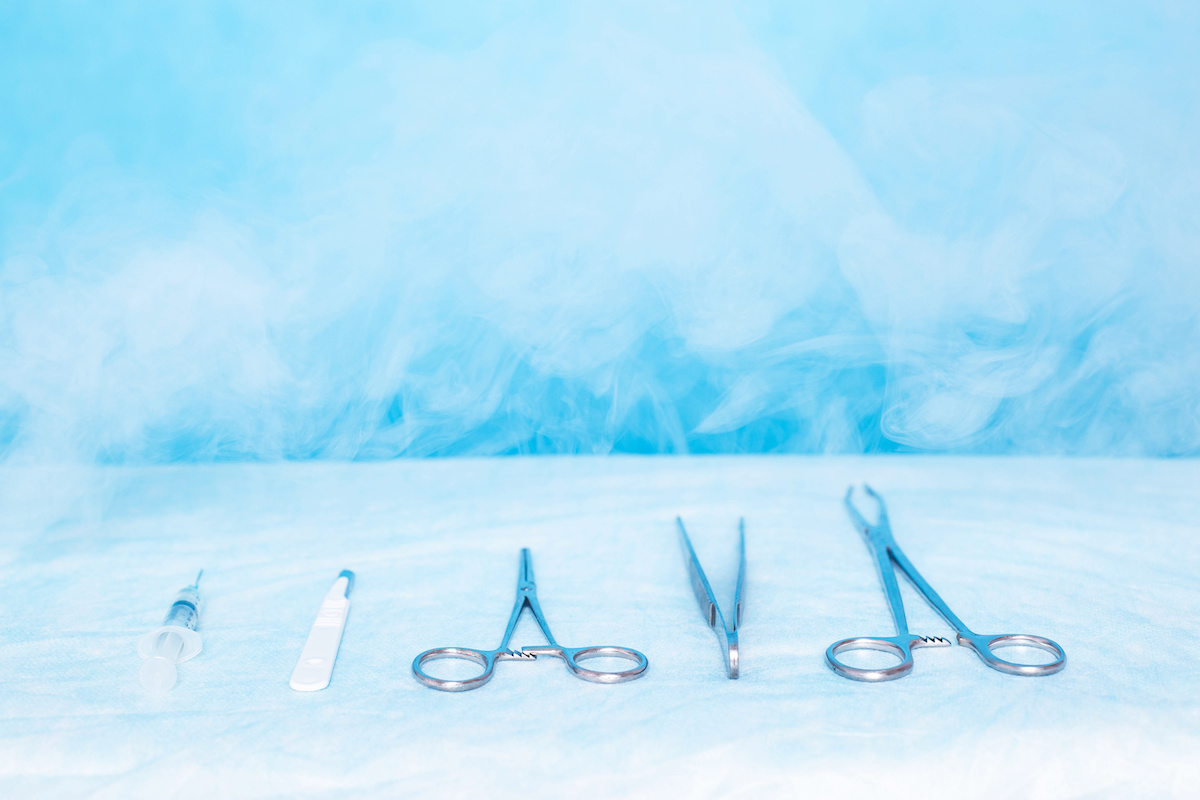
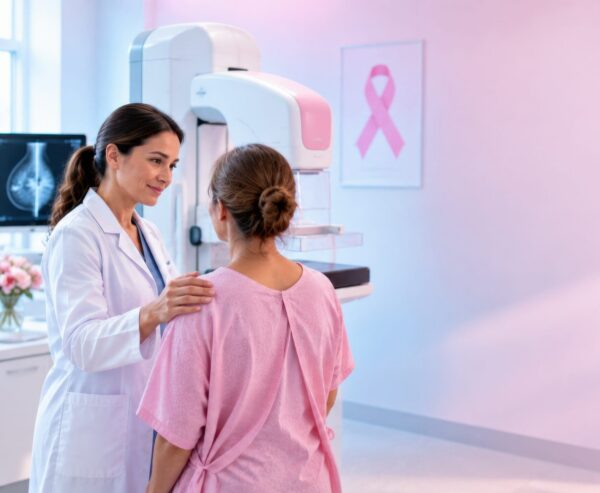
A medical breakthrough now allows doctors to freeze early-stage breast tumors – with no surgery, no scarring, no general anesthetic and no tissue removal. The entire procedure can take as little as 40 minutes. Patients can go straight home after its done, and are spared the painful recovery process. The idea of using an extremely cold liquid to freeze and destroy abnormal tissue – or cryoablation – isn’t new. Doctors have been doing it in hospitals for the last 30 years. But IceCure Medical, an Israeli startup, has developed technology that allows physicians to perform the procedure at their own office,…

US gaming and computer graphics giant Nvidia has joined forces with an Israeli startup to roll out a new hardware system to connect the quantum computer with classical computers. The new system, Nvidia DGX Quantum, built together with Israel’s Quantum Machines, a developer of a standard universal language for quantum computers, is expected to be first deployed at Israel’s quantum computing research center at the end of this year. The quantum computing R&D center funded by the Israel Innovation Authority at an investment of NIS 100 million ($27 million), which is headed by Quantum Machines, was established to help Israel build a…

What’s your password? The question makes most of us cringe because we all have a gazillion passwords for banking, shopping and everything else we do online. But with passkeys, there’s nothing to remember or type in. Touching our finger or showing our face to a device for authentication is so much easier. And it is safer, too, says Tal Zamir, CTO of Tel Aviv-based Perception Point, whose software detects, investigates and remediates any kind of hack attack across a company’s email, web browsers and cloud collaboration channels.

A new program will help orthodox Jewish entrepreneurs to integrate into Israel’s hi-tech and technology industries. It is the first of its kind, and will provide them with mentoring, marketing and sales skills. It will also teach them how to raise funds and adapt their products, and connect with other groups within the population. The program was presented at the Israeli President’s residence by a group of representatives. It aligns with the Israeli President’s new “Exchange Word” initiative, which calls for a fruitful dialogue between the different parts of the nation. Intel Ignite, one of the founders of the program,…

The gender gap in Israel’s startups is slowly narrowing, with women now accounting for 35 percent of all jobs. A report published by Start-Up Nation Policy Institute to mark International Women’s Day shows the number of women in startups is increasing, albeit slowly, up from 33.4 percent in 2021. Still, women account for just 16 percent of senior (C-level or C-suite) positions, and just seven percent of CTO (chief technical officers) positions. They fare best in senior roles as CMOs – chief marketing officers – at 35 percent. The findings are based on a database of all LinkedIn employees in…

The world’s smallest heart pump, which was developed by an Israeli startup, is now being used in the treatment of two heart patients in New York as part of an FDA-approved study. The study is the first step to securing approval for the use of Magenta Medical’s Elevate heart pump in the US. It will evaluate the device’s safety and feasibility in providing temporary support during procedures used to open clogged arteries in the heart. The Elevate pump can support the heart’s activity, and even temporarily replace the organ for several days by opening clogged arteries of cardiac patients, and reducing…

Luxury car maker Porsche has teamed up with Israeli tech company Mobileye to implement its autonomous driving tech in its new models. Mobileye’s SuperVision system includes 11 cameras and radar-based sensing that allows drivers to take their hands off the wheel on certain roads, enabling the car to follow navigation routes pre-chosen by the driver, change lanes, and even overtake slower vehicles that are ahead. The system also includes maps that have up-to-date and local information on road features such as lanes and signals. Porsche did not say when customers would see Mobileye’s technology appear on future models, nor which models would…

Antidote Health, one of several Israeli companies making healthcare affordable and accessible in the United States, has teamed with the Charles Antetokounmpo Family Foundation in the $1 million “Leave No One Behind” campaign to deliver free mental telehealth care services to residents of Milwaukee, Wisconsin. “My family’s path to the United States wouldn’t have been possible without the kindness of others,” said Milwaukee Bucks basketball player Giannis Antetokounmpo, who is of Greek-Nigerian heritage. “That’s why I’m delighted that CAFF and Antidote Health have come together to provide mental healthcare services to those in-need. It’s another great way we can give back to this community…

For women suffering from alopecia, the loss of their hair can be traumatic and life altering. But an Israeli medical technology company has developed an injector to strongly affix multiple strands to the scalp at a time, providing immediate hair restoration to women struggling with baldness. Hairstetics, based in Or Yehuda on the outskirts of Tel Aviv, says its near-instant hair implants can restore a woman’s hair in less than an hour – and without surgical intervention. Hairstetics CEO Oren Ne’eman tells NoCamels that the implants are for women suffering from androgenetic alopecia, a genetic disorder characterized by permanent hair…

Forget about evolution, climate change or vaccines – what makes people really lose their mind, apparently, is cats. “We’ve had posts that have affected people’s lives in a very substantial way, including posts that went beyond the virtual world. People really got threats or disrespectful comments,” says Yomiran Nissan. “For example, when we wrote about the very, very viral topic of street cats and the ecological problems that they pose. It led to a lot of anger, both virtual and in the real world.” Nissan is the CEO of Little, Big Science, an Israeli NGO dedicated to bridging the gap between…

The United States is now home to 88 privately held, Israeli-founded companies that have reached or surpassed a $1 billion valuation, according to the United States – Israel Business Alliance. The number has gone up from 80 a year ago. Each of these unicorns has at least one Israeli founder and its global or regional headquarters in the United States. “The rising number of Israeli-founded unicorns in the United States is a testament to the strategic value that this market continues to offer Israeli entrepreneurs,” USIBA president Aaron Kaplowitz said. “In recent years, there’s been better product-market fit between Israeli technological…

Growing up in a kibbutz and working in agriculture from a young age, Adi Nir, founder of Israeli startup MetoMotion, left the fields, as many others did, to make a living in the tech industry. The widespread global shortage of fruit and vegetable pickers is what brought him back to his roots to develop the world’s first robot for picking tomatoes. Fewer and fewer people work in agriculture, which employs just 5% to 10% of the workforce in the European Union and euro area, and 6% in OECD countries, according to World Bank data. In Israel, only 1% of all…