The Technion’s story has been intertwined with Israel’s for more than a century, from laying the foundations for a new nation to shaping its future.

From medicine to security, explore how the Technion is advancing Israel and improving lives around the world.
View All Impact Areas
Explore stories, news, insights, and data across articles, videos, and podcasts.
view all content types
of the student body are women
among universities worldwide for producing undergrad entrepreneurs
of all universities in the world*
The Technion’s story has been intertwined with Israel’s for more than a century, from laying the foundations for a new nation to shaping its future.
Explore ATS, the Technion, and the people behind the breakthroughs redefining what's possible for Israel and the world.
Learn More About ATSATS is a community of supporters, innovators, and champions of possibility united by one mission: transforming Israel and the world through science and discovery.
Learn MoreFor more than 100 years, the Technion has been Israel's technological engine and leading driver of innovation, technology, and entrepreneurship, transforming ideas into impact.
Learn More
Step inside Israeli innovation at the David and Janet Polak Visitors Center. Experience our 360° immersive movie and tech exhibition. Open to individuals and groups.
Learn MoreFrom medicine to security, explore how the Technion is advancing Israel and improving lives around the world.
View All Impact AreasExplore stories, news, insights, and data across articles, videos, and podcasts.
view all content typesExplore ATS, the Technion, and the people behind the breakthroughs redefining what's possible for Israel and the world.
Learn More About ATSAs Seen in Axios.com
U.S. astronauts Barry “Butch” Wilmore and Sunita “Suni” Williams splashed down to Earth on Tuesday after more than nine months in space.
But now, they have a new mission: recovery.
Why it matters: Muscle atrophy, bone density loss and even vision changes are expected side effects of long-duration space missions. And while some of the impacts of a layover hundreds of miles above Earth are quickly reversible, others can persist.
Wilmore and Williams splashed down Tuesday evening after undocking from the International Space Station early that morning.
Zoom in: One prominent effect of extended time in microgravity is muscle atrophy or weakening. The longer a space mission is, the more severe such atrophy would be, said Shenhav Shemer, a professor of biology at the Technion — Israel Institute of Technology who researches muscle loss.
by
www.axios.com (opens in a new tab)
on
March 18, 2025
Technion Prof. Shenhav Shemer shares the potential prolonged effects of microgravity on the bodies of the U.S. astronauts stuck on the ISS.
1 min
X (opens in a new tab) / Facebook (opens in a new tab) / LinkedIn (opens in a new tab) / Email / Copy Link
Since October 7, 2023, the global academic community has witnessed an unprecedented surge in campaigns to ostracize Israeli universities. What began as campus protests has hardened into “silent boycotts”—institutional breaks, journal desk rejections, and quiet exclusions from research consortia. Yet, those leading this isolation campaign fail to realize a fundamental truth: cutting ties with Israeli […]
Dark points within a changing wave pattern can shift faster than light, even while the waves carrying energy move far more slowly. An electron microscopy experiment has tracked that counterintuitive behavior in a thin material sample. The moving features are locations where a measured wave field cancels to zero. Their motion describes an evolving pattern, […]
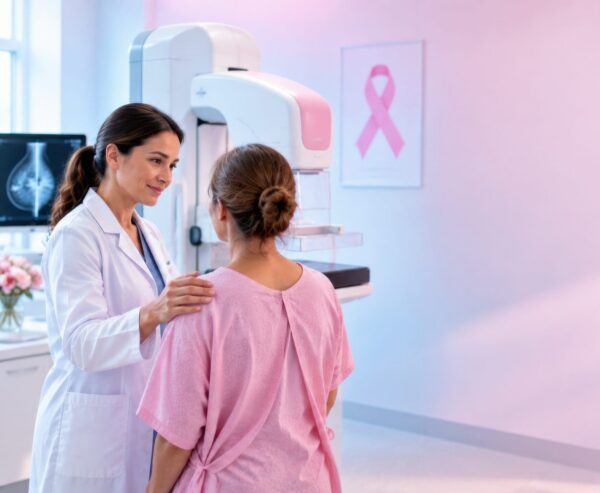
A Breakthrough From the Technion Together with collaborators from leading medical centers in Israel, the United States, Europe, and Australia, Shamai and his team at the Technion have developed an AI model that predicts both the risk that breast cancer will return and whether a patient is likely to benefit from chemotherapy — offering a […]
Stay on top of the latest breaking scientific discoveries from Israel and the Technion. Subscribe to the ATS newsletter.