Something Fresh in the State of Denmark
October 06, 2026






















The Technion’s story has been intertwined with Israel’s for more than a century, from laying the foundations for a new nation to shaping its future.

Step inside Israeli innovation at the David and Janet Polak Visitors Center. Experience our 360° immersive movie and tech exhibition. Open to individuals and groups.
Learn More

The electrocardiogram (ECG) is one of the most essential tools in modern medicine, used to detect heart problems ranging from arrhythmias to structural abnormalities. In the U.S. alone, millions of ECGs are performed each year, whether in emergency rooms or routine doctor visits. As artificial intelligence (AI) systems become more advanced, they are increasingly being used to analyze ECGs—sometimes even detecting conditions that doctors might miss. The problem with this is that doctors need to understand why an AI system is making a certain diagnosis. While AI-powered ECG analysis can achieve high accuracy, it often works like a “black box,”…

For delivery robots, not all sidewalks are created equal – some are uneven or clogged with people and bus shelters – so researchers at Cornell Tech developed a “robotability score” and rated every street in New York City on how hospitable it would be to robots. Their rating system is the first of its kind, researchers said, and may help urban planners and robotics companies plan for future robot deployments that won’t disrupt existing sidewalk environments. “I don’t know that everybody wants robots in their neighborhood, but if they do, the robotability score can help them think about, what are…

Here’s a win-win opportunity if you grow grapes for a living. A startup in Israel is integrating solar panels into vineyards. They generate electricity (and revenue). And they give the farmer precise control over how much sunshine reaches the vine. The solar panels are fitted right above the grapes, tilting throughout the day – either to capture as much sunlight as possible for energy production, or to shade the vine to delay ripening and improve the flavor of the grapes. Generating solar energy in vineyards (agrivoltaics) is not a new idea. The challenge is to do it better than the…

Entrepreneur Ifat Shterenberg Toledano was 30 weeks into her fourth pregnancy when she started feeling sudden excruciating pain in her pelvis and lower back. “Basically, I became disabled,” she tells ISRAEL21c. Her horrifying medical ordeal resulted in Shterenberg Toledano establishing Treat Me, a unique platform combining Western medicine, complementary therapies and cutting-edge research. Designed for practitioners, the platform leverages research-driven data and AI to personalize each treatment, improve patient outcomes and streamline care. It incorporates all integrative care methods, from more traditional treatments such as physiotherapy, to holistic ones such as Chinese medicine, naturopathy, reflexology and more.

A rumor falsely claiming green card holders are banned from leaving and re-entering the U.S. spread like wildfire on TikTok this week, garnering more than 21 million views across dozens of videos shared by a network of nearly 40 accounts, many posing as Spanish-language news outlets to share immigration-related misinformation. The accounts have been sharing doctored videos that contain artificial intelligence-generated content and the voices of well-known professional journalists to spread misinformation about immigration and other divisive topics that tend to go viral on social media, according to Alexios Mantzarlis, director of the Security, Trust, and Safety Initiative at Cornell…

Storing digital content in DNA is an emerging technology that takes advantage of the molecule’s density, durability, and low power needs. DNA can last for generations, unlike NAND flash and HDDs that degrade in years or decades, at best. It also offers a data capacity about 100 million times higher than typical data storage systems. However, retrieving data from DNA storage is a complex and rather slow process. Good news, a breakthrough made by Israeli researchers speeds up the activity by 3,200 times, reports TechXplore. A team at Technion – Israel Institute of Technology has created an AI tool that…

Google’s $32 billion deal to acquire cybersecurity start-up Wiz is breaking records: The largest exit in Israel’s high-tech history Google’s biggest acquisition ever The largest cybersecurity deal to date Co-founded by two Technion alumni, Wiz’s success is a testament to the unparalleled impact Technion graduates have on Israel’s economy and innovation culture. Technion alumni have started 729 companies and contributed over $21 billion to Israel’s GDP, cementing Israel’s status as the Startup Nation. The proposed takeover announced Tuesday is part of Google’s aggressive expansion into cloud computing during an artificial intelligence boom. The frenzy is driving demand for data centers…

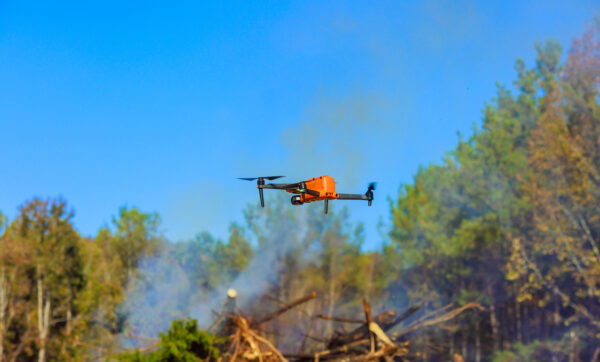
Noam Azran is a real live cowboy. He spent a decade on horseback patrolling the vast cattle ranches of California and Argentina. And now he heads an Israeli tech startup that uses drones — instead of traditional cowboys — to monitor the welfare of millions of cows. BeeFree Agro has just delivered its first fleet of “autonomous flying cowboys” to a paying customer. They’re the eyes in the sky that will transform the way the world’s beef cattle are farmed, says Azran. “I find it hard to believe in 10 years from now there will be commercial livestock growers who…

Bloomberg L.P. co-founder and philanthropist Tom Secunda today announced a landmark donation to Cornell Tech, Cornell University’s tech campus in New York City, totaling $10.5 million to create the Cornell Empire AI Post-Doctoral Fellowship Program Fund. This donation will advance the mission of Empire AI, providing researchers and faculty with unparalleled access to computing power and opportunities to engage in groundbreaking AI research for the public good. “I’m proud to be supporting Cornell’s top AI researchers in their pursuit of new, groundbreaking AI developments that will benefit the people of New York. By giving these researchers the freedom to explore…

Wendy Ju, associate professor at Cornell Tech, the Cornell Ann S. Bowers College of Computing and Information Science, and the Jacobs Technion-Cornell Institute, has been awarded a place in the Class of 2025 of the prestigious ACM SIGCHI Academy. The award honors her leadership and innovations in the field of human-computer interaction (HCI). ACM SIGCHI — the Association for Computing Machinery Special Interest Group on Computer-Human Interaction — is one of the world’s largest associations of professionals who contribute towards the research and practice of HCI. The highly competitive SIGCHI awards uplift those who have changed the field of HCI…
Unlike artificial language models, which process long texts as a whole, the human brain creates a “summary” while reading, helping it understand what comes next. In recent years, large language models (LLMs) like ChatGPT and Bard have revolutionized AI-driven text processing, enabling machines to generate text, translate languages, and analyze sentiment. These models are inspired by the human brain, but key differences remain. A new Technion – Israel Institute of Technology study, published in Nature Communications, explores these differences by examining how the brain processes spoken texts. The research, led by Prof. Roi Reichart and Dr. Refael Tikochinski from the…

Without a crystal ball, it’s impossible to predict with absolute certainty the outcome of any legal process. But AI is getting pretty close. A startup in Israel has developed an algorithm that is currently 85 percent accurate in assessing liability and in predicting how a case will conclude. That number will only increase as the AI handles more cases. “Litigation is a very unknown territory,” says Yariv Lissauer, CEO at Haifa-based Canotera and a former lawyer with vast experience in the startup world. “There are a lot of unknowns, a lot of complications, a lot of regulations and decrees. But…