Something Fresh in the State of Denmark
October 06, 2026














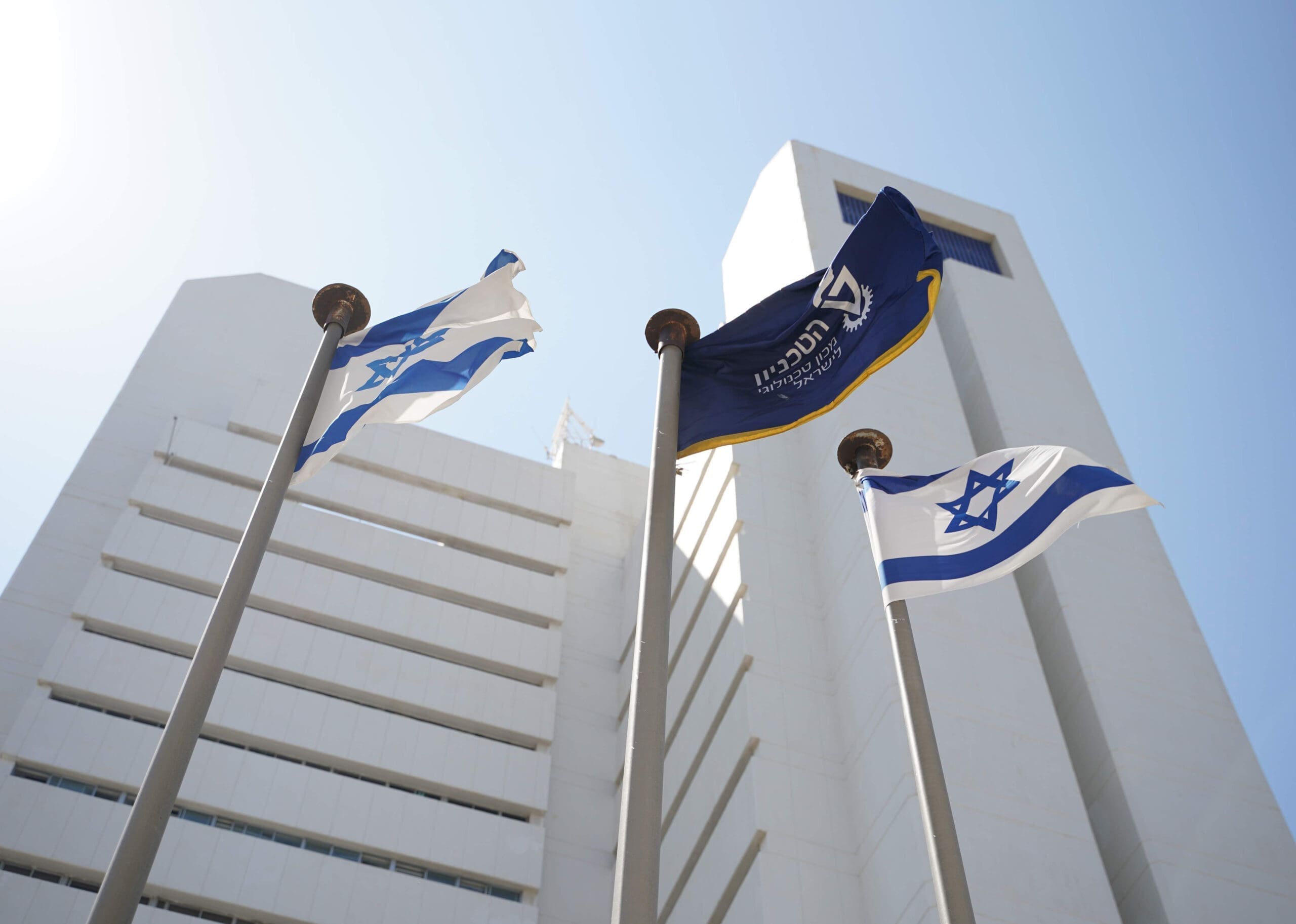


The Technion’s story has been intertwined with Israel’s for more than a century, from laying the foundations for a new nation to shaping its future.

Step inside Israeli innovation at the David and Janet Polak Visitors Center. Experience our 360° immersive movie and tech exhibition. Open to individuals and groups.
Learn More

Two AI-based startups in Israel are joining forces to combat the pests and diseases that destroy up to 40 percent of all food grown globally. Fermata uses cameras and artificial intelligence to monitor crops as they grow and automatically detect problems. yieldsApp translates that data into tailored recommendations, crop by crop, field by field, to maximize yields for the grower. The two companies have now announced a partnership that will merge their technologies and, they say, provide a “comprehensive farm management solution,” detecting problems and providing precise solutions. Farmers will receive “personalized, real-time insights that ensure crops get the right…

The ability to walk independently in nature, in a shopping mall, or in any unfamiliar space isn’t a given for people with vision impairment. Award-winning Israeli company RightHear is changing that reality, one venue at a time. Tens of thousands of people are finding their way to and around more than 2,500 locations that have installed the audio orientation and guiding system so far. These include restaurants, supermarkets, hotels, healthcare facilities, theaters, malls, airports and college campuses in Israel, North America, the United Arab Emirates, Lithuania, Greece and Angola. In August, Natural Bridge State Park in Virginia became the first…

Researchers at the Technion – Israel Institute of Technology have created new materials that could improve magnetic resonance imaging (MRI) technology. In turn, this could lead to advancements in disease detection and potentially reduce the need for some radiation-based diagnostic procedures. The research team used a novel methodology called MMV (matrix magnetization vehicles), which uses engineered materials to enhance the detection of metabolites, small molecules that can indicate various health conditions. The MMV method increases the magnetic resonance signal strength by about four orders of magnitude, and extends the duration of the enhanced signal to approximately 10 minutes, compared to…

Taking race into account when developing tools to predict a patient’s risk of colorectal cancer leads to more accurate predictions when compared with race-blind algorithms, researchers find. While many medical researchers have argued that race should be removed as a factor from clinical algorithms that predict disease risks, a new study finds that, at least for colorectal cancer, including race can help correct a data issue – inaccurate recording of family history for Black patients. Having relatives with colorectal cancer is a known risk factor for the disease, but Black patients are less likely to have an accurate recorded history…

Israeli agritech startup Nanovel has unveiled its new AI-powered autonomous robot capable of picking fruit off the trees for the fresh market. The company says the robot offers a worldwide solution to farm labor shortages and rapidly increasing costs, the two most pressing issues identified in a survey by the Western Growers organization, which works with farmers in Arizona, California, Colorado and New Mexico. According to Nanovel, the robot is the world’s first-of-its-kind system designed to pick citrus fruit in dense foliage, involving a high level of technological complexity, including advanced edge computing and AI-driven data analysis. The system includes…

Technion alumna Dr. Anastasia Braginsky works full time in the high-tech industry, teaches at the University, is a professional dancer, a ballroom dance instructor, and a mother of two, and not necessarily in that order. How does she do it all? “Proper time management, without movies, TV, and other distractions,” she said. “I love everything I do and don’t want to give any of it up, so I need to be focused and efficient on all fronts. I have no doubt it’s worth it.” Her daily schedule is divided into half-hour slots, with a task appearing in her app every…

Amiel and Eitan Gorbonos, twin brothers and Technion students, have developed a proof of concept for an innovative chip for image enhancement. The project, conducted in the Andrew and Erna Viterbi Faculty of Electrical and Computer Engineering, was supported by Apple. Their chip is designed to filter image noise, removing graininess from photos. In the images below, one can see the dramatic improvement in image quality — from left (raw image) to right (the image after filtering image noise).

The Technion – Israel Institute of Technology has entered into a collaboration with global computational intelligence firm Altair. The new partnership will grant the Haifa-based university’s faculty, researchers, and students training and unlimited access to Altair’s data analytics and artificial intelligence (AI) platform, RapidMiner. Headquartered in Michigan, Altair has an Israel office is at the high-tech park in Yokneam Illit, in the north of the country. “Altair enables students to expand their skills and be real-world-ready with our best-in-class technologies and support,” said Altair Israel Managing Director Ariel Hadar. “Collaborating with Technion’s faculty will foster greater synergies between academia and…

For many people around the world, a doctor’s visit can be exceptionally fraught due to a language barrier in a scenario where accuracy and the ability to understand and be understood are of utmost importance. But four former and current students of the Technion – Israel Institute of Technology in Haifa have developed a new tool that could mean an end to such situations, with an automatic translation platform that is designed specifically for encounters between patients and their physicians. “It is a simultaneous translator between doctors and patients who have both language and cultural challenges,” explains CommU CEO Hadar…

Researchers studying artificial intelligence training data, better predictions of extreme weather events and treatment of swelling linked to breast cancer are among the eight Cornell assistant professors who recently received National Science Foundation Faculty Early Career Development Awards. Each will receive a minimum of $400,000 over five years from the program, which supports early-career faculty “who have the potential to serve as academic role models in research and education and to lead advances in the mission of their department or organization,” according to the NSF. Each funded project must include an educational component.

Israeli company DeepDense, which specializes in AI medical imaging, has teamed up with US firm Spectrum Dynamics Medical, a leading innovator in digital imaging, to develop innovative applications for analysis of cardiac and spine diseases. By working together, the two companies aim to use DeepDense’s advanced AI technology to improve diagnostic accuracy, streamline workflows, and improve patient care. The DeepDense AI applications will be added to Spectrum Dynamics’ portfolio of solutions, along with the former’s unique 3D labeling tools. “The integration state of the art digital SPECT technology with advanced AI features will open the path to new capabilities in…

A research group in the Technion’s Henry and Marilyn Taub Faculty of Computer Science was able to takeover Siemens’ new controllers, among the most secure in the world. These controllers are used in a wide range of systems, including aircraft, vehicles, production lines, power stations, gas and oil pipelines, smart homes, traffic lights, and even nuclear reactors. The research was presented at the Black Hat USA 2024 conference by alumni Nadav Adir and Alon Dankner under the guidance of Professor Eli Biham, head of the Hiroshi Fujiwara Cybersecurity Research Center at the Technion, and Dr. Sara Bitan, a senior researcher…