Something Fresh in the State of Denmark
October 06, 2026















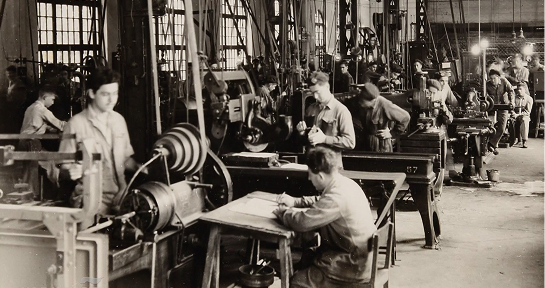
The Technion’s story has been intertwined with Israel’s for more than a century, from laying the foundations for a new nation to shaping its future.

Step inside Israeli innovation at the David and Janet Polak Visitors Center. Experience our 360° immersive movie and tech exhibition. Open to individuals and groups.
Learn More
Israel started to show the world its technological prowess in the 1990s, earned the moniker “Start-Up Nation” in 2009, and its high-tech boom is still going strong. Today, Israel is also emerging as a global food technology leader, second only to the U.S. in raising investments in the field, according to the Good Food Institute’s Israel report. And the Technion is playing a key role in Israel’s pioneering efforts.
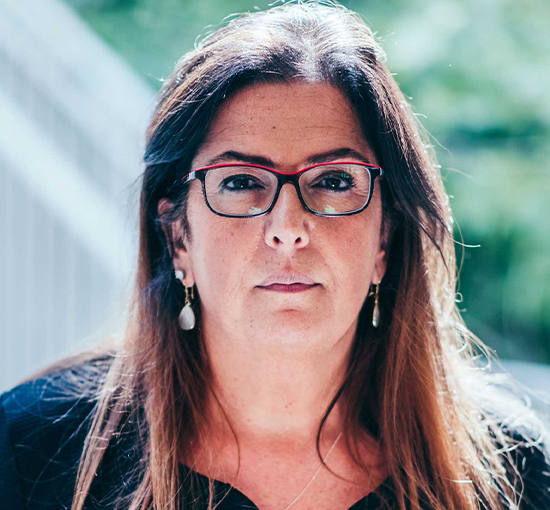
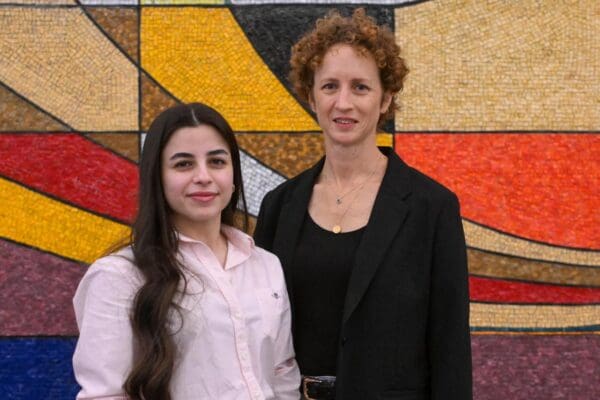
“Biotech and foodtech are rising and will catch up with high tech,” predicted Professor Marcelle Machluf, immediate past dean of Israel’s only Faculty of Biotechnology and Food Engineering. “People are living longer, the population is growing, and the effects of climate change and the pandemic are impacting food security.”
Sizing up the potentially dire consequences, the Technion recently inaugurated the Carasso Foodtech Innovation Center, headed by Prof. Machluf, to help startups develop sustainable technologies while training students in the traditional food industry. And in November 2022 Prof. Machluf launched foodtech startup, Meatafora (opens in a new tab).
These efforts couldn’t come a moment too soon. The world’s population is growing by 75 million people each year, increasing demand for meat. Yet the livestock industry already accounts for nearly 18% of global greenhouse gas emissions and some 75% of the world’s forests are being cut down to grow food and raise farm animals. “We don’t have enough land to continue to raise the cattle we need. Our planet is suffering,” said Prof. Machluf.
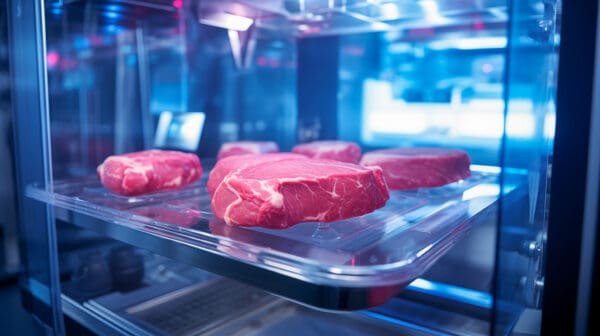
Meatafora, a pun on “meat” and “metaphor,” is growing meat directly from animal cells in a scalable, affordable, and sustainable process without harming animals. The startup differs from other engineered meat companies in that the beef cells are cultivated on edible, plant-based scaffolds rather than synthetic scaffolds. “You don’t need to separate the scaffold from the cells in the process of making the meat and make sure everything is clean,” said Prof. Machluf. “So, it’s quicker, cheaper, and more nutritious.”
Meatafora has already produced ground beef and sausages on a small scale. The Netanya-based startup is working on scaling up and anticipates getting their products to the marketplace in three to four years.
“Foodtech is here not only to stay, but to bloom in a way no one expected,” she said.
Lowering consumption of traditional meat will reduce greenhouse gas emissions, conserve water, free up arable land for agriculture, and lessen the shipping industry’s effects on air, water, oil, and ocean noise pollution, Prof. Machluf explained. In addition, her faculty at the Technion is developing high-protein food alternatives such as milk produced without cows, honey without bees, and Israeli falafels made from seaweed, as well as food packaging that is biodegradable and will keep food fresher longer.
“The development of cultivated meat and other healthy foods of the future will help to provide nutritional security, combat climate change, and save our planet,” said Prof. Machluf.