Something Fresh in the State of Denmark
October 06, 2026















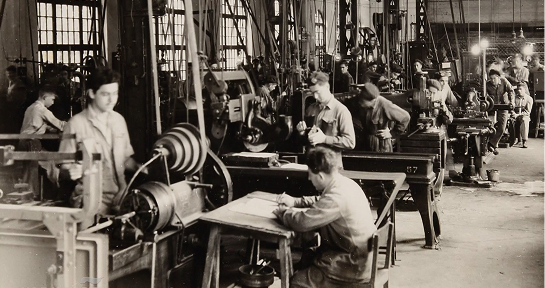
The Technion’s story has been intertwined with Israel’s for more than a century, from laying the foundations for a new nation to shaping its future.
Step inside Israeli innovation at the David and Janet Polak Visitors Center. Experience our 360° immersive movie and tech exhibition. Open to individuals and groups.
Learn More
Startup H2Pro (opens in a new tab), founded by Technion scientists, has signed an agreement with Morocco’s Gaia Energy to co-develop a gigawatt-scale “green” hydrogen energy project — a potential boon for promoting economic ties between the two countries and combatting climate change.
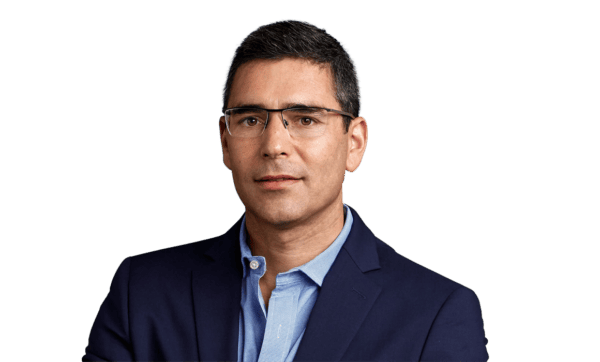
“Climate change is the greatest challenge facing our generation, and it can only be solved by reaching across borders with seamless coordination between the private and public sector,” said Talmon Marco, CEO of H2Pro.
The technology at the core of H2Pro was developed by Professors Avner Rothschild and Gideon Grader and Drs. Hen Dotan and Avigail Landman in the Nancy and Stephen Grand Technion Energy Program, with backing from Technion supporter Ed Satell. The agreement allows Gaia to use H2Pro’s E-TAC (Electrochemical-Thermally Activated Chemical) technology for a demonstration project in Morocco. Its goal is to make enough “clean” hydrogen to generate 10-20 megawatts of electricity, while also exploring its use in a gigawatt-scale system currently under development. Ten megawatts provide enough electricity to power between 4,000 to 9,000 homes, whereas 10 gigawatts could power 7.5 million homes.
The Memorandum of Understanding was signed in Sharm el-Sheik during the high-profile United Nations Climate Conference known as COP27, and came just two years after the historic Abraham Accords normalized relations among Israel, the United Arab Emirates, Bahrain, Morocco, and Sudan. “We chose COP27 as the platform for launching the partnership because this moment is not merely an achievement of two private companies, but a milestone in Moroccan-Israeli relations,” said Marco. “It demonstrates the triumph of regional cooperation over climate change and is a clear indicator of the key role innovation plays in diplomacy.”
Attending the signing, Israel’s Minister of Environmental Protection Tamar Zandberg said: “No country, and no sector, and no one can do it alone. We are all gathered in this cause, and if we can use it for the sake of our children, we will be blessed.”
Hydrogen is the most abundant element in the universe, making it a most promising sustainable, alternative to fossil fuel. When produced by “green” methods of electrolysis (separating and reuniting the elements that make up water) the only waste product is pure water. But traditional electrolysis is costly and uses natural gas, which produces greenhouse gas emissions. H2Pro’s novel E-TAC electrolysis doesn’t consume energy and splits the water molecule into hydrogen and oxygen in separate steps to avoid the risk of explosive mixing. As a result, the process is safer, more efficient, and less costly.
H2Pro was founded in 2019 after years of research in Technion labs. The company has won numerous prizes and has received financial backing from leading investors and strategic partners including Bill Gates’ climate fund Breakthrough Energy. H2Pro laid the cornerstone for its first production facility in Tzziporit, Israel earlier this year, and expects to be up and running by the end of 2023.
Headquartered in Morocco, Gaia works with large utilities, national grid operators, and governments to develop large-scale renewable energy projects in more than 10 countries in Africa. Gaia CEO Moundir Zniber said: “By combining the power of Gaia’s renewable energy assets with H2Pro’s efficient and cost-effective green hydrogen production technology, we bring Morocco and our region (Israel) one step closer to … a clean energy transition.”