Something Fresh in the State of Denmark
October 06, 2026
























The Technion’s story has been intertwined with Israel’s for more than a century, from laying the foundations for a new nation to shaping its future.

Step inside Israeli innovation at the David and Janet Polak Visitors Center. Experience our 360° immersive movie and tech exhibition. Open to individuals and groups.
Learn More
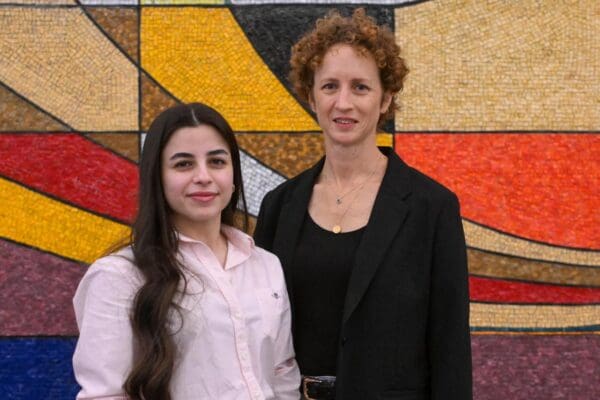
Sarit Shpits remembers a moment when a colleague, analyzing battlefield video, recognized members of the IDF unit using her company’s equipment. It starkly brought home how her work goes beyond selling cyber-protected communications networks to safeguard drones and other robotics. “It’s much more than business,” said Shpits. “Each piece of equipment leaving here needs to be the best possible because the people using it are our kids, our friends, our husbands, boyfriends, girlfriends.”
A Technion graduate of the class of 1997, Shpits joined Australian-U.S.-Israeli-based Mobilicom (opens in a new tab) earlier this year, hoping to contribute more directly to Israel’s security. “October 7 increased my connection between my work and Zionism. It’s something I feel every day.”
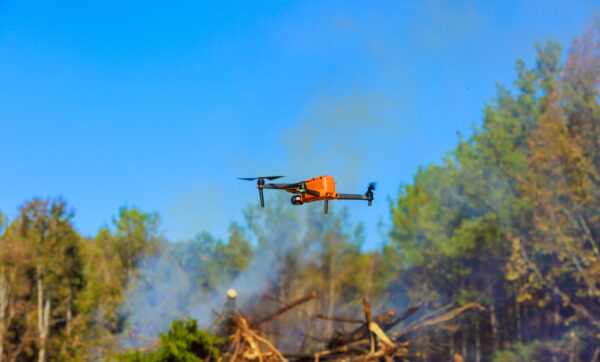
Mobilicom’s cybersecurity technology safeguards communication channels, encrypts data, and defends against cyber breaches to ensure the safety of surveillance and other drones. As Shpits put it, the networks allow “uncrewed vehicles to save lives by acting as eyes for the soldiers.” Mobilicom’s technology, for instance, was fitted on search-and-rescue dogs that discovered the bodies of hostages held in Gaza. The company’s technology also aids drones in non-defense activities such as delivering medical equipment, protecting electrical lines, and monitoring agricultural fields.
Since the outbreak of the war, Shpits and her colleagues have been working overtime to repair damaged units for soldiers in the field and supply equipment to customers such as Rafael Advanced Defense Systems, Elbit Systems, and Israel Aerospace Industries. “We’re putting a lot into protecting our customers and they are using drones to protect Israel,” she said. Mobilicom also sells to the U.S. Department of Defense.
Shpits comes from a family of engineers and social workers. “A daddy’s girl,” she entered the Technion and became an engineer like her father. “A Technion degree means you went to the best place in Israel to learn engineering. It’s a door opener,” she said. Alongside the prestige, “the most important thing the Technion gave me was the ability to learn by myself; to take any subject, no matter how difficult it looks, find a starting point, and learn it. Even now, nearly 30 years later, I’m in a new position, a new market, and I say, ‘I’ll learn it.’”
After earning her Technion degree and an MBA from Israel’s Reichman University, Shpits started her career in electrical engineering, then moved into electronics and defense with jobs at Siemens, Honeywell and the French electronics company Nicomatic SA. She got a taste of cybersecurity and wanted to delve deeper.
As the war continued and global opinion turned against Israel, doing business abroad became challenging and Mobilicom hired Shpits as Sales Director of Europe and Israel. The job combined her interests in electronics, defense, and cybersecurity; drew on her natural ability in relationship building, management and sales, and sometimes brought her to the center of the news. When France banned Israeli companies from the annual Eurosatory defense industry exhibition in June, Shpits flew to Paris and told i24NEWS, “I am the granddaughter of Holocaust survivors and this takes us back to the feelings we had in 1935.”
Shpits is used to being the only woman at the table and is one of just four women at her current 30-person company. “I’ve learned to enjoy it,” she said. “People don’t always know what to expect so you’re free to work in a different way.”
Citing the heroic actions of four female tank crewwomen who freed a kibbutz of terrorists on October 7, Shpits predicts the war with Hamas will continue opening the gates for women in defense. These tankers and other women soldiers called into the current war, she said, will help women attain higher positions in the military, which is a key to entering Israel’s defense industry. “We’re going to see more women in the defense market, and that’s a blessing,” she said. “Like in every industry, diversity opens us up, concepts are breaking, maybe we’ll see less ego.”
Married to a Technion alumnus, Shpits managed to juggle her intense career while raising three children, two soldiers and a teenager. “My work means more protection for Israel, more eyes outside, and a feeling of security that we’re doing things to protect ourselves, which is the reason Israel exists.”