The Technion’s story has been intertwined with Israel’s for more than a century, from laying the foundations for a new nation to shaping its future.

From medicine to security, explore how the Technion is advancing Israel and improving lives around the world.
View All Impact Areas
Explore stories, news, insights, and data across articles, videos, and podcasts.
view all content types
of all universities in the world*
of the student body are Arab Israeli
companies founded by graduates and faculty in the last 10 years
The Technion’s story has been intertwined with Israel’s for more than a century, from laying the foundations for a new nation to shaping its future.
Explore ATS, the Technion, and the people behind the breakthroughs redefining what's possible for Israel and the world.
Learn More About ATSATS is a community of supporters, innovators, and champions of possibility united by one mission: transforming Israel and the world through science and discovery.
Learn MoreFor more than 100 years, the Technion has been Israel's technological engine and leading driver of innovation, technology, and entrepreneurship, transforming ideas into impact.
Learn More
Step inside Israeli innovation at the David and Janet Polak Visitors Center. Experience our 360° immersive movie and tech exhibition. Open to individuals and groups.
Learn MoreFrom medicine to security, explore how the Technion is advancing Israel and improving lives around the world.
View All Impact AreasExplore stories, news, insights, and data across articles, videos, and podcasts.
view all content typesDiscover ways to support, connect, and help drive innovation.
Get InvolvedExplore ATS, the Technion, and the people behind the breakthroughs redefining what's possible for Israel and the world.
Learn More About ATSAs seen on phys.org.
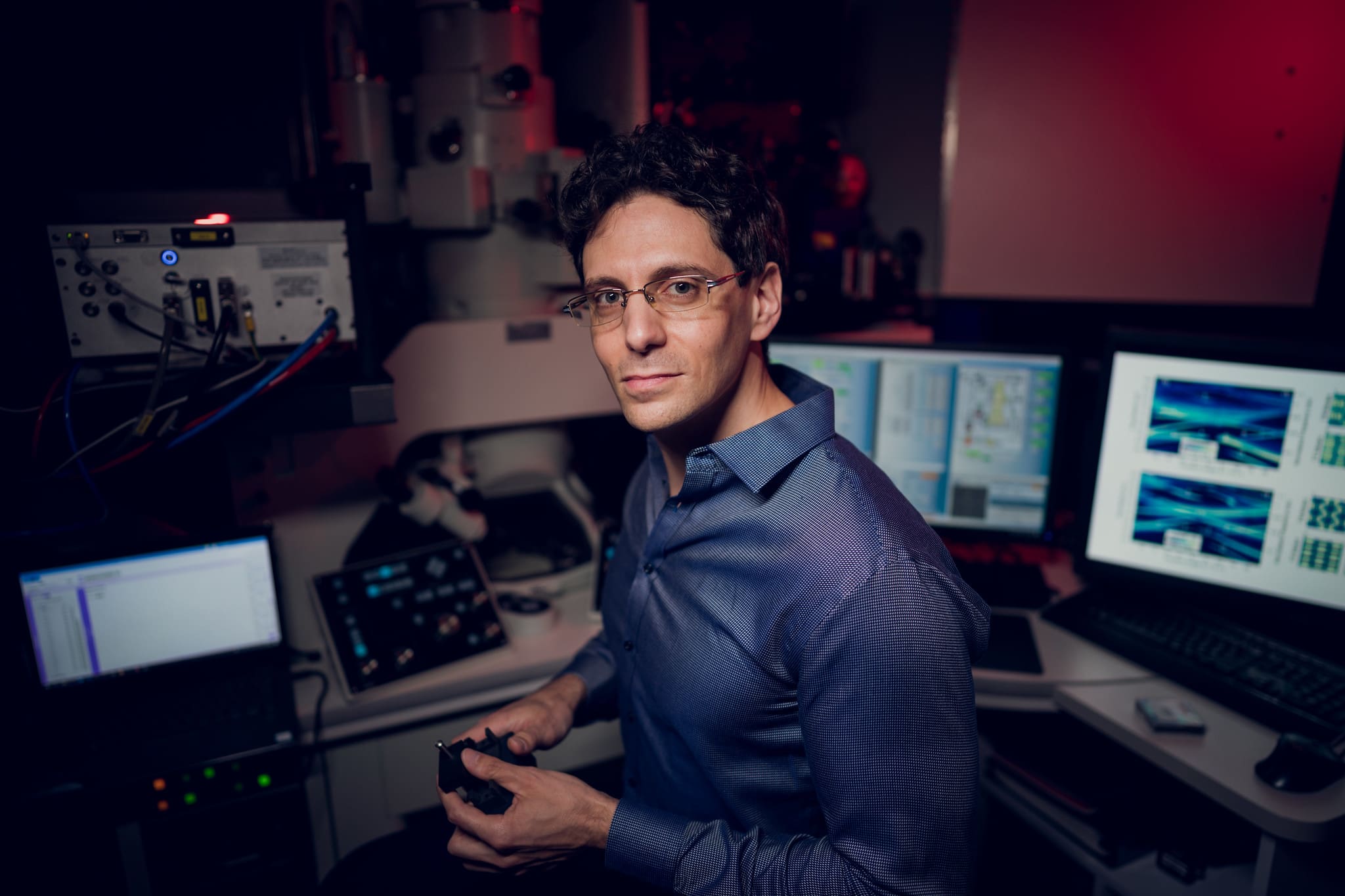
Scientists led by Nanyang Technological University, Singapore (NTU Singapore) have developed and simulated a new energy-efficient way to generate highly focused and finely controlled X-rays that are up to a thousand times more intense than those from traditional methods. The findings are published (opens in a new tab) in the journal Light: Science & Applications.
This paves the way for ultra high-quality X-ray imaging that uses powerful X-rays for detecting flaws in semi-conductor chips accurately. The new method could also allow more focused X-ray imaging to be done for health screening while using less energy.
The novel method is based on computer simulations (opens in a new tab) that shoot electrons at an ultra-thin material with highly ordered structures, such as graphene. The basic mechanism is similar to how X-rays are conventionally produced using X-ray tubes. But there is a twist: In the simulations, the wave-like patterns of how the electrons travel are “shaped” in a very specific way so that the particles’ traveling path matches and overlaps with the highly structured positions of the material’s atoms.
The international team of scientists who conducted this research include researchers from the Technion.
by
phys.org (opens in a new tab)
on
January 25, 2024
Find out how Technion scientists are generating powerful focused x-rays that are more intense and energy-efficient than traditional methods.
1 min
X (opens in a new tab) / Facebook (opens in a new tab) / LinkedIn (opens in a new tab) / Email / Copy Link
Artificial intelligence is not simply changing higher education — it is detonating old assumptions about how students learn and how professors teach. As universities worldwide grapple with how to respond, the Technion is working to confront the questions head-on. Here, AI is not treated as a threat but a catalyst, prompting careful reexamination at every […]
Every year, the European Research Council (ERC) identifies some of the world’s most promising early-career researchers and gives them the freedom to pursue bold ideas. This year, two of those ideas came from the Technion – Israel Institute of Technology. From cancer research to artificial intelligence (AI), breakthroughs that shape the future often begin with […]
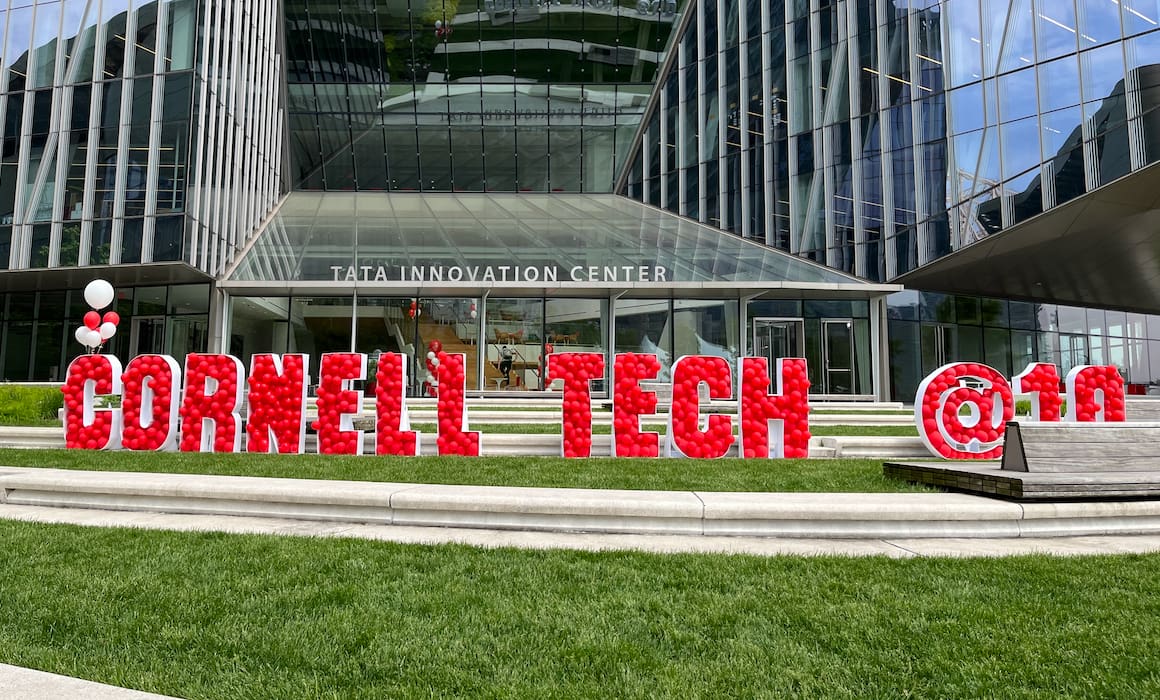
Despite New York City Mayor Zohran Mamdani’s past calls to boycott Cornell Tech because of its partnership with Israel’s Technion-Israel Institute of Technology, city officials and Jewish community leaders on Wednesday announced a $250,000 investment in a Cornell Tech research initiative aimed at expanding New York City’s tree canopy to combat rising temperatures. New York City Council Speaker Julie Menin, the first Jewish woman to hold the post, and other officials unveiled the funding for Cornell Tech’s Urban Tech Hub at the Jacobs Technion-Cornell Institute on Roosevelt Island. The grant will launch the Generative Tree Canopy Project, which will use…
Stay on top of the latest breaking scientific discoveries from Israel and the Technion. Subscribe to the ATS newsletter.