Assaf Glazer on How Grit Turns Ideas Into Impact
November 24, 2026











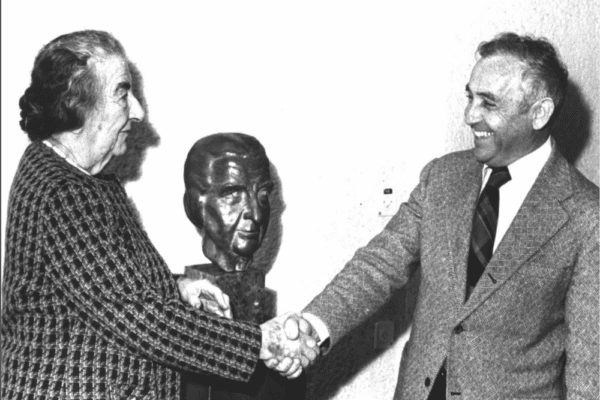






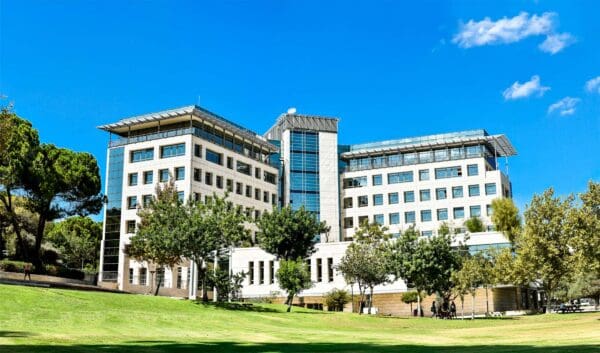



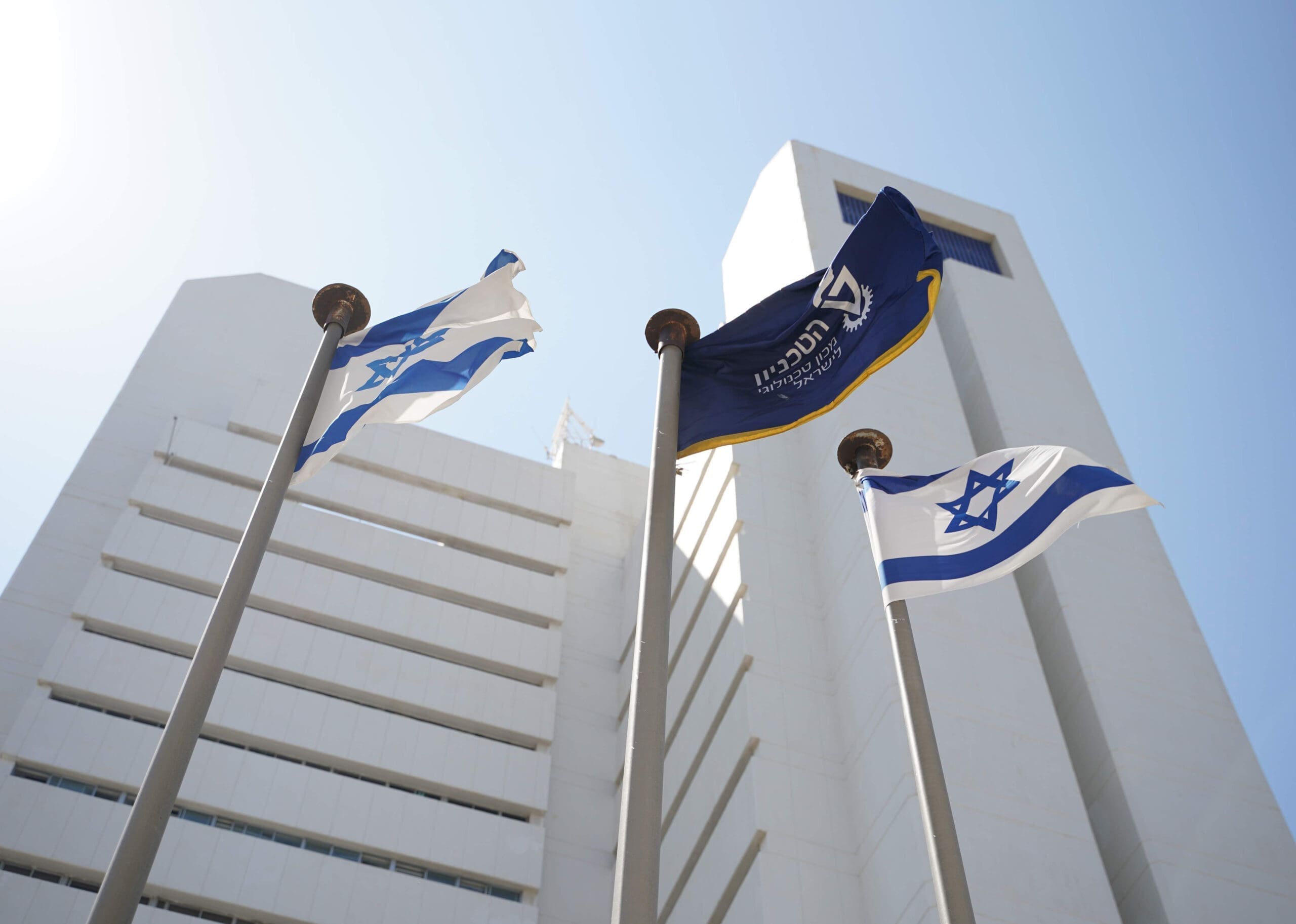


The Technion’s story has been intertwined with Israel’s for more than a century, from laying the foundations for a new nation to shaping its future.

Step inside Israeli innovation at the David and Janet Polak Visitors Center. Experience our 360° immersive movie and tech exhibition. Open to individuals and groups.
Learn More

Gal Frenkel built a wooden deck and pool in the backyard of his home in central Israel the summer after he had sold luxury wedding/bar mitzvah event planner Sky Productions (opening price for an event: $1 million). Frenkel hosted a few parties there, and after the summer he didn’t think much about his pool and deck. When he went out to look at it the following spring, he was shocked. “The whole area looked old and ruined and faded. I was so disappointed,” he tells ISRAEL21c. “I called the guy who installed the deck and said, ‘Nadav, you really messed it up.’…

Common pedagogical wisdom states that the younger a child begins learning a new language, the easier it is for them to acquire. And adhering to that philosophy, Israeli startup Curiosity Robotics has created a friendly, chatty little robot to teach English as a foreign language to preschoolers. Meet Aico, the charming, smiling artificial intelligence teaching tool that is the product of three years of research at Tel Aviv University’s Curiosity Labs. Aico is programmed to use a teaching method devised by British-Israeli educator Helen Doron, which advocates for children starting to learn a second language as early as three months of age. Curiosity Robotics is a…
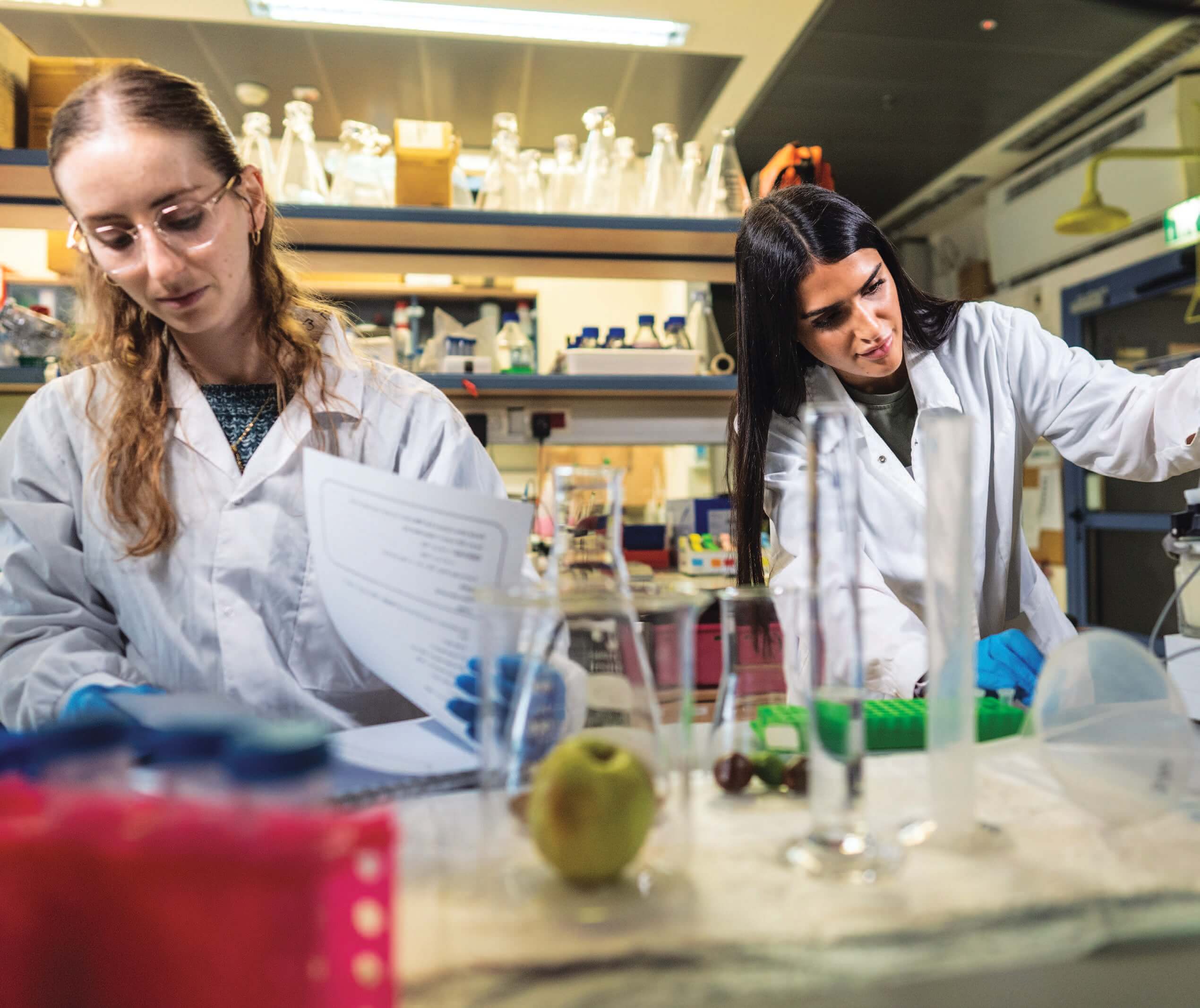
Increasing the global food supply while protecting the environment is one of the world’s most pressing challenges. Technion is heavily invested in meeting this challenge, perpetuating Israel’s dominant position in the FoodTech revolution. “Eradicating world hunger and improving food security are among the main challenges facing humanity in the 21st century, as defined by the […]
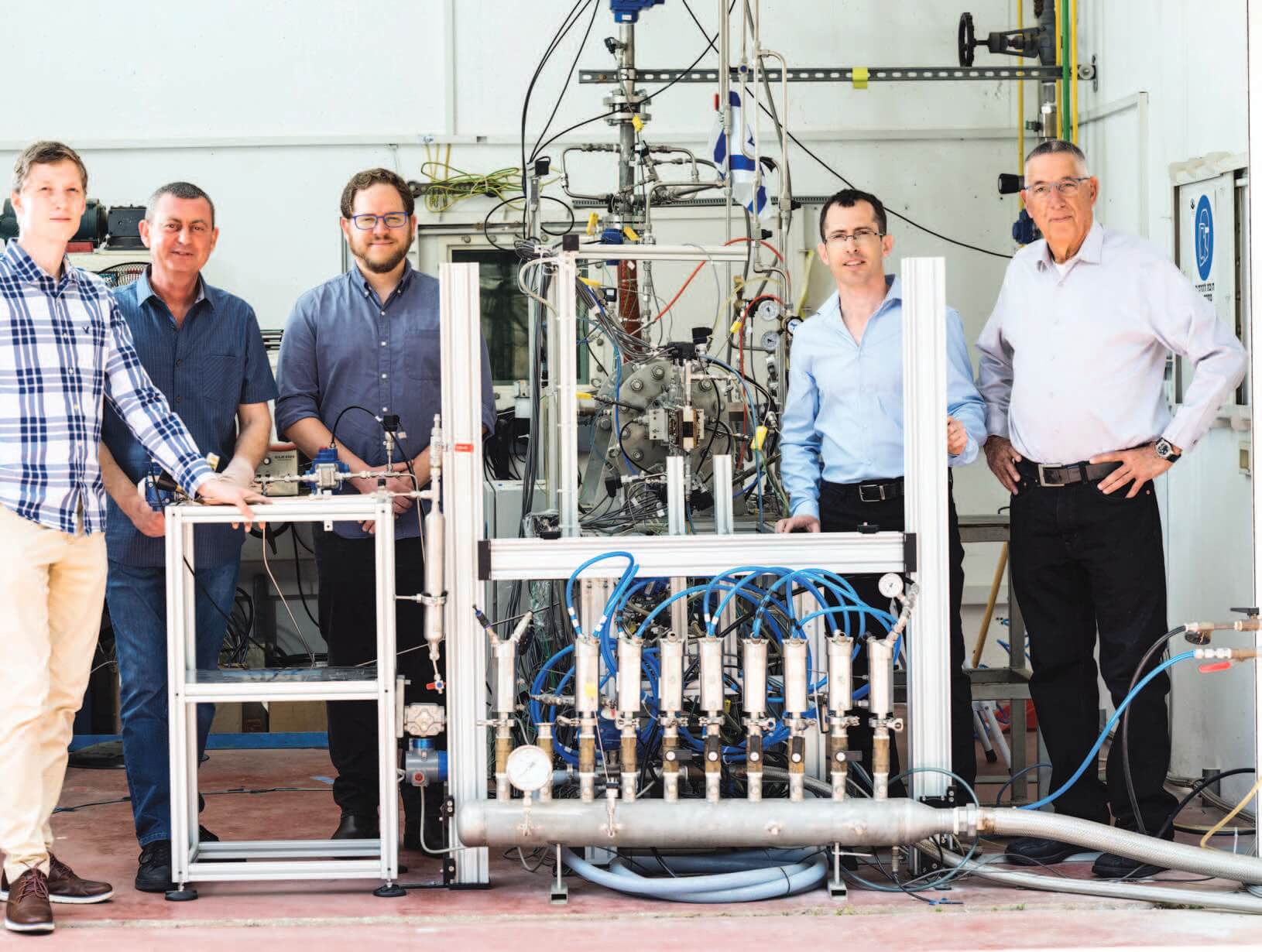
Imagine traversing the oceans and back in a few short hours or, within a single day, flying to and from an orbital hub as a space tourist or a spacelab research assistant. Hypersonic flight is key to these and other human ambitions in space and on earth. Aerospace engineers have been grappling with the challenges […]

(Nanowerk News) Refractive index – the ratio of the speed of electromagnetic radiation in a medium to its speed in a vacuum – can be modulated fast enough to generate photonic time crystals (PTCs) in the near-visible part of the spectrum, a new study published in the journal Nanophotonics demonstrates (“Time-refraction optics with single cycle modulation”). The study’s authors suggest that the ability to sustain PTCs in the optical domain could have profound implications for the science of light, enabling truly disruptive applications in the future. PTCs, materials in which refractive index rises and falls rapidly in time, are the…

The Israel-U.S. Binational Industrial Research and Development (BIRD) Foundation has announced that it has approved $8 million in funding for nine new projects between U.S. and Israeli companies. Alongside grants from BIRD, the projects will access private-sector funding and boost the total investment in all projects to $23 million. As well as conditional grants of up to $1.5 million, the BIRD Foundation assists by working with companies to identify potential strategic partners and facilitate introductions. The submitted projects are reviewed by evaluators appointed by the National Institute of Standards and Technology (NIST) of the U.S. Department of Commerce and the…

An emerging field of generative artificial intelligence (AI) technology has elevated voice dubbing to a new level—one where English-speaking acting icons can indeed appear to speak their famous lines in fluent Spanish or Greek or even Russian. Voice dubbing is when a new voice replaces the original voice for a role, usually to translate the content into another language and an Israeli startup is leading the way, thanks to its artificial intelligence platform. Traditional voice dubbing studios can take up to months to produce dubbed versions of content, with a complex duplication process that includes finding the right voice actor and…

The development of high-performance alternatives to silicon in microelectronics has been brought nearer by researchers at the Technion-Israel Institute of Technology in Haifa who stretched an oxide material at an atomic level, thus controlling its conductivity. They said this is a “milestone advancement towards making efficient switches, which are the basic building blocks of computer chips.” Researchers in the Viterbi Faculty of Electrical and Computer Engineering have been able to control an emerging material that they regard as a possible future alternative to silicon in microelectronics. This is a timely development, because scientists and engineers face challenges in continuing the transistor shrinking…

While there are countless scientific breakthroughs that could help fight the world’s bourgeoning climate woes, “the problem lies in bringing together the science and technology people and the entrepreneurs” to make these innovations effective, said Noam Sonnenberg, director of the Israel Innovation Institute’s PLANETech community. In the interest of tackling this important, high impact challenge […]

There’s nothing like a good night’s sleep, but that’s easier said than done. Now, a high-tech headband and accompanying app are helping put some sleep problems to bed. Israeli company NyX, co-founded in 2016 by Technion alum Ophir Orenstein, M.S. ’16, developed a comfortable, attractive headband that uses smart continuous-learning AI to automatically train your […]

Arab Israeli social entrepreneur Imad Telhami has seen phenomenal success from the Babcom customer-service centers he and partner Dov Lautman established to employ Arab women and men in the north, south and Jerusalem. Babcom (“Your Door” in Arabic) now employs 5,000 people providing outsourced services, including call centers and software development, to Israeli companies. In 2018, Harvard Business School built a case study about Babcom into its curriculum. But Telhami was increasingly troubled to note that no Babcom client companies were owned or managed by Arabs.

Space is getting crowded. In addition to the thousands of satellites already orbiting Earth, about 14,000 new satellites are expected to be launched by the end of the decade. That translates into about 9,000 tons of space debris, says Igal Kronhaus, former Technion professor-turned-space-tech startup entrepreneur. It’s gotten so bad that the United States issued new regulations in 2022 that “won’t allow the launch of a satellite unless it has a convincing capability to move out of the way after five years from the end of the mission,” Kronhaus says.