Something Fresh in the State of Denmark
October 06, 2026
























The Technion’s story has been intertwined with Israel’s for more than a century, from laying the foundations for a new nation to shaping its future.
Step inside Israeli innovation at the David and Janet Polak Visitors Center. Experience our 360° immersive movie and tech exhibition. Open to individuals and groups.
Learn More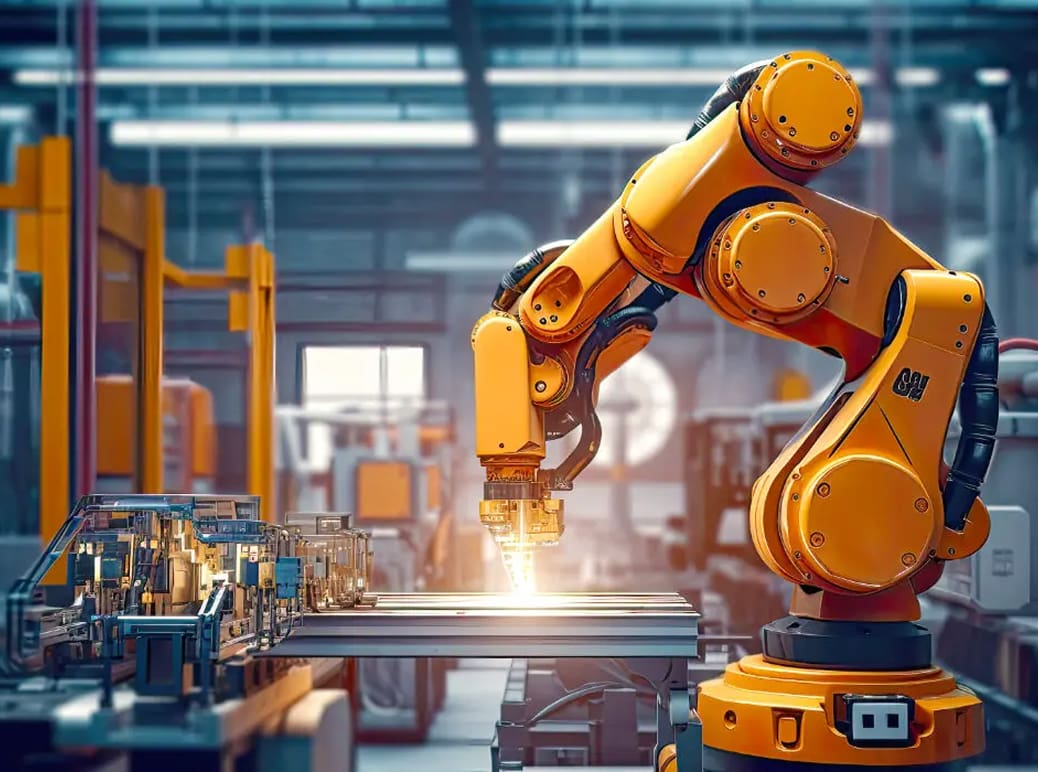

In a move aimed at revolutionizing the manufacturing sector, the Economy and Industry Ministry, in partnership with the Technion – Israel Institute of Technology, launched an initiative to enhance the research and development efforts of manufacturing plants across the country. This collaborative endeavor seeks to propel innovation, progress and competitiveness, ultimately boosting production capacity in the industry. In an agreement valued at NIS 4 million, researchers from the Technion will join forces with the Israeli manufacturing industry, addressing the barriers hindering approximately 100 factories, as identified in a preliminary study. The recently signed agreement is poised to make significant strides…

One of the things that sets the quantum world apart from our everyday classical one is the capacity for entanglement—when two or more objects share an invisible connection that entwines their fates. Entanglement is the most extreme version of a quantum connection, where measuring one particle can tell you everything you need to know about another. Short of that, particles can still sync up in decidedly quantum ways, where measuring one particle will give you some incomplete information about another. Such quantum correlations can be used to make more precise measurements than classical ones. For example, they can help us detect gravitational waves….

As applications and devices enabling more realistic virtual and augmented reality come to market — with 2023 widely forecast to be the year Apple releases its reportedly game-changing goggles — there’s an elephant in the room that could hamper the segment’s growth. Cybersickness. Between 38% and 66% of virtual and augmented reality users will experience dizziness, nausea and headache while plugged into their devices. It’s particularly pronounced during games but could also crop up in the midst of a video chat. Stress, online bullying, FOMO and isolation also can contribute to the phenomenon. Cybersickness is similar to seasickness in that your eyes, ears and…

AI-powered writing assistants such as ChatGPT are creeping into everything from office tools to search tools – but using them actually puts ideas into people’s heads. Researchers found that people using an AI writing tool programmed with one idea (that social media is good, for example) are twice as likely to write a paragraph agreeing with the assistant. Maurice Jakesch of Cornell University asked more than 1,500 participants to write a paragraph answering the question, “Is social media good for society?” People who used an AI writing assistant that was biassed for or against social media were twice as likely to write a…

Researchers have theorized a new mechanism to generate high-energy “quantum light,” which could be used to investigate new properties of matter at the atomic scale. The researchers, from the University of Cambridge, along with colleagues from the U.S., Israel and Austria, developed a theory describing a new state of light, which has controllable quantum properties over a broad range of frequencies, up as high as X-ray frequencies. Their results are reported in the journal Nature Physics. The world we observe around us can be described according to the laws of classical physics, but once we observe things at an atomic scale,…

Hospitals have begun using “decision support tools” powered by artificial intelligence that can diagnose disease, suggest treatment or predict a surgery’s outcome. But no algorithm is correct all the time, so how do doctors know when to trust the AI’s recommendation? A new study led by Qian Yang, assistant professor of information science in the Cornell Ann S. Bowers College of Computing and Information Science, suggests that if AI tools can counsel the doctor like a colleague – pointing out relevant biomedical research that supports the decision – then doctors can better weigh the merits of the recommendation. The researchers will…

Throwing out trash can be an icky, and sometimes even confusing, experience. To better understand how humans interact with robots, Cornell University researchers recently created and released two trash and recycling bots to do some dirty work in a Manhattan plaza. And for most of the people who interacted with the adorable barrel bots, the robots’ helpful interceptions of waste were welcomed. The study involved two robots. One was blue, and one was gray, and they were mounted on recycled hoverboard parts and equipped with 360-degree cameras. The bots received all sorts of reactions, from onlookers expressing their appreciation to treating…

The Fluidic Telescope (FLUTE) project team, jointly led by NASA and Technion – Israel Institute of Technology, envisions a way to make huge circular self-healing mirrors in-orbit to further the field of astronomy. Larger telescopes collect more light, and they allow astronomers to peer farther into space and see distant objects in greater detail. These next-generation large space observatories would study the highest priority astrophysics targets, including first generation stars – the first to shine and flame out after the Big Bang – early galaxies, and Earth-like exoplanets. These observatories could help address one of humanity’s most important science questions:…

One aspect of how industrial 3D printing works that is hard to grasp at first, is its ability to build parts inside of other parts. A metal 3D printer makes an object one hair-thin horizontal layer at a time. So imagine 3D printing an item like a chain. It’s constructed already linked in completely solid circles. By contrast, in traditional manufacturing, individual links are first straight, then bent, and joined together one at a time, which is slower, more labor intensive, and has weak points at each link. It’s the same age-old manufacturing principle for jewelry as it is for…

A computer that stores and processes data in a single chip is able to tell apart different people’s handwriting. Professor Shahar Kvatinsky, of the Technion, in Haifa, says combining its RAM and CPU allows it to function much more like a human brain, and opens up a whole new world of opportunities. To demonstrate its capabilities, he and his team presented the chip with different examples of handwritten letters. The chip learned which one was which with each example, and achieved a 97 per cent accuracy in recognition. “We like to describe a computer as a ‘brain’, but entirely separate…
Technion aerospace engineers in collaboration with U.S. software giant PTC have created a 3D-printed micro turbojet engine in one piece — not an easy feat considering the complexity of the many moving parts in a traditional jet engine. While it is not the world’s first 3D-printed jet engine, Associate Professor Beni Cukurel and Dr. Ronen Ben Horin, a senior research fellow at the Technion and a VP of Technology at PTC, can lay claim to being the first to make the printed engine in a single, complete assembly. “This microturbine engine is meant to be an iconic part that demonstrates…
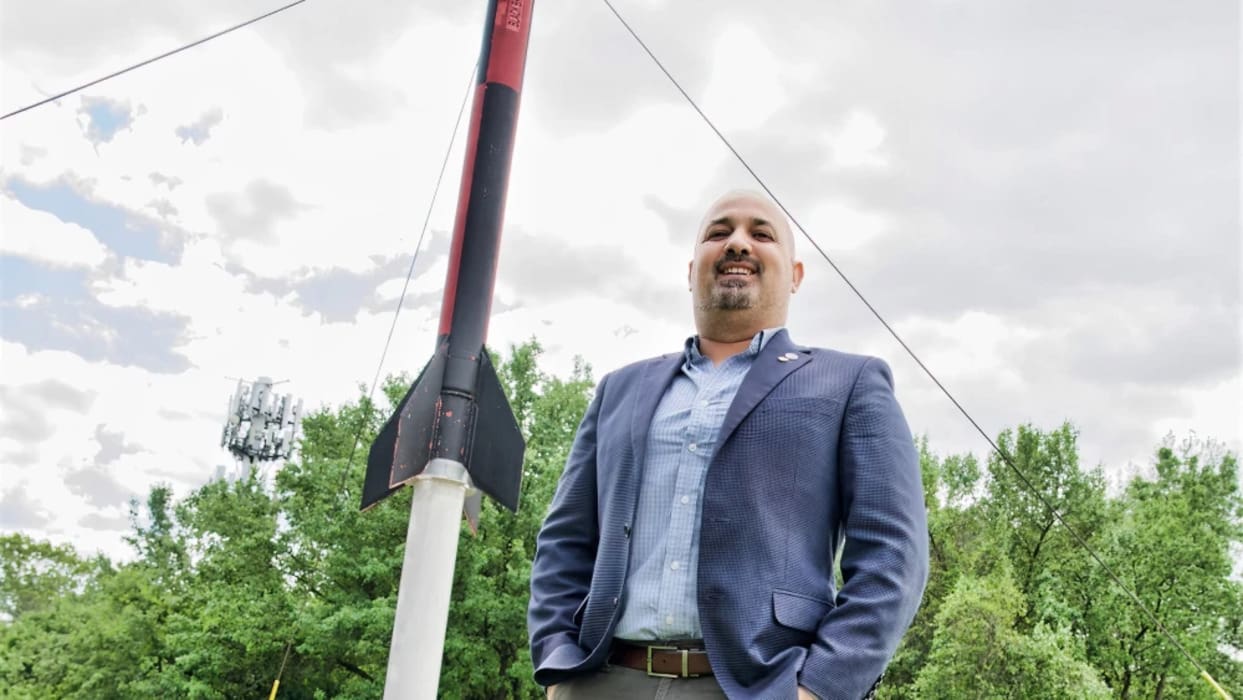
As a child growing up in Israel, Eliad Peretz was fascinated by space and the night sky. His goal, which he laid out in a five-year plan that he wrote as a fifth-grader, was to work for the organization whose mission was to address the big questions he wanted to pursue: the National Aeronautics and Space Administration. “I’m living my dream,” Peretz, who currently works at the NASA Goddard Space Flight Center in Greenbelt, Md., told JNS in a phone interview. On May 1, 2023, the American Technion Society will celebrate Peretz, a graduate of the Technion’s aerospace engineering faculty…