Something Fresh in the State of Denmark
October 06, 2026



























The Technion’s story has been intertwined with Israel’s for more than a century, from laying the foundations for a new nation to shaping its future.

Step inside Israeli innovation at the David and Janet Polak Visitors Center. Experience our 360° immersive movie and tech exhibition. Open to individuals and groups.
Learn More
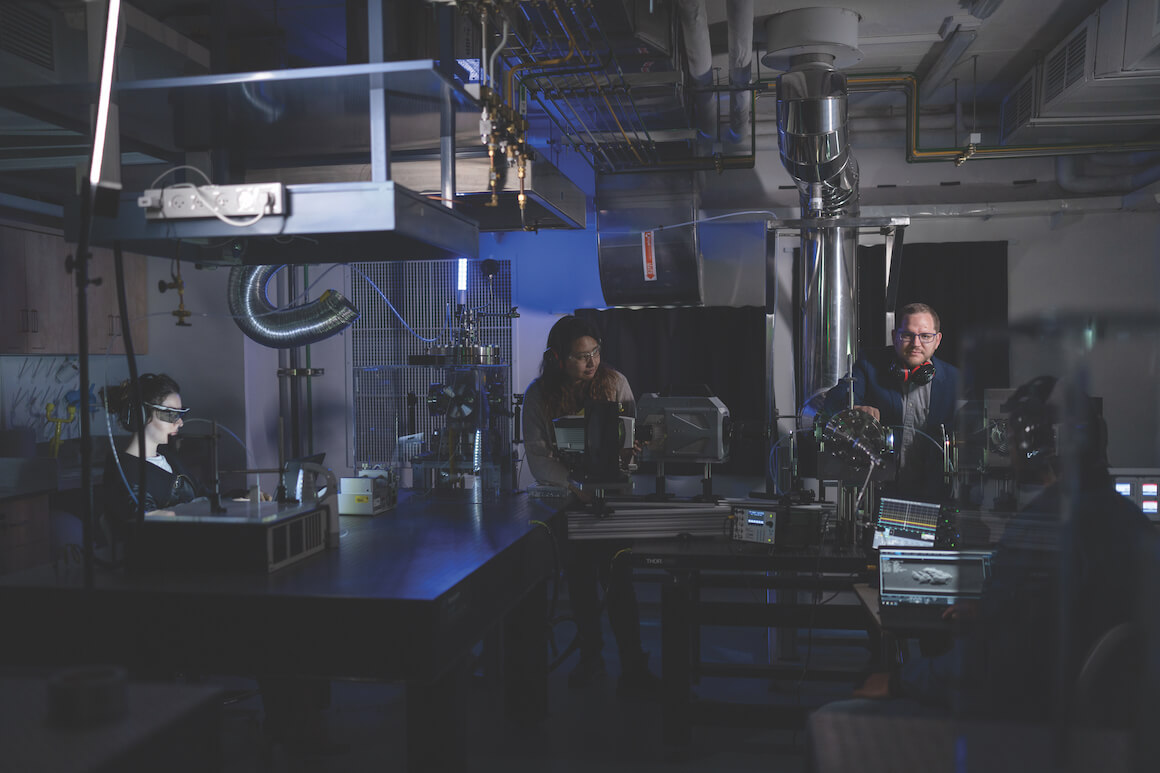
A decade from now, travelers could be flying in a jet that emits no carbon into the atmosphere. The fuel powering that aircraft may have its origins in the Technion’s Faculty of Aerospace Engineering. Technion researchers are working on a variety of projects to develop alternative jet fuels derived from ammonia and hydrogen. While considerable barriers remain, both substances — when produced cleanly with renewable power — have the potential to run jet engines as well as gas turbines to generate carbon-free electricity. “If you want to live in a world where we reduce the carbon dioxide in the air…
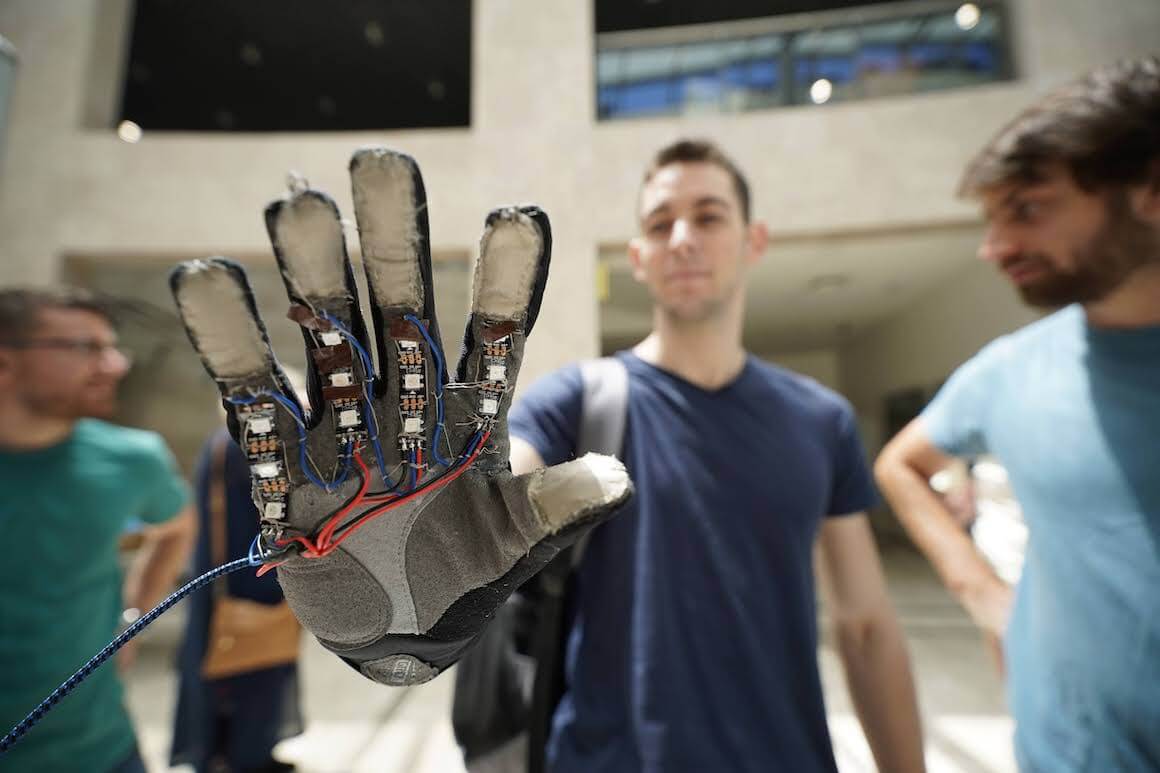
Graduating students from the Technion’s Henry and Marilyn Taub Faculty of Computer Science showcased their work at a fair featuring the keystone projects. The exhibits included innovative mobile apps and digital devices that ran the gamut from improving health to coordinating travel and advancing Israel’s windsurfing team. One group made rehabilitation fun for people suffering from an injury or neurological event affecting the fingers. Nadav Heller, Eran Cohen, and Gilad El-Dor constructed a glove with electronic fingertips, turning the monotonous exercise of touching the tip of each finger with the thumb over and over again into a Guitar Hero-like game….

Gal Frenkel built a wooden deck and pool in the backyard of his home in central Israel the summer after he had sold luxury wedding/bar mitzvah event planner Sky Productions (opening price for an event: $1 million). Frenkel hosted a few parties there, and after the summer he didn’t think much about his pool and deck. When he went out to look at it the following spring, he was shocked. “The whole area looked old and ruined and faded. I was so disappointed,” he tells ISRAEL21c. “I called the guy who installed the deck and said, ‘Nadav, you really messed it up.’…

Common pedagogical wisdom states that the younger a child begins learning a new language, the easier it is for them to acquire. And adhering to that philosophy, Israeli startup Curiosity Robotics has created a friendly, chatty little robot to teach English as a foreign language to preschoolers. Meet Aico, the charming, smiling artificial intelligence teaching tool that is the product of three years of research at Tel Aviv University’s Curiosity Labs. Aico is programmed to use a teaching method devised by British-Israeli educator Helen Doron, which advocates for children starting to learn a second language as early as three months of age. Curiosity Robotics is a…
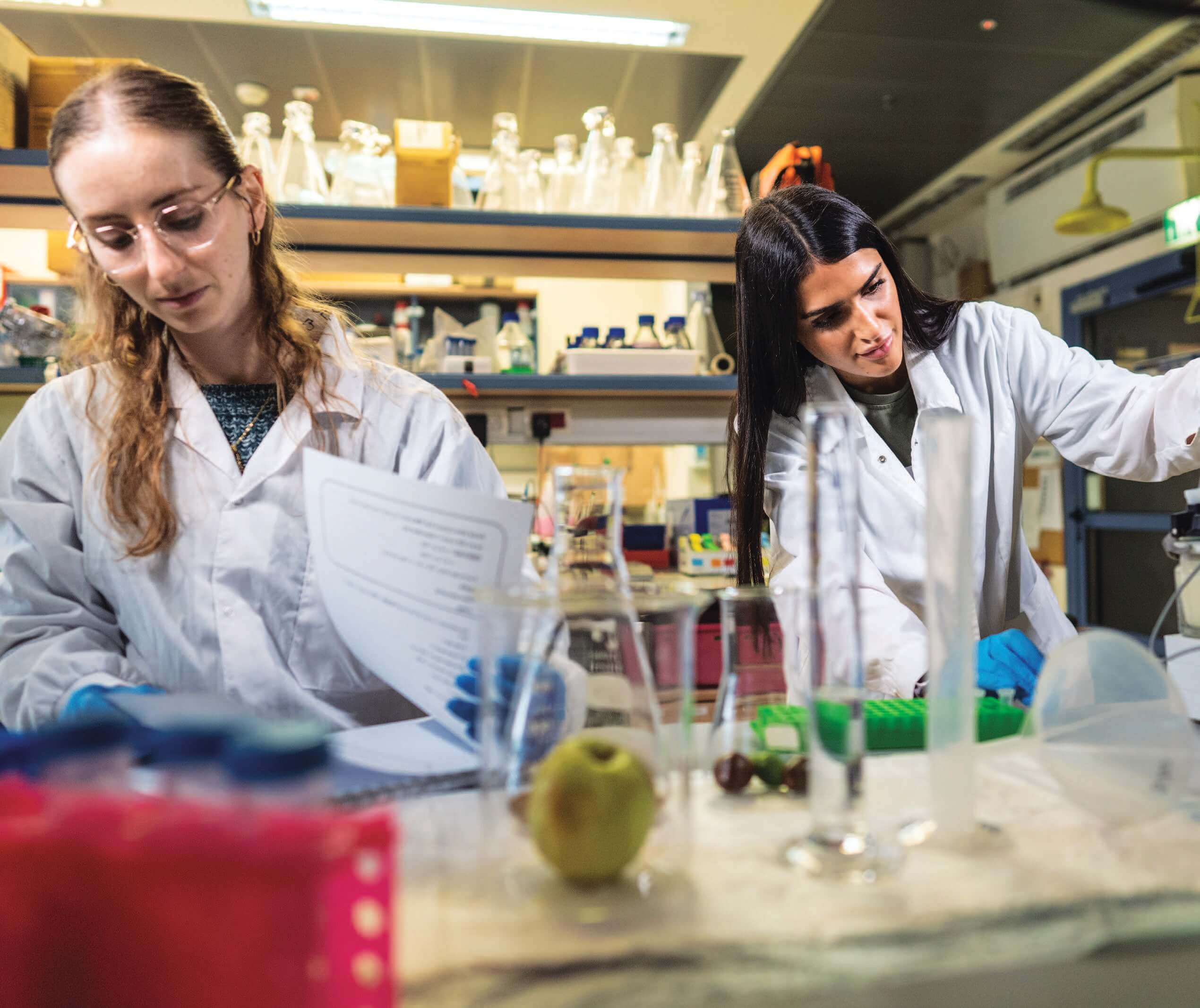
Increasing the global food supply while protecting the environment is one of the world’s most pressing challenges. Technion is heavily invested in meeting this challenge, perpetuating Israel’s dominant position in the FoodTech revolution. “Eradicating world hunger and improving food security are among the main challenges facing humanity in the 21st century, as defined by the UN’s Sustainable Development Goals,” notes Technion President Prof. Uri Sivan. “The Technion has the only faculty in Israel for research in food engineering, a faculty that leads the Israeli FoodTech industry.” The Faculty of Biotechnology and Food Engineering at the Technion is also one of…
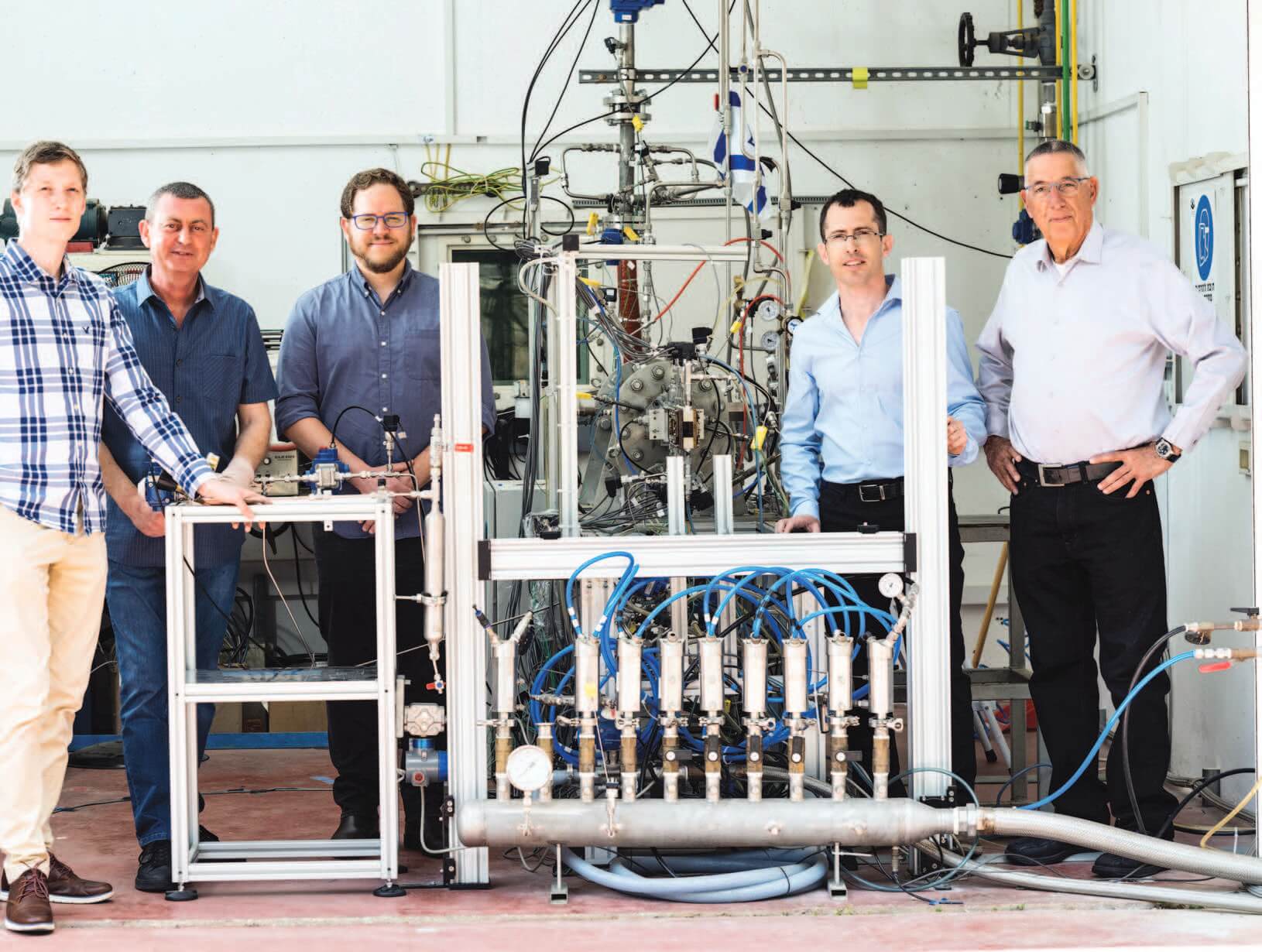
Technion Sets Up a Center for High-Speed Flight Imagine traversing the oceans and back in a few short hours or, within a single day, flying to and from an orbital hub as a space tourist or a spacelab research assistant. Hypersonic flight is key to these and other human ambitions in space and on earth. Aerospace engineers have been grappling with the challenges of high-altitude hypersonic flight since the 1960s – when the United States’ North American X-15 research aircraft achieved an astounding 6.7 times the speed of sound (also referred to as Mach 6.7), hitting an altitude of 354,200…

(Nanowerk News) Refractive index – the ratio of the speed of electromagnetic radiation in a medium to its speed in a vacuum – can be modulated fast enough to generate photonic time crystals (PTCs) in the near-visible part of the spectrum, a new study published in the journal Nanophotonics demonstrates (“Time-refraction optics with single cycle modulation”). The study’s authors suggest that the ability to sustain PTCs in the optical domain could have profound implications for the science of light, enabling truly disruptive applications in the future. PTCs, materials in which refractive index rises and falls rapidly in time, are the…

The Israel-U.S. Binational Industrial Research and Development (BIRD) Foundation has announced that it has approved $8 million in funding for nine new projects between U.S. and Israeli companies. Alongside grants from BIRD, the projects will access private-sector funding and boost the total investment in all projects to $23 million. As well as conditional grants of up to $1.5 million, the BIRD Foundation assists by working with companies to identify potential strategic partners and facilitate introductions. The submitted projects are reviewed by evaluators appointed by the National Institute of Standards and Technology (NIST) of the U.S. Department of Commerce and the…

An emerging field of generative artificial intelligence (AI) technology has elevated voice dubbing to a new level—one where English-speaking acting icons can indeed appear to speak their famous lines in fluent Spanish or Greek or even Russian. Voice dubbing is when a new voice replaces the original voice for a role, usually to translate the content into another language and an Israeli startup is leading the way, thanks to its artificial intelligence platform. Traditional voice dubbing studios can take up to months to produce dubbed versions of content, with a complex duplication process that includes finding the right voice actor and…

The development of high-performance alternatives to silicon in microelectronics has been brought nearer by researchers at the Technion-Israel Institute of Technology in Haifa who stretched an oxide material at an atomic level, thus controlling its conductivity. They said this is a “milestone advancement towards making efficient switches, which are the basic building blocks of computer chips.” Researchers in the Viterbi Faculty of Electrical and Computer Engineering have been able to control an emerging material that they regard as a possible future alternative to silicon in microelectronics. This is a timely development, because scientists and engineers face challenges in continuing the transistor shrinking…

While there are countless scientific breakthroughs that could help fight the world’s bourgeoning climate woes, “the problem lies in bringing together the science and technology people and the entrepreneurs” to make these innovations effective, said Noam Sonnenberg, director of the Israel Innovation Institute’s PLANETech community. In the interest of tackling this important, high impact challenge the Technion and the PLANETech community recently began a unique collaboration that will bring together researchers from different academic departments with entrepreneurs and investors interested in ClimaTech. The two groups recently conducted the first of a series of meetings that will explore research in foodtech,…

There’s nothing like a good night’s sleep, but that’s easier said than done. Now, a high-tech headband and accompanying app are helping put some sleep problems to bed. Israeli company NyX, co-founded in 2016 by Technion alum Ophir Orenstein, M.S. ’16, developed a comfortable, attractive headband that uses smart continuous-learning AI to automatically train your brain for optimum sleep. Other sleep aids use complicated training programs or things like guided meditation, said Orenstein, who is also the company’s chief technology officer. But NyX’s headband “talks” directly to the brain through neural signals. ”We cut out the middleman.” The headband is…