Something Fresh in the State of Denmark
October 06, 2026





















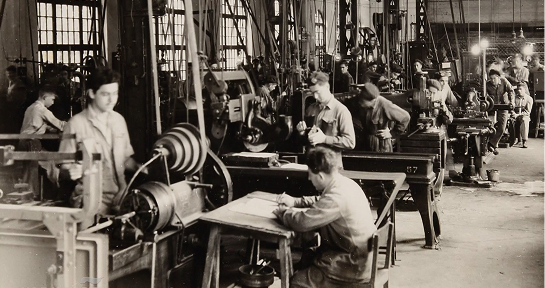
The Technion’s story has been intertwined with Israel’s for more than a century, from laying the foundations for a new nation to shaping its future.

Step inside Israeli innovation at the David and Janet Polak Visitors Center. Experience our 360° immersive movie and tech exhibition. Open to individuals and groups.
Learn More
A decade from now, travelers could be flying in a jet that emits no carbon into the atmosphere. The fuel powering that aircraft may have its origins in the Technion’s Faculty of Aerospace Engineering.
Technion researchers are working on a variety of projects to develop alternative jet fuels derived from ammonia and hydrogen. While considerable barriers remain, both substances — when produced cleanly with renewable power — have the potential to run jet engines as well as gas turbines to generate carbon-free electricity.
“If you want to live in a world where we reduce the carbon dioxide in the air as quickly as possible, you need to use zero-carbon fuels,” said Assistant Professor Joseph Lefkowitz, who is leading the Technion’s research into ammonia. “Long-term,” he continued, “zero-carbon fuel made from hydrogen or ammonia is better for the planet.”
Researchers in the U.S. and Europe are developing sustainable aviation fuel (SAF) made from used cooking oil, agricultural waste, captured CO2, or a variety of other waste carbon streams. Because SAF can often be blended with fossil fuel-derived kerosene, it can be used in conventional aircrafts, much as ethanol is mixed with gasoline.
In February, United Airlines and other big-name aerospace and financial companies, including Boeing and JPMorgan Chase, launched a $100 million venture fund to invest in SAF. Most types of SAF are “carbon-neutral,” meaning they neither increase nor reduce the CO2 in the environment. Technion researchers are taking these efforts in sustainability a step further.
Since air travel currently contributes just 2% annually to global warming, the focus at the Technion is on a truly zero-carbon fuel solution that would have applications beyond the aerospace industry, including in power plants.
Hydrogen-based fuel would provide such a solution, and “would have a huge impact on the total amount of carbon we’re emitting,” said Prof. Lefkowitz. He is working together with Aerospace Faculty Associate Professor Beni Cukurel, funded by a grant from Israel’s Ministry of Energy (opens in a new tab), to develop a process that would use ammonia — which consists of hydrogen and nitrogen — as a hydrogen carrier for renewable energy storage and power generation. Using ammonia would potentially overcome the obstacles of employing hydrogen alone.
Due to hydrogen’s low energy density, it takes a great deal of storage space to contain enough hydrogen to power an aircraft. It is also highly flammable. “The problem becomes, how do you store hydrogen in aircraft?” said Prof. Cukurel. “If there were a leak, it would just burn like the Hindenburg in 1937.”
Ammonia, widely used in the synthesis of fertilizers, has a host of advantages. As the world’s second-most-produced synthetic chemical, it is both ubiquitous and inexpensive, reducing the cost of delivery and storage by more than 10 times over compressed hydrogen. It does not release carbon dioxide when it combusts, and it can potentially be used directly in engines or be converted back into hydrogen at the point of use.
While ammonia presents challenges, including a propensity to produce nitric oxide pollutants when burned, its energy density, though lower than conventional jet fuel, is higher than batteries or hydrogen.
A third member of the Faculty, Associate Professor Dan Michaels, is working on a project that could eventually be applied to the jet fuel challenge. Funded by the Israel Electric Corporation, he is developing a gas turbine for electrical power plants that can use many different fuels, including hydrogen. If Prof. Michaels can solve the problem on the ground, his solution could be applied to aircrafts. Manufacturers like Boeing and Pratt & Whitney are seriously discussing hydrogen power for aerospace. “Hopefully my research will help them know what to invest in,” said Prof. Michaels.
Beyond the Faculty of Aerospace Engineering, members of the Wolfson Department of Chemical Engineering at the Technion are in early discussions with Boeing to fund a Technion effort to develop sustainable aviation fuels from hydrogen or methane.
Prof. Lefkowitz said that he and his multidisciplinary Technion colleagues are aiming high in their work on sustainable jet fuel. But he thinks their projects will take at least 20 years to come to market. Prof. Cukurel is more optimistic: “I believe we can bridge this challenge not in 20 years, but in 10,” he said.
As Israel’s only faculty of aerospace engineering, the Technion is accustomed to anticipating and fulfilling needs that arise in this area. “Ammonia is the best candidate we have in terms of decarbonizing energy and transportation,” said Prof. Lefkowitz. “We’re working on long-term solutions to the climate crisis.”
Prof. Cukurel agrees and said, “At the Technion in the last four to five years, there has been a broad range of activity toward sustainability. I’m very excited about it.”