The Technion’s story has been intertwined with Israel’s for more than a century, from laying the foundations for a new nation to shaping its future.

From medicine to security, explore how the Technion is advancing Israel and improving lives around the world.
View All Impact Areas
Explore stories, news, insights, and data across articles, videos, and podcasts.
view all content types
of all universities in the world*
in Israel and Europe for research on artificial intelligence
among universities worldwide for producing undergrad entrepreneurs
The Technion’s story has been intertwined with Israel’s for more than a century, from laying the foundations for a new nation to shaping its future.
Explore ATS, the Technion, and the people behind the breakthroughs redefining what's possible for Israel and the world.
Learn More About ATSATS is a community of supporters, innovators, and champions of possibility united by one mission: transforming Israel and the world through science and discovery.
Learn MoreFor more than 100 years, the Technion has been Israel's technological engine and leading driver of innovation, technology, and entrepreneurship, transforming ideas into impact.
Learn More
Step inside Israeli innovation at the David and Janet Polak Visitors Center. Experience our 360° immersive movie and tech exhibition. Open to individuals and groups.
Learn MoreFrom medicine to security, explore how the Technion is advancing Israel and improving lives around the world.
View All Impact AreasExplore stories, news, insights, and data across articles, videos, and podcasts.
view all content typesExplore ATS, the Technion, and the people behind the breakthroughs redefining what's possible for Israel and the world.
Learn More About ATSAs Seen in tech.cornell.edu
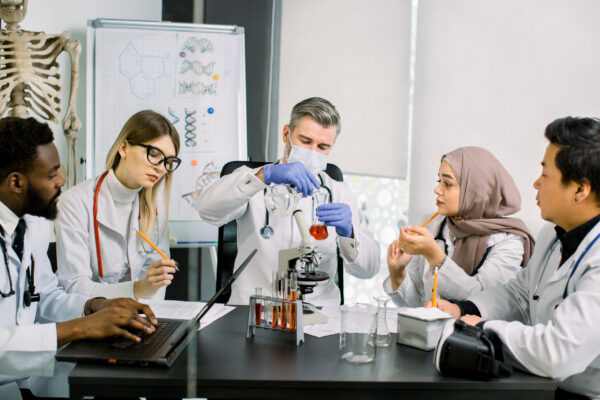
Hospitals have begun using “decision support tools” powered by artificial intelligence that can diagnose disease, suggest treatment or predict a surgery’s outcome. But no algorithm is correct all the time, so how do doctors know when to trust the AI’s recommendation?
A new study led by Qian Yang (opens in a new tab), assistant professor of information science in the Cornell Ann S. Bowers College of Computing and Information Science, suggests that if AI tools can counsel the doctor like a colleague – pointing out relevant biomedical research that supports the decision – then doctors can better weigh the merits of the recommendation.
The researchers will present the new study, “Harnessing Biomedical Literature to Calibrate Clinicians’ Trust in AI Decision Support Systems (opens in a new tab),” in April at the Association for Computing Machinery CHI Conference on Human Factors in Computing Systems.
by
tech.cornell.edu (opens in a new tab)
on
April 05, 2023
Doctors are more likely to trust AI if it explains its recommendations with supporting biomedical research, a new Cornell study finds.
1 min
X (opens in a new tab) / Facebook (opens in a new tab) / LinkedIn (opens in a new tab) / Email / Copy Link
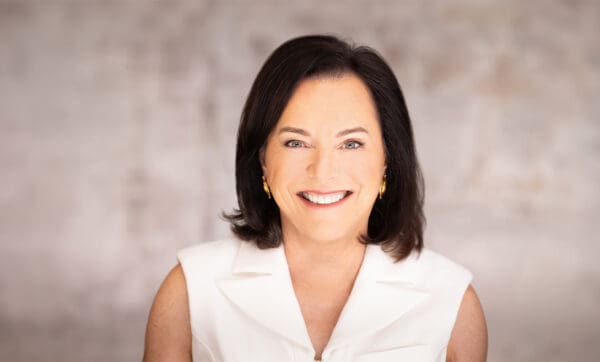
At the Technion, Israel Institute of Technology, the future often begins with a deceptively simple question: What can we do today that we could not do before? “Science and engineering have never been about yesterday’s tasks. They’ve always been about the future,” said Prof. Lihi Zelnik-Manor, vice president of External Relations and Resource Development at […]
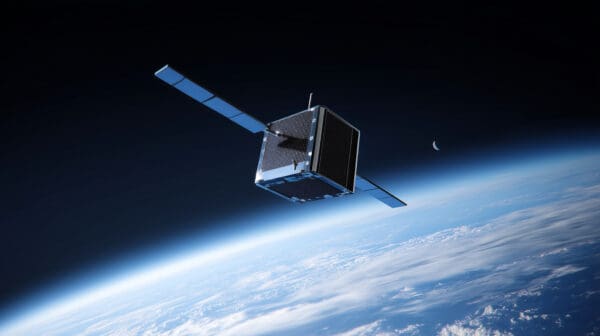
The first satellite in the CloudCT network has transmitted its first observation from orbit, marking an early milestone for the Israeli-German research project studying clouds and polarized light from space. The image shows a view toward central France as the satellite passed over the Baltic Sea, according to a statement from the Technion – Israel […]
Los Angeles Unified School District recently announced it will bar student use of generative artificial intelligence on school devices for the 2026-27 academic year, joining New York City Public Schools in limiting children’s access to a technology no one yet knows how to safely manage. The nation’s two largest school districts made the move at […]
Stay on top of the latest breaking scientific discoveries from Israel and the Technion. Subscribe to the ATS newsletter.