Something Fresh in the State of Denmark
October 06, 2026























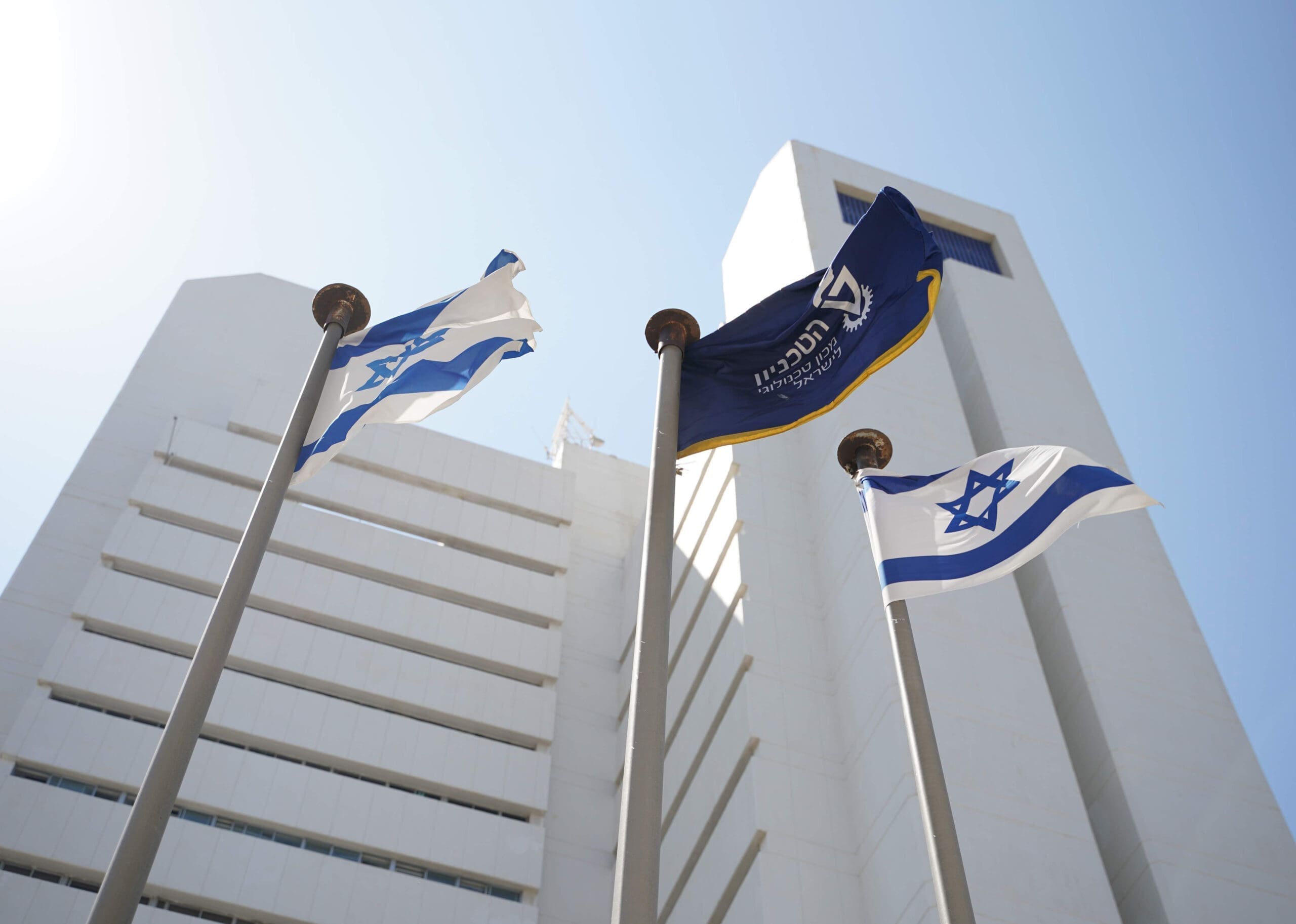






The Technion’s story has been intertwined with Israel’s for more than a century, from laying the foundations for a new nation to shaping its future.

Step inside Israeli innovation at the David and Janet Polak Visitors Center. Experience our 360° immersive movie and tech exhibition. Open to individuals and groups.
Learn MoreProf. Levenberg conducts interdisciplinary research on stem cells and tissue engineering, with implications for regenerative medicine and sustainable food production. Her research shows that it is possible to create complex tissues, including blood vessels, in a laboratory and that these engineered tissue-constructs can integrate with the host when implanted. Her team recently developed unique stem-cell engineered tissue constructs that induce the regeneration and repair of injured spinal cords and genetically engineered muscle tissue for treating type 2 diabetes. She is founder and CSO of two start-up companies, including Aleph Farms, which is revolutionizing the food industry by producing real meat…
Professor Efraim Lev has a strong interdisciplinary focus — combining archeology with botany and the history of Middle Eastern medicine with pharmacology. Integrating biology and history has allowed him to study subjects that have seldom been researched together, and to arrive at new historical insights. In his current research, he has mined the sacred Jewish manuscripts known as the Cairo Genizah to shed light on the medical practice of Jews in Arab Medieval Egypt, and is building a medical library of the ancient physicians and pharmacists. Balancing his interest in history, he has helped start interdisciplinary research groups for complementary…
Prof. Kishony is one of the most prominent names in the struggle against bacterial resistance to antibiotics. A physicist and mathematician by training, he recently developed an AI-based algorithm to combat antibiotic resistance that markedly helped doctors at Maccabi Healthcare Services prescribe the correct antibiotic for urinary tract infection patients. He has also used genetic mapping of pathogens to unravel emergence of antibiotic resistance during infection within the human host. And he has developed “antibiotic cocktails” that can counteract and even reverse the evolution of antibiotic resistance. These approaches inspire a novel paradigm of patient-tailored antibiotic diagnostics and treatment. Most…
Shie Mannor is a professor at the Andrew and Erna Viterbi Faculty of Computer and Electrical Engineering at the Technion. He is a member of the Technion Machine Learning Center and the Grand Technion Energy Program, and the head of the Technion and Intel Corporation’s Center for Artificial Intelligence. Prof. Mannor’s research interests include machine learning and pattern recognition, planning and control, multi-agent systems, computer network security, and communications. He is currently leading a new initiative by Ford to develop a decision-making system in Israel for driving autonomous cars.
With expertise in computer architecture and electronic circuit design, he is working to build the computers of the future. Inspired by the human brain, Prof. Kvatinsky is developing computers that have structures and computational models similar to neural networks. This research combines new semiconductor technologies, such as memristors, with new architectures that are fundamentally different from conventional computer architecture (i.e., not based on a processor and memory). These computer structures have significantly better energy efficiency and faster computation, and they enable new applications such as artificial intelligence. As a member of the Technion Faculty Ambassador Program, Prof. Kvatinksy shares his…
Boaz Mizrahi is an associate professor and member of the Faculty of Biotechnology and Food Engineering at the Technion. He is also a member of the Russell Berrie Nanotechnology Institute and the Lorry I. Lokey Interdisciplinary Center for Life Sciences and Engineering. His research interests focus on understanding and mimicking principles that nature uses and on designing functional materials — such as mucoadhesive tablets and polymeric implants — based on these concepts. Prof. Mizrahi holds 12 patents, three of which were licensed, and is the author of more than 20 scientific publications.
Galia Maayan is an associate professor and member of the Schulich Faculty of Chemistry at the Technion. She leads the Biomimetic Chemistry Laboratory. Her research focuses on the design and synthesis of peptide mimics and their use in enzymatic functions such as selective recognition and cooperative catalysis. Prof. Maayan holds awards from the Stereochemical Society of Greater New York (2009), the American Chemical Society (2010), and the National Science Foundation (2011).
She is a member of the Information Science field at Cornell University. Dr. Ju comes to Cornell Tech from the Center for Design Research at Stanford University, where she was Executive Director of Interaction Design Research, and from the California College of the Arts, where she was an Associate Professor of Interaction Design in the Design MFA program. Her work in the areas of human-robot interaction and automated vehicle interfaces highlights the ways that interactive devices can communicate and engage people without interrupting or intruding. Dr. Ju has innovated numerous methods for early-stage prototyping of automated systems to understand how…
Assistant Professor Meytal Landau is a member of the Technion Faculty of Biology. Her research focuses on protein structure-function relationships to better understand diseases and how to treat them. Of particular focus to Prof. Landau is understanding how to fight antibiotic-resistant bacteria. Her lab is also studying rational drug design in order to move drugs to the market more quickly. Prof. Landau holds three patents and has published more than 40 papers in professional journals. She has received more than 20 awards and honors, including the Biophysical Society’s Margaret Oakley Dayhoff Award (2019), the Wolf Foundation’s Krill Prize for Excellence…
An expert in image processing, 3D data analysis, and computer vision, he is an accomplished scholar and entrepreneur. The laboratory he oversees, GIP, conducts theoretical and applied research in model-based image and video processing and analysis. The lab’s research can be applied to a wide range of fields including medicine, security, robotics, and entertainment. For example, Prof. Kimmel is using 3D facial recognition technology to improve airport security, and he is also working to develop an infant-specific inhalation mask for pediatricians. He has leveraged his lab’s innovations to co-found six tech start-ups. Prof. Kimmel serves by courtesy as a professor…
At the Technion, he heads the Center for Security Science and Technology (CSST) and the Peter Munk Advanced Defense Research Institute (ADRI). The institute’s mission is to advance the development of novel defense-related concepts and technologies; to foster collaboration among defense authorities, governmental institutions, industry, and academy researchers; and to educate the next generation of engineers and scientists who will play leading roles in Israel’s defense ecosystem. Brig. Gen. (res.) Prof. Nagel heads and teaches a master’s program for military officers on defense R&D strategy and policy, and systems engineering. His most recent government appointment was chairing the “Nagel Committee,”…