Something Fresh in the State of Denmark
October 06, 2026
















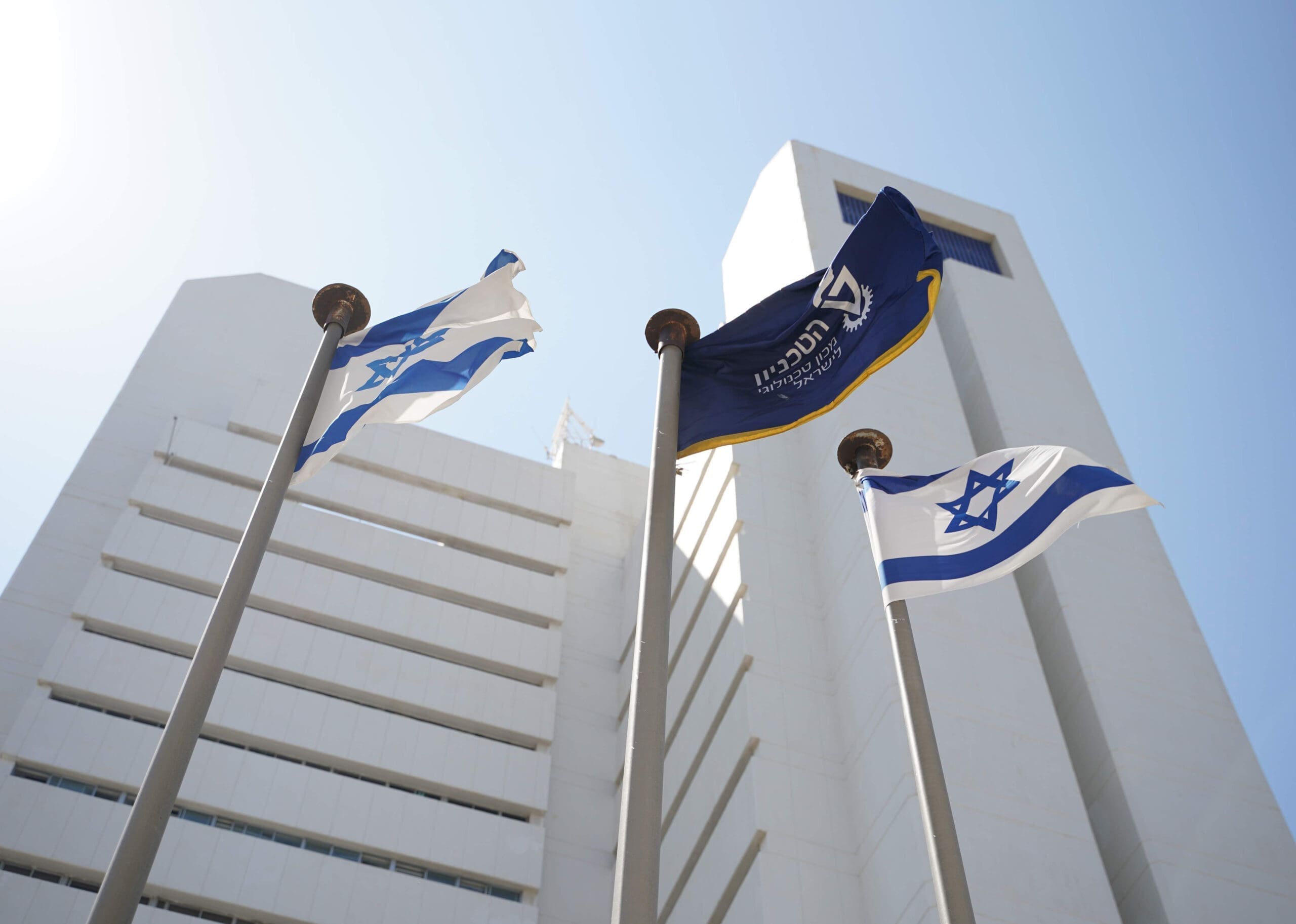





The Technion’s story has been intertwined with Israel’s for more than a century, from laying the foundations for a new nation to shaping its future.

Step inside Israeli innovation at the David and Janet Polak Visitors Center. Experience our 360° immersive movie and tech exhibition. Open to individuals and groups.
Learn MoreAs a founding member of the Center for High-Speed Flight, he is also advancing the basic science needed to one day field vehicles at hypersonic speeds (exceeding Mach 5, or five times the speed of sound) — and defend Israel from a new generation of airborne threats. Prof. Michaels’ work further promises to advance a new generation of power plants and jet engines that can meet the increasing global demand for cheap, carbon-based energy with minimal impact on human health and the environment. He also researches alternative fuels, examining the impact of fuel composition on the combustion processes in jet…
Before joining the Technion, she held a senior role at Israel’s Planning and Budgeting Committee (PBC), where she contributed to system-wide strategic initiatives and evaluation processes in the higher education sector. She also worked for several years as a strategy consultant and team leader at Shaldor, a leading Israeli management consulting firm. She holds a Ph.D. in Physics from Harvard University, where her research focused on string theory, combining a strong analytical foundation with extensive experience in higher education systems and institutional strategy.
His 35-year diplomatic career, which he began in 1990, included key positions worldwide. He held senior postings as ambassador to Brazil, Panama, and Ecuador; deputy ambassador in Portugal; consul general in Atlanta; and consul in San Francisco. Appointed at 35, he was the youngest ambassador in Israel’s history and the first Druze career diplomat. Fluent in five languages, he has served as a visiting professor at Emory University in Atlanta, Haifa University, and Reichman University. Mansour is a longtime activist for peace, dialogue, and the integration of minorities into society, both in Israel and internationally. In recognition of these efforts,…
He’s developing smart control and estimation systems that help these high-speed, high-stakes machines stay on course — even when the unexpected hits. An associate professor in The Stephen B. Klein Faculty of Aerospace Engineering, Prof. Idan researches control systems for aerospace applications — from autonomous drones and their formation, to hypersonic vehicles, to missile guidance. His work includes developing advanced estimation and control methods for systems affected by volatile, non-Gaussian noise; creating robust and adaptive flight control systems; and designing nonlinear autopilots for hypersonic vehicles, accounting for stringent scramjet engine constraints. Prof. Idan holds bachelor’s and master’s degrees in aeronautical…
In her computer lab, the organic chemist’s research group uses computational models to investigate the chemical properties and reactivity of molecules and elucidate the connections between molecular properties and structural features. The chemical insights they uncover are leveraged to implement machine-learning and deep-learning models for data-driven molecular design and discovery. Bridging the gap between the organic chemistry and digital worlds, the Poranne group develops user-friendly methods that help connect these abstract properties to real-world synthetic strategies. Before joining the Technion faculty in 2021, Renana was a senior scientist at the Laboratorium für Organische Chemie at the ETH Zürich, where she…
Prof. Mawase focuses his work on the principals of motor control and on brain rehabilitation — deciphering the mechanisms that determine the extent of recovery following a stroke. Using tools from behavioral and computational neuroscience and functional imaging of the brain, he aims to bridge the gap between basic science and clinical applications. For example, Prof. Mawase and a team of researchers from the Technion and the Rabin Medical Center, guided Shaked Ron, then a medical and undergraduate student, in his work for the annual 2019 student project fair in the Faculty of Biomedical Engineering. Ron took first place for…
He heads the Lab of Biopolymers for Food and Health in the Faculty of Biotechnology and Food Engineering, is associated with the Russell Berrie Nanotechnology Institute, and is the director of the recently launched Sustainable Protein Research Center (SPRC) at the Technion. Prof. Livney’s lab aims to improve human health through both medicine and food. Among the team’s medical diagnostic and treatment projects is the development of targeted nanoparticles to treat drug resistant gastrointestinal cancers, lung cancer, prostate cancer, and ovarian cancer. In the area of food research, they are investigating methods of enriching beverages with nutraceuticals, boosting the proportion…
His research focuses on harnessing the inherent properties of proteins, including their functions, interactions with the environment, and the way they fold and unfold. Through these efforts, he aims to drive significant advancement in biomaterials. His studies also center on understanding the complex interactions between polymers and proteins, aiming to uncover how these two elements influence materials’ mechanical and microstructural aspects. This work contributes to the development of innovative hybrid biomaterials. Drawing on insights from these comprehensive investigations, he aims to engineer biomaterials that seamlessly combine the unique characteristics of polymers and proteins. These materials have potential applications across various…
Prof. Melamed’s research interests span cell biology, endocrinology, epigenetics, fertility, gene regulation, hormones, and reproduction. Her lab focuses on the role of epigenetics in controlling reproduction. Epigenetics is a field of study that looks at how genes are regulated through altering their accessibility and packaging, without changes in the DNA sequence. The field comprises a means of regulation that occurs during normal development and in response to the environment. She and her team aim to understand how DNA packaging at key genes encoding regulatory factors plays a role in normal reproductive development, and how epigenetic modifications (chemical changes in the…
Associate Professor Tzipi Horowitz-Kraus also serves as a Technion Faculty Ambassador and is an associate professor in the Kennedy Krieger Institute and the Johns Hopkins School of Medicine in Baltimore, and has had a long association with the Cincinnati Children’s Hospital. Prof. Horowitz-Kraus is a neuroimaging researcher in the field of reading and reading impairments in children. Most reading difficulties are not identified until third grade, but by then the child is often falling hopelessly behind. Her goal is to diagnose and remediate reading challenges as early as possible. She works with both healthy children and those suffering from genetic…
Prof. Kaplan focuses his research on the structure, chemistry, and energy of interfaces: primarily between metals and ceramics. Applications include the development of ultra high temperature ceramics for use in aerospace applications, metal-ceramic composites for the development of jet engines and automobile brake pads, as well as flash memory devices, and in defense applications. His research in materials science makes use of the Technion’s high resolution transmission electron microscope, housed in the Electron Microscopy Center, to understand how the type and position of atoms at metal-ceramic interfaces influence properties of materials. Prof. Kaplan earned his bachelor’s degree in 1989 in…